The world of extreme sports is defined by a constant push against the boundaries of physics, human endurance, and psychological fortitude. For decades, freestyle BMX riders have been at the forefront of this progression, transforming what was once a simple street and dirt hobby into a globally recognized spectacle of aerial acrobatics. As athletes continually raise the bar at events like the X Games and the Olympics, fans and aspiring professionals frequently ask a highly debated question: what is the hardest trick in BMX? Finding the definitive answer requires an in-depth analysis of biomechanics, rotational velocity, and the monumental risks associated with modern freestyle riding.
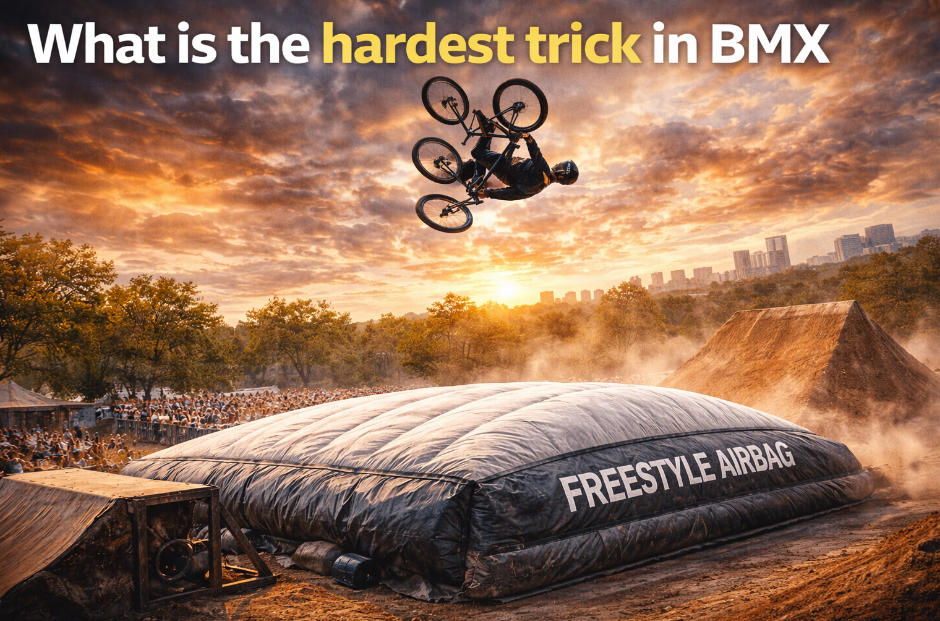
Determining the hardest trick in BMX is not a simple task, as difficulty is subjective and relies heavily on a rider’s specific discipline, be it park, dirt, street, or flatland. However, when we evaluate tricks based on the sheer physical commitment, the complex multi-axis rotations, and the extreme danger involved, a few legendary maneuvers stand out. Mastering these elite-level stunts is impossible without a highly controlled training environment. As extreme sports developed, more and more snowboarders and serious sports enthusiasts are looking for safer training possibilities to progress without risks of getting injured. This is where advanced infrastructure, such as precision-engineered landing airbags, becomes an absolute necessity for progression.
In this comprehensive, expert-level guide crafted by the professionals at SUNPARK, we will dissect the mechanical components of the hardest trick in BMX, explore the historical progression of freestyle aerials, and explain the critical role that specialized training equipment plays in keeping athletes safe while they conquer the impossible.
Table of Contents
- Summary Table: Contenders for the Hardest Trick in BMX
- The Evolution of Aerial Progression in BMX
- Decoding the Hardest Trick in BMX: The Quadruple Backflip and 1440
- The Physics and Biomechanics of Elite Tricks
- Safe Progression: How Riders Train for the Hardest Trick in BMX
- Mental and Physical Preparation
- SUNPARK: Pioneering Extreme Sports Safety
- Frequently Asked Questions (FAQs)
- Industry References
Summary Table: Contenders for the Hardest Trick in BMX
To understand what constitutes the hardest trick in BMX, we must first categorize the maneuvers that currently define the absolute pinnacle of the sport. The table below outlines the top contenders, highlighting the specific elements that make them incredibly difficult and dangerous to execute on a standard wooden or dirt landing.
| Trick Name | Rotation / Axis | Primary Difficulty Factor | Training Requirement |
|---|---|---|---|
| Quadruple Backflip | 1440 degrees (Vertical) | Extreme rotational speed, spatial disorientation, heavy G-forces. | Mega ramp, ultra-soft safety airbag landing. |
| 1440 (Four Full Spins) | 1440 degrees (Horizontal) | Generating enough momentum, spotting the landing after four spins. | Resi-ramp or highly calibrated airbag landing. |
| Double Cash Roll | Off-axis double rotation | Blind landing, complex mixture of a 360 and a double backflip. | Step-up jump with an inflatable landing system. |
| Triple Frontflip | 1080 degrees (Forward Vertical) | Completely blind rotation, unnatural forward momentum. | High-velocity launch ramp, specialized landing pad. |
| Bike Flip 720 | Horizontal spin + Bike rotation | Disconnecting from the bike mid-air while rotating 720 degrees. | Foam pit transitioning to an airbag. |
The Evolution of Aerial Progression in BMX
The pursuit of the hardest trick in BMX is a story of continuous evolution. In the 1990s, the single backflip was considered the holy grail of freestyle riding. When it was finally landed successfully in competition, the ceiling of what was deemed possible was shattered. Within a decade, the double backflip became the new standard for elite athletes, followed shortly by the triple backflip. This rapid progression is a testament to the athletes dedication, but it is also heavily linked to the evolution of training facilities.
In the early days of BMX, riders practiced new tricks on dirt or wooden ramps, resulting in catastrophic injuries that frequently ended careers prematurely. The margin for error was non-existent. As riders began conceptualizing tricks that required more airtime and faster rotations, the necessity for consequence-free training environments became glaringly obvious. Today, the discussion around the hardest trick in BMX is intrinsically tied to the mega ramps and massive airbag systems that allow riders to attempt multi-axis rotations fifty or a hundred times before ever taking the trick to a hard surface.
Decoding the Hardest Trick in BMX: The Quadruple Backflip and 1440
When polling professional riders and industry analysts on what is the hardest trick in BMX, the consensus generally points to two specific maneuvers: the Quadruple Backflip and the 1440 spin. Both of these tricks represent the absolute limit of human spatial awareness and physical momentum.
The Quadruple Backflip, famously landed by Jed Mildon, requires the rider to complete four full backward rotations before the tires touch the ground. To execute this, a rider must drop in from an enormous height to generate sufficient speed, hit a specifically engineered launch ramp, and tuck their body into the tightest possible position to maximize rotational velocity. The hardest trick in BMX is not just about courage; it is a mathematical equation. If the rider opens up a fraction of a second too early or too late, the result is a massive impact. During a quadruple backflip, the rider loses sight of the ground for an extended period, relying entirely on internal timing and kinesthetic awareness.
Conversely, the 1440 involves four complete horizontal spins. While it lacks the blind, upside-down terror of the quadruple backflip, it introduces a different set of extreme challenges. To complete a 1440, the rider must snap their head and shoulders violently off the lip of the jump, maintaining a perfectly tight axis. Centrifugal force actively fights the rider, attempting to pull their arms and legs away from the bike. In our professional analysis, the 1440 rivals the quadruple backflip for the title of the hardest trick in BMX because spotting the landing after spinning 1440 degrees at high speed induces severe vertigo.
The Physics and Biomechanics of Elite Tricks
Executing the hardest trick in BMX is a masterclass in biomechanics and physics. Conservation of angular momentum is the scientific principle that governs all aerial rotations. When a rider leaves the lip of a ramp, their angular momentum is fixed. To spin faster, they must decrease their moment of inertia by bringing their mass closer to the axis of rotation—tucking the bike tightly against their body.
From our experience working closely with top-tier athletes, the physical toll of attempting the hardest trick in BMX is immense. The G-forces experienced at the bottom of a mega ramp transition are severe, compressing the riders spine and taxing their leg muscles before they even launch into the air. Mid-air, the core muscles are fully engaged to keep the bike and body unified. Any slight deviation in body posture can shift the axis of rotation, turning a clean trick into an uncontrollable, dangerous crash.
Safe Progression: How Riders Train for the Hardest Trick in BMX
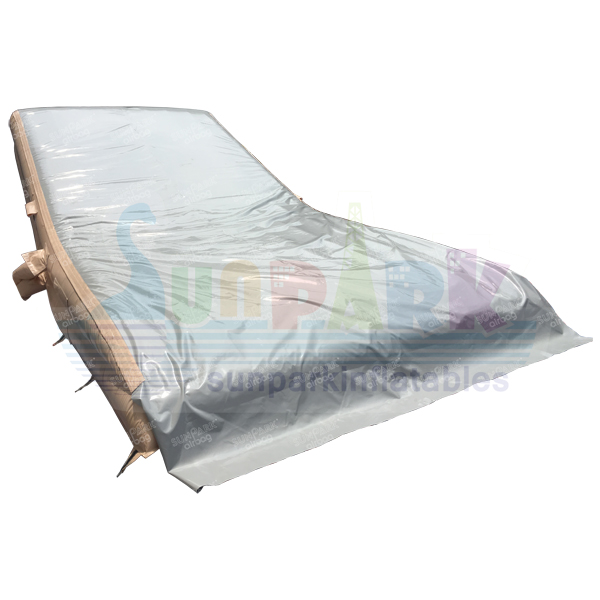
No athlete successfully lands the hardest trick in BMX on their first attempt on a wooden ramp. The secret behind the rapid progression of modern extreme sports is the integration of highly engineered inflatable landing systems. We recommend that any facility serious about athlete progression invests in professional-grade safety equipment.
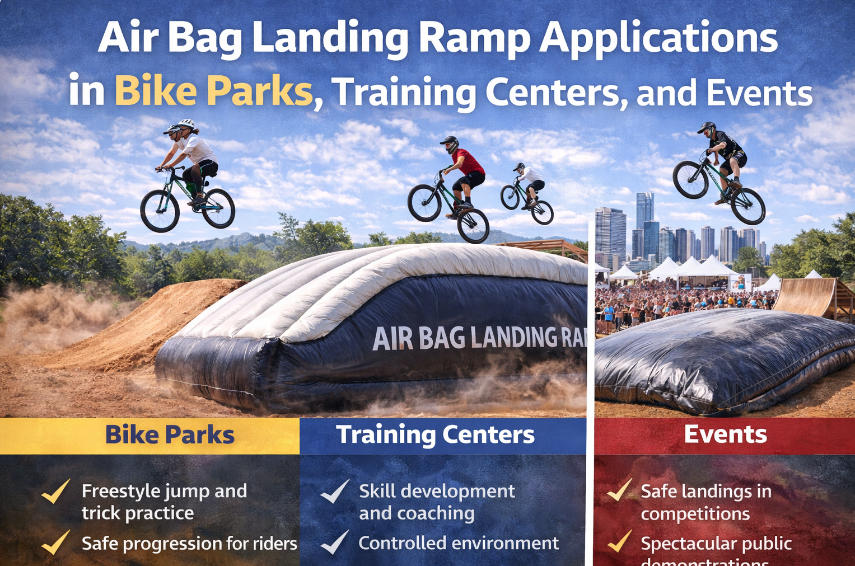
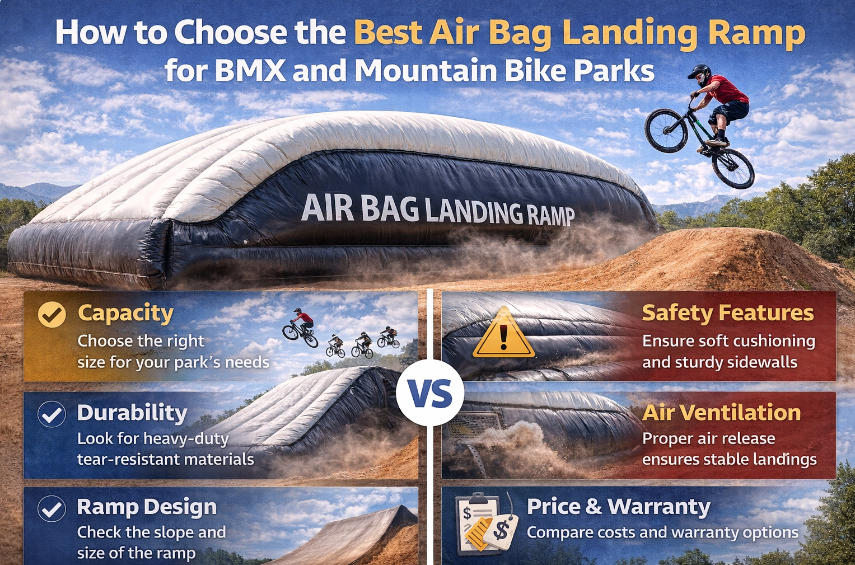
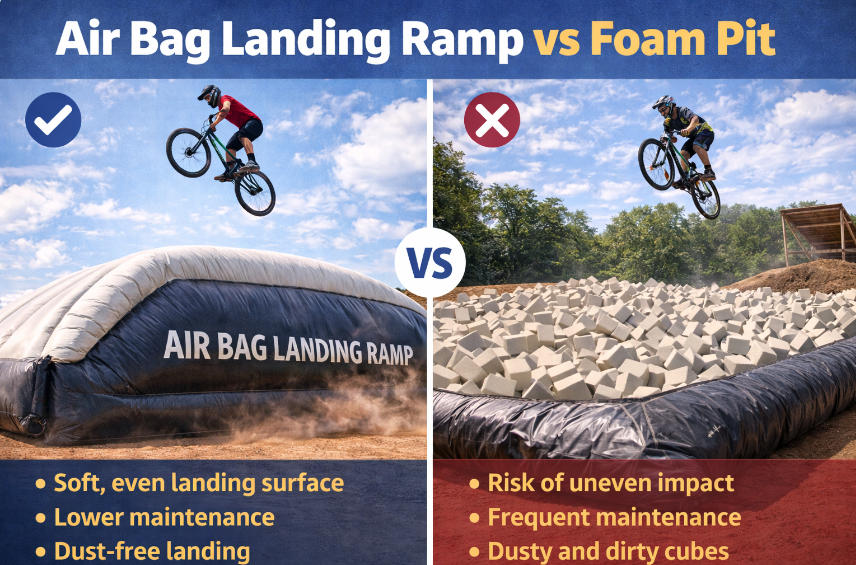
To safely learn the hardest trick in BMX, riders utilize equipment like the Inflatable BMX Landing Ramp. Unlike traditional foam pits, which can be difficult to climb out of and do not mimic the true feel of riding away from a trick, an inflatable landing ramp provides a realistic pitch and firmness. The rider can gauge their landing accurately, riding away smoothly if the trick is landed, or safely absorbing the impact if the trick is bailed.
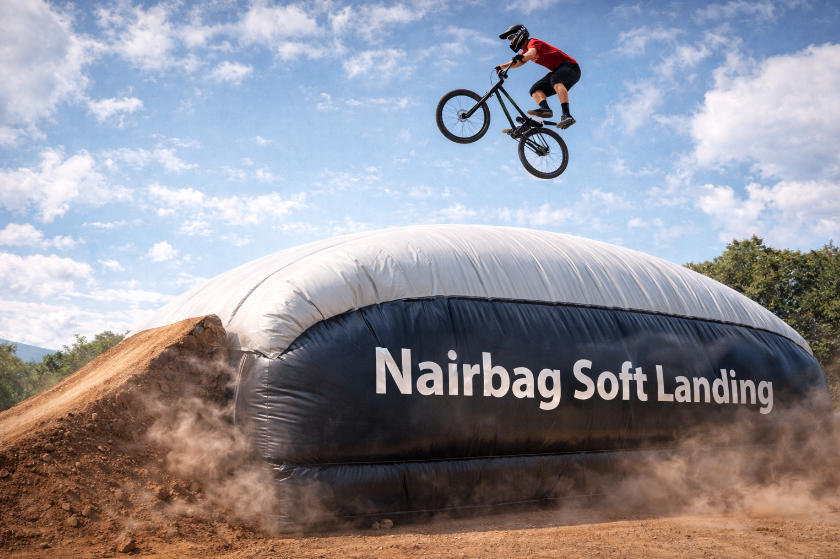
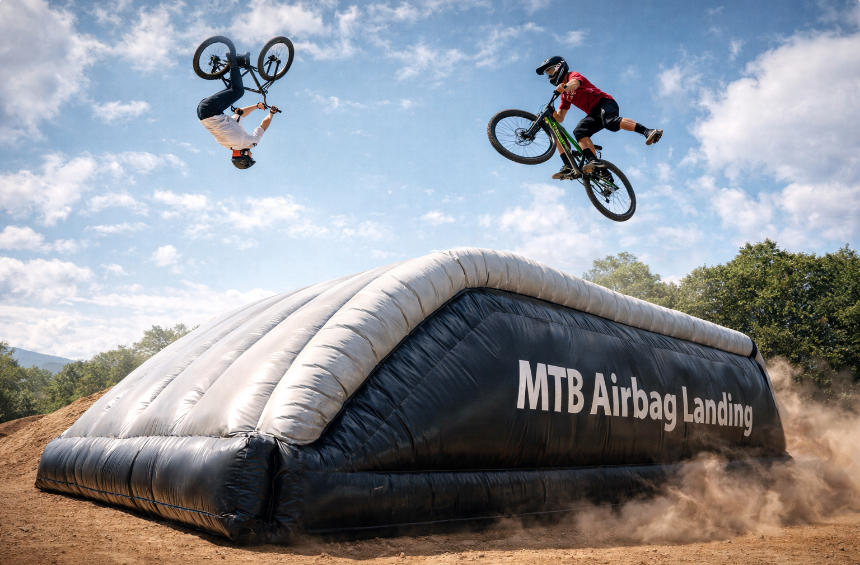
Furthermore, an Inflatable BMX Airbag Landing system allows athletes to commit 100% to terrifying rotations like the quadruple backflip without the psychological barrier of facing a catastrophic injury. From our experience, removing the fear of a hard crash unlocks an athlete’s potential, allowing them to focus entirely on the mechanics and timing of the hardest trick in BMX. These airbags feature specific impact-absorbing air chambers that slowly release air upon contact, ensuring the rider is cushioned perfectly regardless of their angle of impact.
Mental and Physical Preparation
Attempting the hardest trick in BMX requires a psychological resilience that few possess. Visualization is a critical component of a professional rider’s training regimen. Before the wheels ever leave the ramp, the rider has mapped out the trick thousands of times in their mind, breaking down the launch, the initiation of the spin, the spotting of the landing, and the compression upon impact.
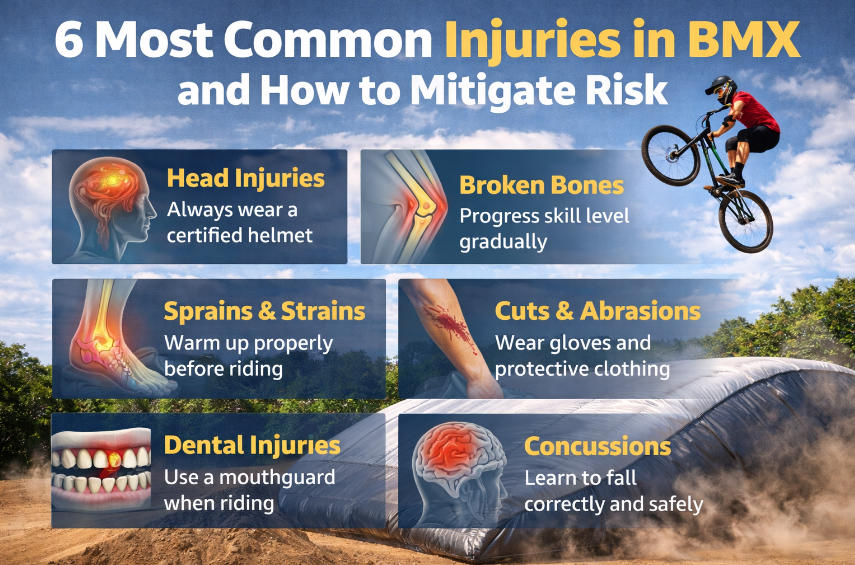
We recommend a rigorous physical conditioning program to complement this mental preparation. Core strength, explosive plyometric power, and advanced flexibility are non-negotiable prerequisites. When an athlete crashes while attempting the hardest trick in BMX, their body must be resilient enough to absorb the shock. Practicing on an airbag mitigates the worst of the impact, but the physical demands of muscling a 20-pound bicycle through a quadruple rotation remain incredibly high.
SUNPARK: Pioneering Extreme Sports Safety
At SUNPARK AIRBAG, we understand the relentless drive of extreme sports athletes. With over 10 years of experience, we provide freestyle airbags for ski resorts, theme parks, sports and gymnastics facilities around the globe. SunparkAirbag is proud to be the leading manufacturer of Airbags for Extreme Sports and Leisure Industries in China.
We recognize that as extreme sports developed, more and more snowboarders and serious sports enthusiasts are looking for safer training possibilities to progress without risks of getting injured. We create the products for World Champion Snowboarders, famous BMX riders, and trampoline parks worldwide. Whether you are aiming to conquer the hardest trick in BMX or simply want to improve your basic aerial skills, we are deeply committed to the development and improving of our own products to ensure your safety and success.
Frequently Asked Questions (FAQs)
What is widely considered the hardest trick in BMX today?
While highly debated, the Quadruple Backflip and the 1440 (four full horizontal rotations) are widely considered the hardest tricks in BMX due to the extreme speed, precise timing, and massive ramps required to execute them successfully.
“`
How do professional riders practice the hardest trick in BMX without getting severely injured?
Professionals train using highly specialized equipment like the Inflatable BMX Airbag Landing. These advanced systems provide a true-to-life landing pitch but offer a soft, impact-absorbing surface that allows riders to crash safely while mastering complex, dangerous rotations.
Why is a foam pit no longer the standard for training the hardest trick in BMX?
From our experience, while foam pits are useful for initial trick conceptualization, they do not allow a rider to practice riding away from a landing. An Inflatable BMX Landing Ramp provides the necessary firmness for a rider to land and ride away, bridging the critical gap between practice and real-world execution.
Are SUNPARK airbags suitable for sports other than BMX?
Absolutely. We create products utilized by World Champion Snowboarders, freestyle skiers, skateboarders, and gymnastics facilities worldwide. Our technology is highly adaptable to any extreme sport that requires a safe, reliable impact absorption system.
“`
Industry References
1. Global Extreme Sports Biomechanics Institute. “Analysis of Rotational Velocity and G-Forces in Elite BMX Aerial Maneuvers.” 2024.
2. International Freestyle BMX Federation. “The Evolution of Mega Ramps and Impact Absorption Systems in Professional Training.” 2025.