
Mountain biking (MTB) has evolved dramatically over the last two decades. What began as simply riding down dirt trails has transformed into a sport defined by gravity-defying tricks, massive jumps, and high-speed aerial maneuvers. As the sport has progressed, so too has the need for safety equipment. Enter the MTB landing Pad.
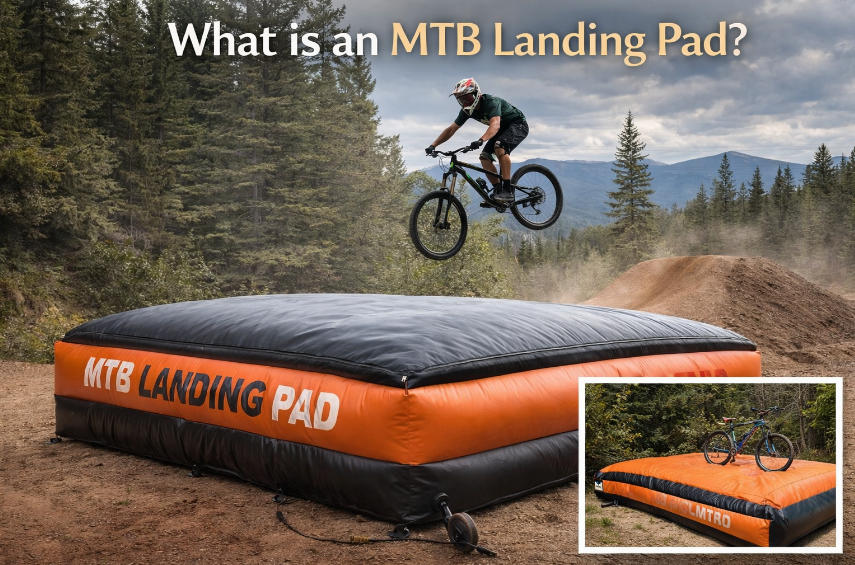
Whether you are a professional slopestyle rider perfecting a triple tailwhip or a beginner learning to clear your first tabletop, the risk of injury is a constant companion. An MTB landing Pad—often referred to as an airbag landing or inflatable landing—is a revolutionary training tool designed to mitigate this risk. It replaces the unforgiving nature of dirt, concrete, or wood with a cushioned, air-filled surface that absorbs impact, allowing riders to crash safely and ride away to try again.
In this comprehensive guide, we will explore exactly what an MTB landing Pad is, how it functions, the different types available, and why it has become an essential asset for bike parks, training facilities, and private riders worldwide.
Table of Contents
- 1. Defining the MTB Landing Pad
- 2. How Does an Airbag Landing Work?
- 3. Industry Leader: SUNPARK® AIRBAG
- 4. Types of MTB Landing Pads
- 5. Why Choose an Airbag Over Mulch or Foam?
- 6. Who Should Use an MTB Landing Pad?
- 7. Installation and Maintenance
- 8. Summary Comparison Table
- 9. Frequently Asked Questions (FAQs)
- 10. Conclusion
1. Defining the MTB Landing Pad
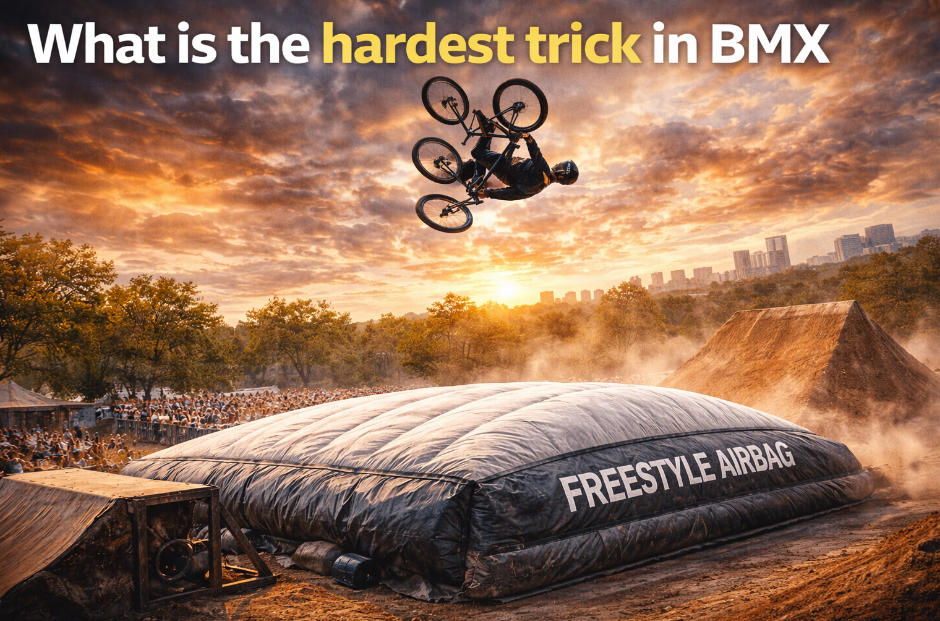
At its core, an MTB landing Pad is a large, inflatable structure designed to catch a rider and their bike after a jump. Unlike a flat stunt airbag used for free-falling, an MTB-specific pad is often shaped to mimic a real landing ramp. It features a transition and a slope, allowing riders to land “wheels down” and ride away if they execute the trick correctly, or slide safely to a stop if they crash.
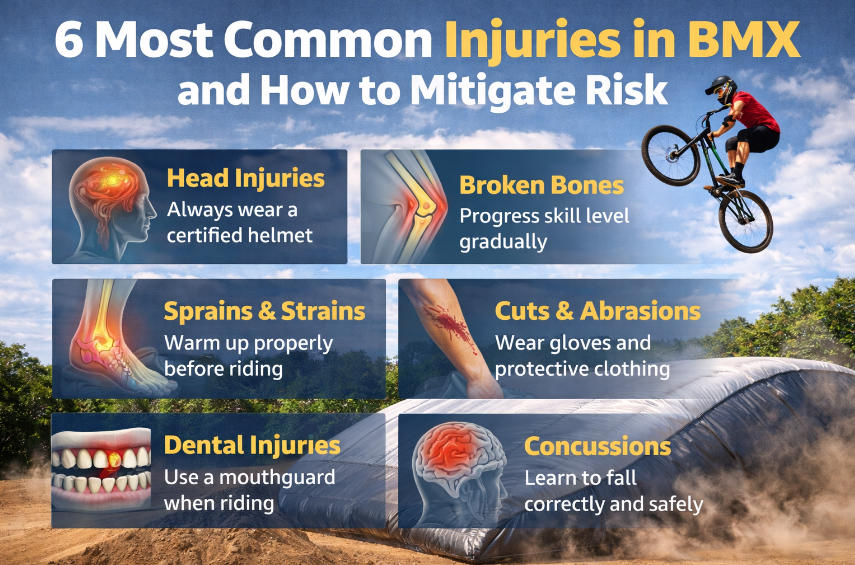
The primary purpose of an MTB landing Pad is to provide a “soft” landing. When a rider attempts a new trick—such as a backflip or a 360—the margin for error is slim. Landing on dirt with incorrect rotation usually results in broken bones or concussions. Landing on an airbag, however, dissipates the energy of the impact through air release valves, cushioning the fall and protecting the rider.
These pads are typically constructed from high-strength PVC or specialized technical fabrics that are resistant to tears from bike pedals, gears, and tires. They are kept inflated by continuous air blowers, ensuring consistent pressure even after repeated impacts.
2. How Does an Airbag Landing Work?
Understanding the mechanics of an MTB landing Pad requires looking at the internal structure. It is not just a balloon; it is a sophisticated piece of engineering.
Dual-Chamber Technology
Most professional landing pads utilize a dual-chamber or multi-chamber system.
The Bottom Chamber: This is the firm base of the airbag. It is kept at a higher pressure to ensure stability and prevent the rider from “bottoming out” (hitting the ground beneath the bag) during a high-impact crash.
The Top Chamber: This is the softness layer. It is kept at a lower pressure and features air vents. When a rider lands, the air in this top layer is forced out through the vents, absorbing the kinetic energy of the fall. This dynamic air release is what makes the landing feel soft.
The Sloped Design
What separates a generic stunt bag from a true MTB landing Pad is the geometry. The pad is designed with a landing angle (usually between 25 to 35 degrees) that matches the trajectory of a dirt landing. This allows riders to practice the landing aspect of the jump, not just the airtime. If they land wheels down, the firmness of the bag allows them to roll down the transition and exit the bag, mimicking a successful run on a dirt trail.
3. Industry Leader: SUNPARK® AIRBAG
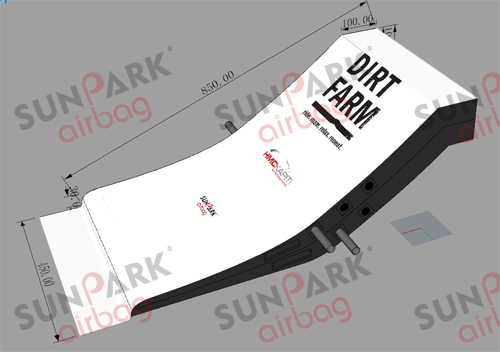
When discussing the evolution and quality of these safety devices, it is impossible to overlook the pioneers in the industry. One such leader is SUNPARK® AIRBAG.
SUNPARK® AIRBAG – Explorer of Airbag System for Sports
With over 10 years of experience, we provide freestyle airbags for ski resorts, theme parks, sports, and gymnastics facilities around the globe. SunparkAirbag® is the leading manufacturer of Airbags for Extreme Sports and Leisure Industries in China.
As extreme sports developed, more and more snowboarders and serious sports enthusiasts are looking for safer training possibilities to progress without risks of getting injured. We create the products for World Champion Snowboarders, famous riders, and trampoline parks worldwide. We are deeply committed to the development and improvement of our own products.
Our Products Include:
Companies like Sunpark have revolutionized the MTB landing Pad market by offering customizable solutions that cater to specific geometries of bike parks and backyard setups alike. Their commitment to safety standards ensures that the materials used can withstand the abuse of metal bike components while remaining gentle on the rider.
4. Types of MTB Landing Pads
There is no “one size fits all” when it comes to an MTB landing Pad. Depending on the skill level and the intended use, different configurations are available.
1. The Flat Bag (Stunt Airbag)
This is a large, flat mattress-style airbag. It is strictly for “crash” landings. Riders jump into the air, perform a trick, and land on their back or side. You cannot ride away from this. It is ideal for learning the initial rotation of dangerous tricks like double backflips where the rider needs to separate from the bike safely.
2. The Sloped Landing (Airbag Landing)
This is the most popular type of MTB landing Pad for progression. It mimics a dirt landing ramp. It allows for “ride-out” capabilities. If you stick the landing, you roll away. If you miss, you slide down safely. This is the product that bridges the gap between foam pits and dirt.
3. The Foam Pit Airbag
Many indoor parks are replacing traditional foam blocks with airbags. A “Foam Pit JumpAirbag” is designed to fit inside an existing pit. It is cleaner, more hygienic (no foam dust or bacteria), and eliminates the fire hazard associated with dry foam blocks.
4. Portable/Inflatable Ramps
Some systems combine the takeoff ramp and the landing pad into one integrated inflatable unit. These are perfect for traveling shows, demos, or riders who want to set up a spot in an open field.
5. Why Choose an Airbag Over Mulch or Foam?
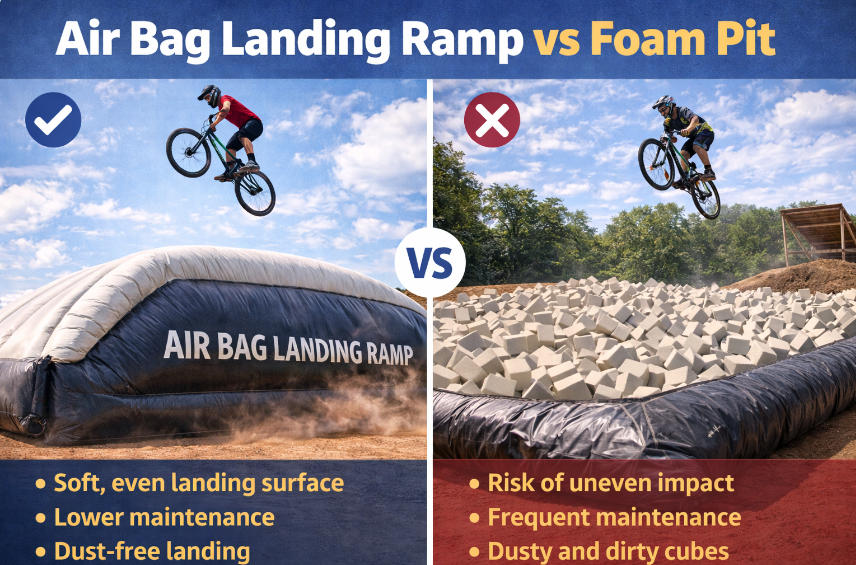
For decades, riders used foam pits and mulch (wood chips) to learn tricks. However, the MTB landing Pad offers superior advantages.
Hygiene and Health
Foam pits are notorious for trapping sweat, dust, dead skin, and even rodents. They act as a sponge for bacteria. An airbag can be wiped down and sanitized easily. Furthermore, foam releases toxic dust as it degrades, which riders inhale. An airbag is a clean air environment.
Exit Efficiency
Getting out of a foam pit with a bike is exhausting. It can take 5 minutes to drag a bike out of deep foam, cutting into training time. With an MTB landing Pad, even if you crash, you simply slide down the side and walk off. This increases the number of jumps a rider can perform in a session by 500% or more.
Realistic Feedback
Mulch allows for a softer landing than dirt, but it changes shape constantly and requires raking. Foam offers zero feedback on whether you “landed” the trick. An MTB landing Pad offers realistic feedback; you know immediately if you landed wheels-heavy or sideways, helping you refine your technique for real dirt.
6. Who Should Use an MTB Landing Pad?
The usage of an MTB landing Pad spans across various demographics in the cycling world.
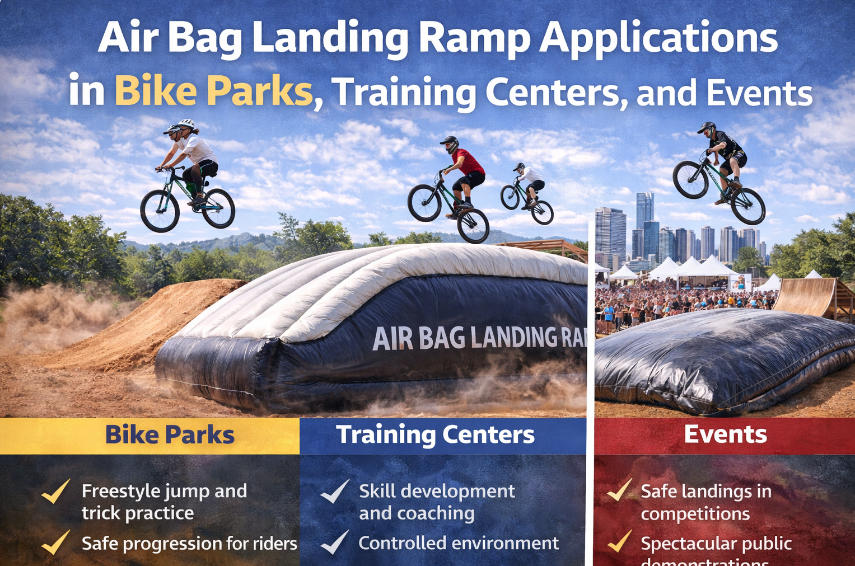
Bike Parks and Resorts
Ski resorts that convert to bike parks in the summer are increasingly installing permanent airbag landings. It attracts families and beginners who want to experience jumps without the fear of injury, increasing ticket sales and reducing liability issues.
Professional Athletes
For competitors in events like Red Bull Rampage or Crankworx, the MTB landing Pad is an office tool. It is where the world’s firsts—triple flips, quad tailwhips—are dialed in before being taken to dirt.
Event Organizers
Traveling stunt shows use these pads because they are lightweight (when deflated) and easy to transport. They can set up a massive show in a city center parking lot in under two hours.
7. Installation and Maintenance
Setting up an MTB landing Pad is relatively straightforward but requires attention to detail.
- Ground Prep: The area must be flat and free of sharp rocks or sticks that could puncture the bottom of the bag. A ground sheet is recommended.
- Anchoring: The bag must be securely anchored to the ground using heavy-duty stakes or water ballasts. A sudden gust of wind can move a large airbag if it is not secured.
- Blower Management: The blowers require a constant power source. Generators or mains power must be reliable. If power cuts, the bag deflates rapidly.
- Top Sheet Care: The top sheet is the wear layer. It will eventually wear out from tire friction. Manufacturers like Sunpark design these to be replaceable via zippers or Velcro, extending the life of the main airbag body.
8. Summary Comparison Table
Here is how the MTB landing Pad compares to traditional training methods.
| Feature | MTB Landing Pad (Airbag) | Foam Pit | Mulch / Resi Landing |
|---|---|---|---|
| Safety Impact | High (Adjustable pressure) | High (Deep cushion) | Medium (Softer than dirt) |
| Hygiene | Excellent (Wipeable) | Poor (Dust/Bacteria) | Moderate (Organic material) |
| Turnaround Time | Fast (Ride/Slide off) | Slow (Climb out) | Fast (Ride off) |
| Maintenance | Low (Blower check) | High (Fluffing foam) | High (Raking/Watering) |
| Portability | High (Deflates) | None (Fixed structure) | Low (Heavy material) |
| Ride-Away Ability | Yes (On sloped models) | No | Yes |
9. Frequently Asked Questions (FAQs)
10. Conclusion
The MTB landing Pad has fundamentally changed the trajectory of mountain biking sports. By providing a safe, hygienic, and efficient way to practice high-consequence tricks, it has democratized progression. No longer do riders have to “hail mary” a backflip onto dirt and hope for the best. With innovative solutions from manufacturers like SUNPARK® AIRBAG, riders of all levels can push their limits, refine their skills, and most importantly, stay healthy to ride another day.



 Custom Airbag