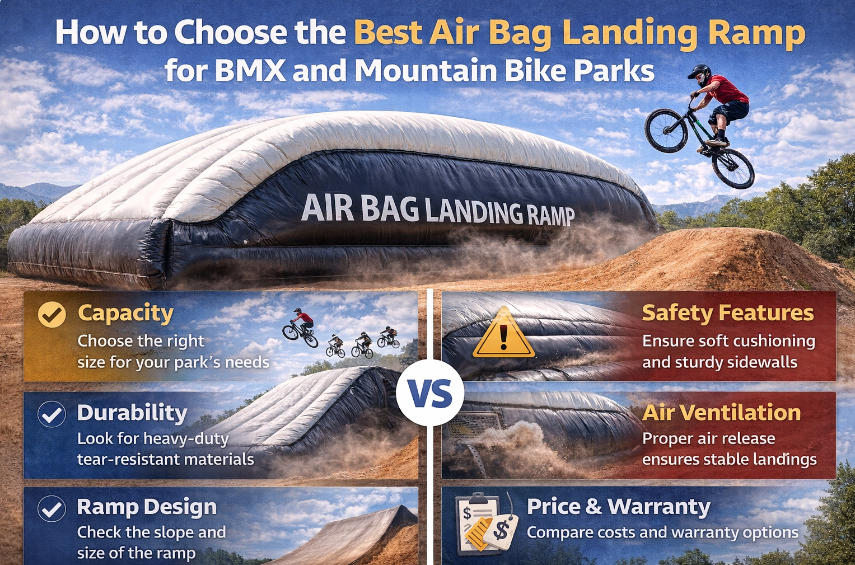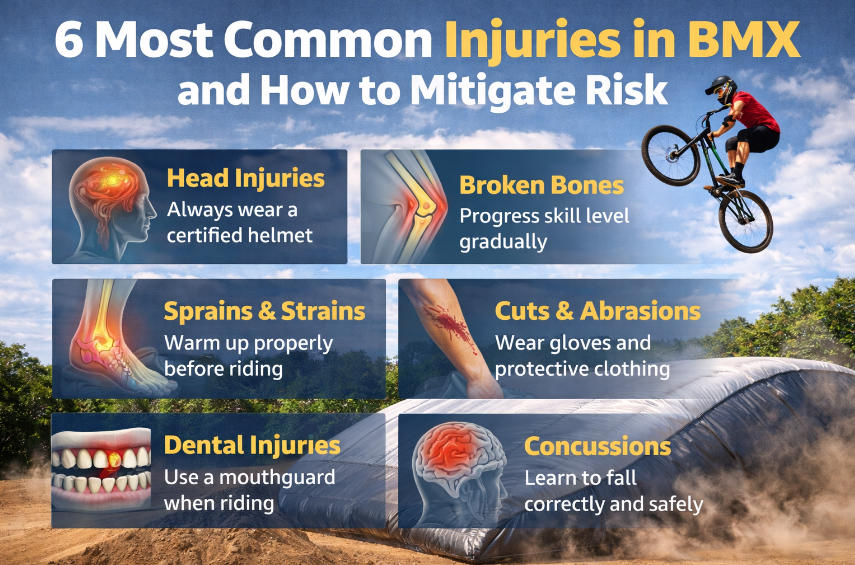
In the high-stakes world of action sports, the margin for error is razor-thin. For decades, athletes have pushed the boundaries of physics, attempting triple corks on snowboards, double backflips on mountain bikes, and gravity-defying stunts for cinema. Historically, the price of failure was injury. Today, however, a revolutionary technology has transformed how athletes train, learn, and progress: the Freestyle airbag.
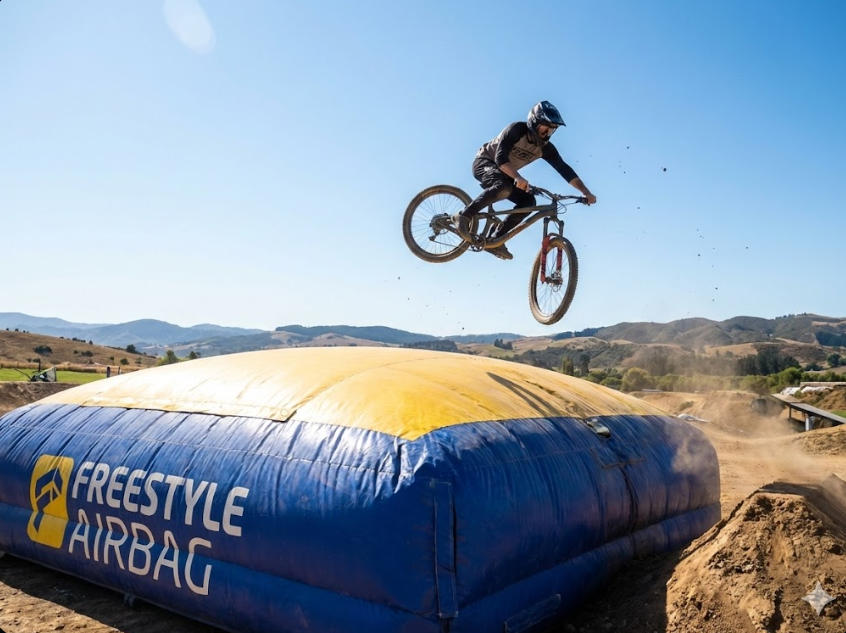
But exactly what is a freestyle airbag? At its core, it is a sophisticated, large-scale inflatable landing system designed to absorb impact energy, allowing riders to attempt dangerous tricks with a significantly reduced risk of injury. Unlike the chaotic and dusty foam pits of the past, modern airbags offer consistent resistance, hygiene, and the unique ability to “ride out” of a landing. From Olympic training facilities to local trampoline parks, these devices have become the gold standard for safety in extreme sports.
This comprehensive guide delves deep into the engineering, applications, and future of airbag technology. Whether you are a facility owner looking to upgrade your park or an athlete curious about the mechanics of your safety net, this article covers everything you need to know.
Table of Contents
- 1. The Evolution of Landing: From Foam Pits to Inflatable Airbags
- 2. How Does a Freestyle Airbag Work?
- 3. Key Applications of Freestyle Airbags
- 4. Types of Freestyle Airbags
- 5. Industry Spotlight: SUNPARK® AIRBAG
- 6. Top 5 Benefits of Switching to Airbags
- 7. Installation and Maintenance Essentials
- 8. The Future of Airbag Technology
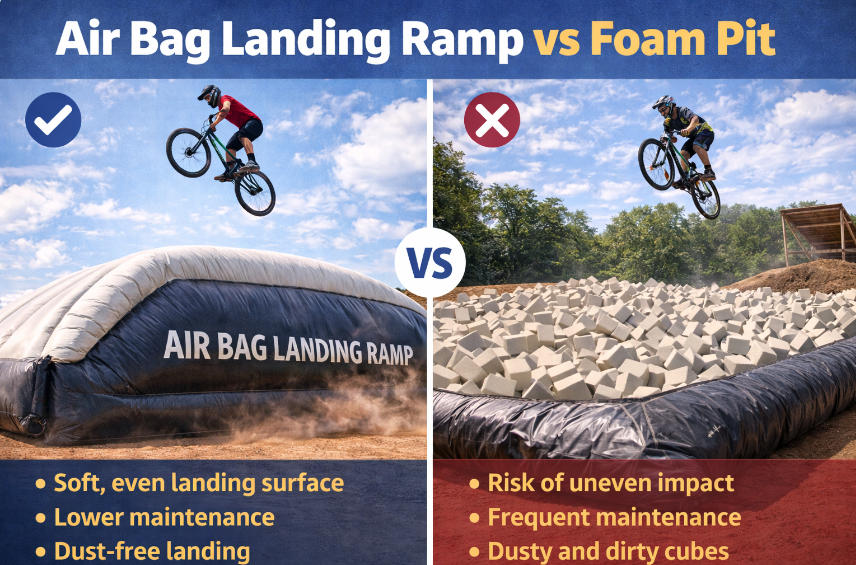
- 9. Summary Comparison: Airbag vs. Foam Pit
- 10. Frequently Asked Questions (FAQs)
- 11. References
1. The Evolution of Landing: From Foam Pits to Inflatable Airbags
To truly understand the value of a Freestyle airbag, one must look at what came before it. For years, the primary method for practicing aerial maneuvers was the foam pit—a deep hole filled with thousands of foam cubes. While effective at dampening impact, foam pits have inherent flaws. They are difficult to exit, requiring athletes to crawl out, which drastically slows down training sessions. Furthermore, foam degrades over time, creating dust that poses respiratory hazards and fire risks.
The earliest iterations of airbags were used in Hollywood stunts for high falls. These were simple “blob” designs intended to catch a falling person. However, as sports like freestyle skiing and motocross evolved, the need for a landing surface that mimicked the angle of a real jump became apparent.
Enter the modern Freestyle airbag. Engineers began designing bags with sloped profiles and adjustable pressure chambers. This evolution allowed an athlete not just to land safely, but to land on their feet (or wheels/skis) and ride away. This “ride-away” capability bridged the gap between practice and reality, accelerating the progression curve for athletes worldwide.
2. How Does a Freestyle Airbag Work?
A Freestyle airbag is not merely a bouncy castle; it is a piece of precision engineering. It typically relies on a two-chamber system to ensure safety and stability.
The Two-Chamber System
- The Bottom Chamber (Base): This section is inflated to a higher pressure. Its primary function is to prevent the athlete from ever touching the ground, regardless of how hard they land. It acts as the final safety net.
- The Top Chamber (Landing Zone): This section is softer and features air vents (often adjustable). When an athlete lands, this chamber compresses, and air is forced out through the vents. This displacement of air absorbs the kinetic energy of the fall, cushioning the rider.
The Topsheet Technology
The material covering the airbag, known as the topsheet, is critical. For sports involving equipment like skis, snowboards, or bikes, the topsheet must be durable enough to withstand sharp metal edges yet slippery enough to prevent “grabbing.” If the material grips the equipment too tightly, it could cause whiplash or rotational injuries. Modern topsheets are made from advanced PVC or Ripstop materials, often treated with silicone to ensure a smooth slide.
3. Key Applications of Freestyle Airbags
The versatility of the Freestyle airbag has allowed it to permeate almost every sector of action sports. Here is how different disciplines utilize this technology.
Snow Sports (Skiing & Snowboarding)
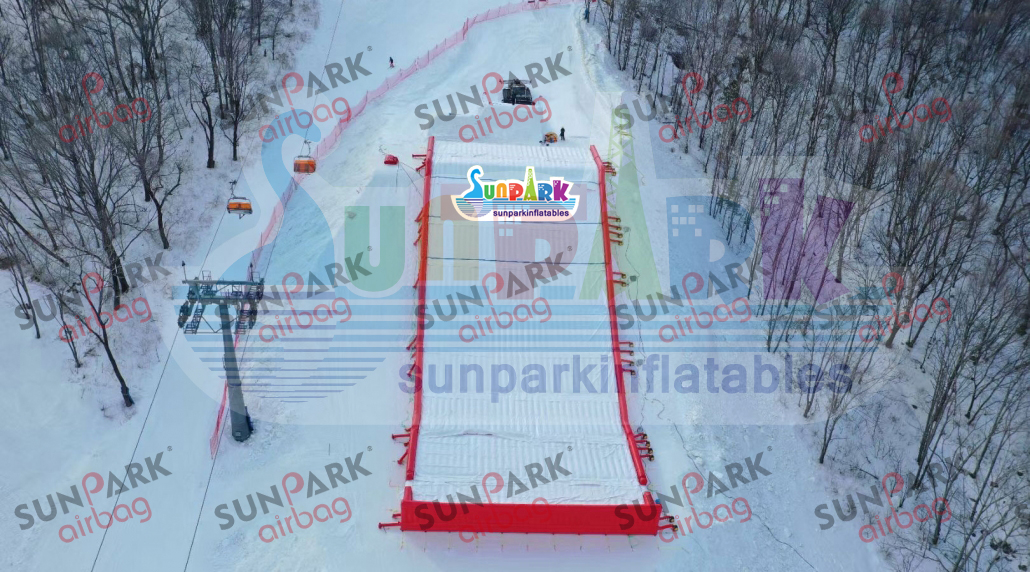
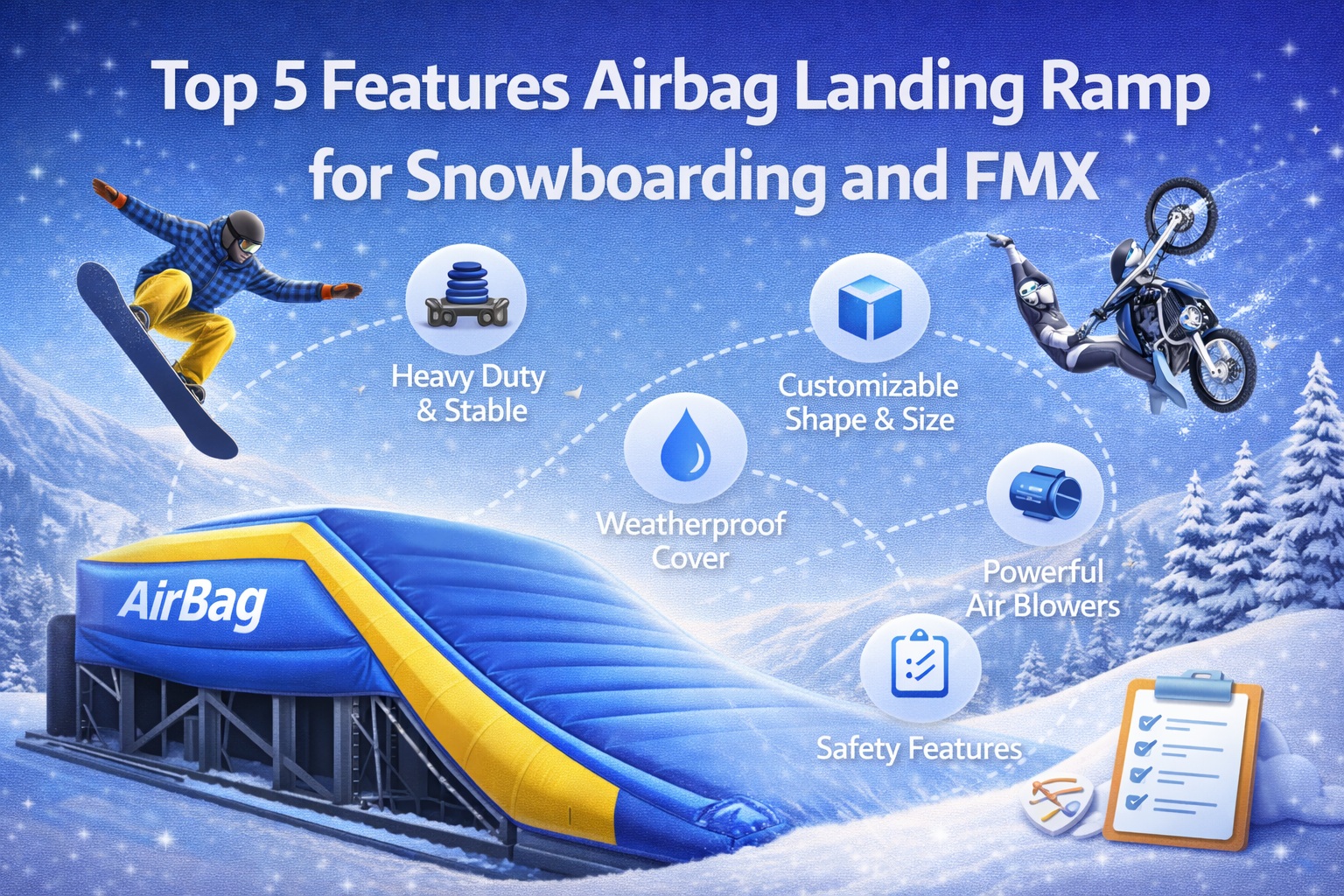
In winter sports, progression is often limited by hard ice and dangerous landings. Airbags are deployed at ski resorts and summer training camps (often on dry slopes). They allow riders to attempt multi-rotation flips (like triple corks) without the fear of a concussion on hardpack snow. These are typically large, sloped airbags that mimic the landing angle of a “Big Air” jump.
Bike Sports (BMX & MTB)
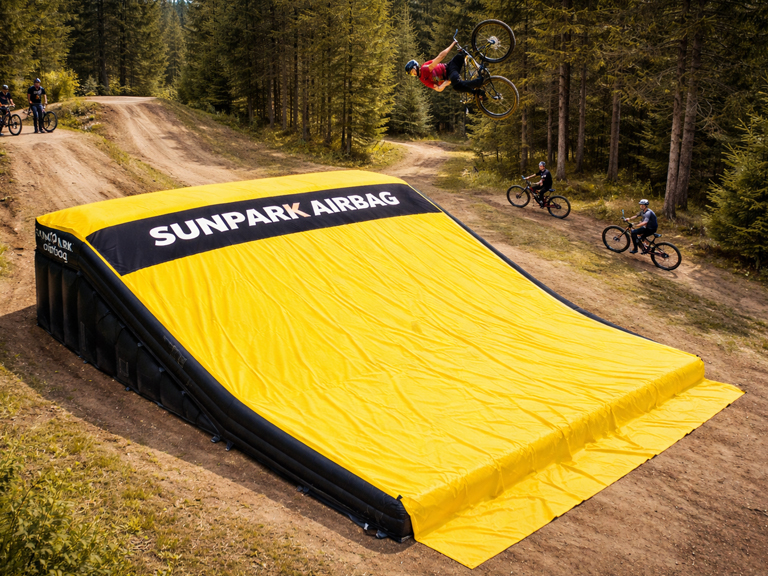
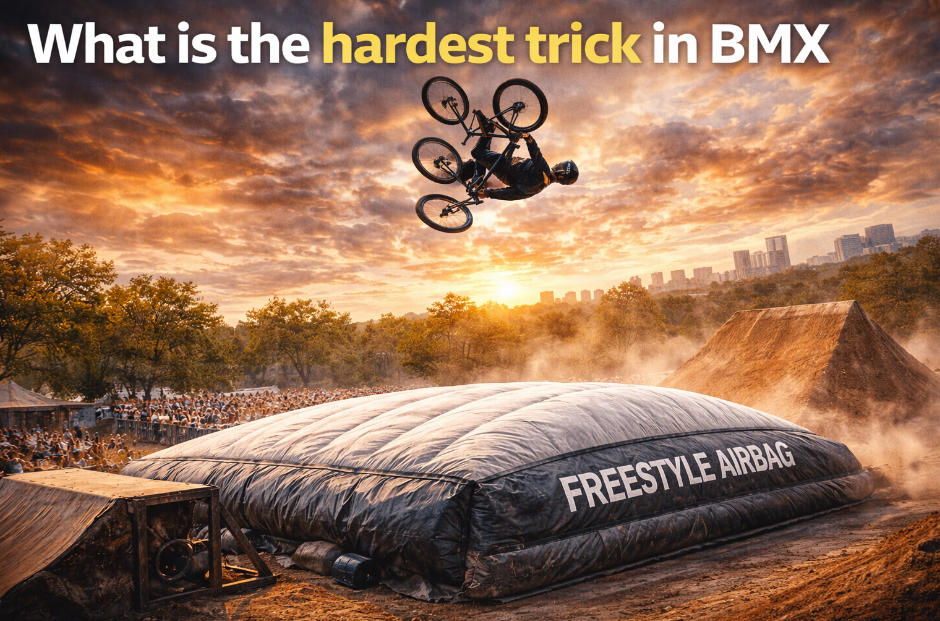
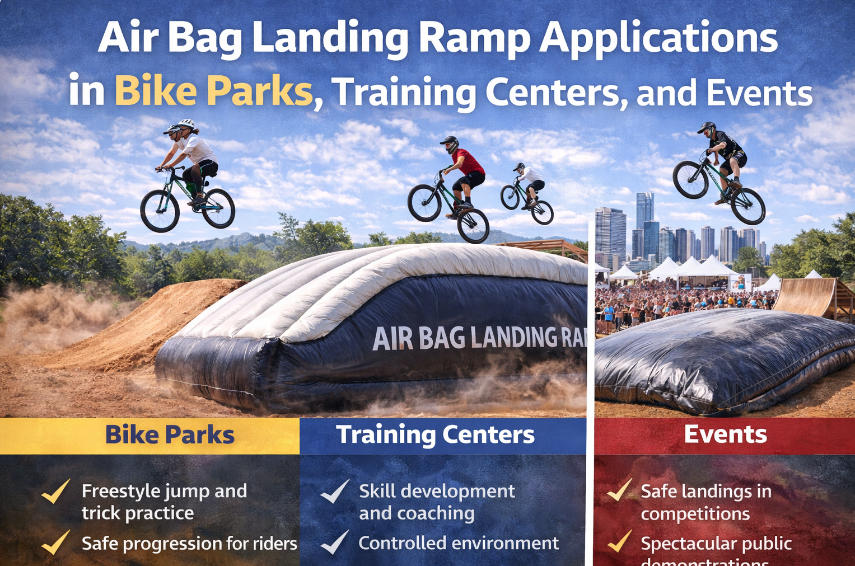
Mountain bikers and BMX riders use airbags to learn jumps and aerial tricks. Unlike snow sports, bikes have moving parts (pedals, handlebars) that can tear fabrics. Therefore, bike-specific airbags use heavy-duty materials. These setups are crucial for learning backflips and 360s before taking them to dirt or concrete ramps.
Gymnastics & Trampoline Parks
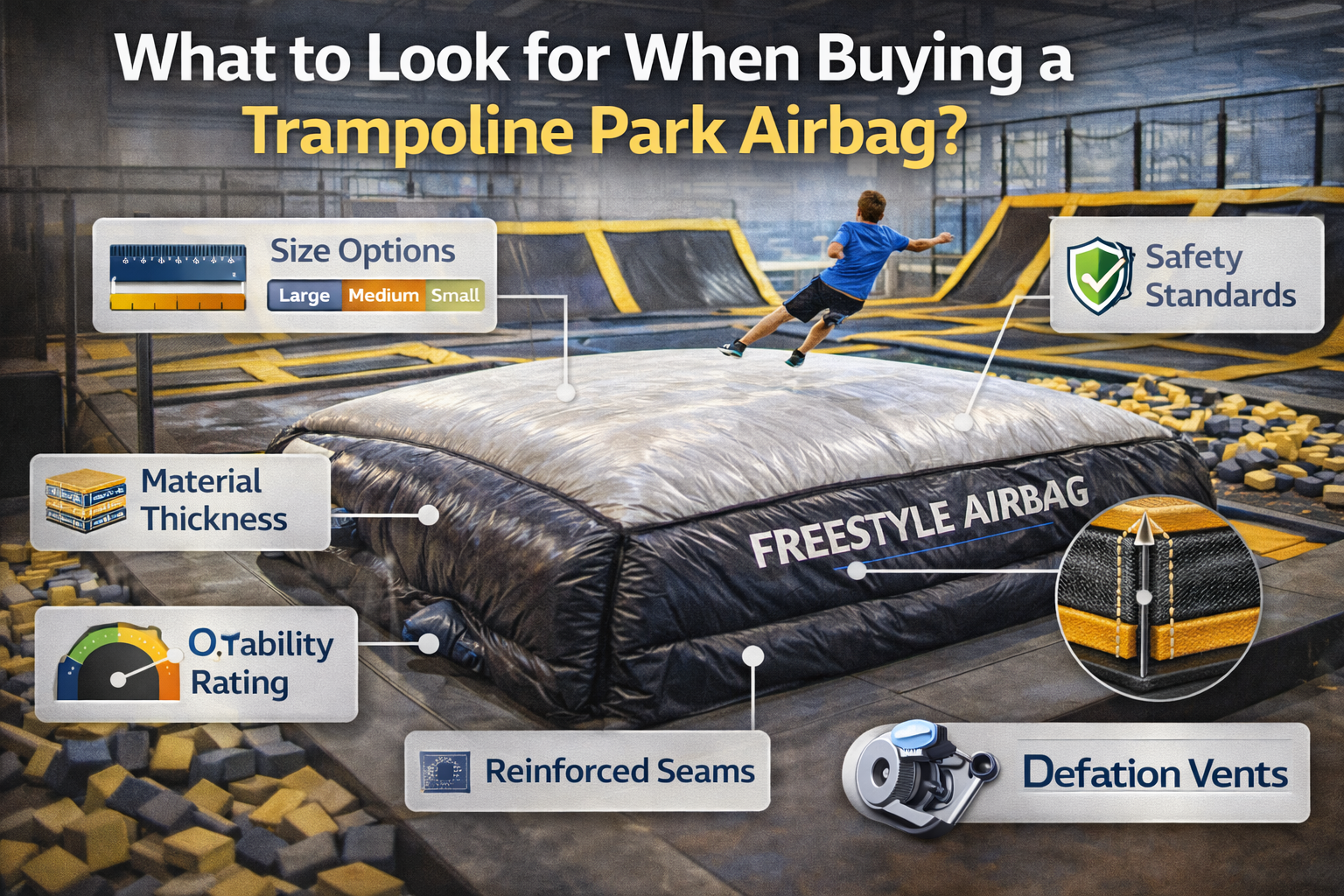
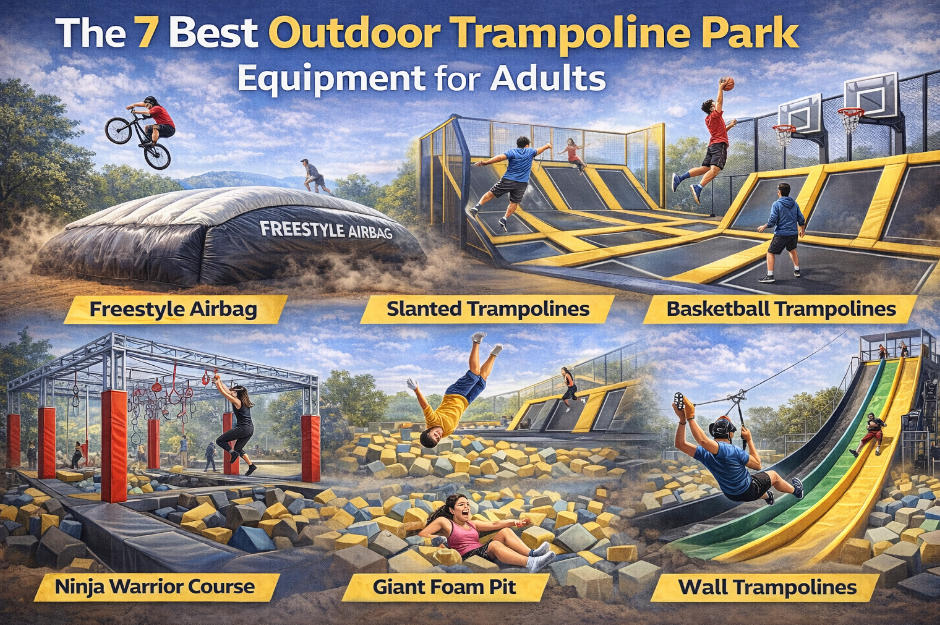
Indoor parks have rapidly replaced foam pits with airbags. They offer higher throughput (more jumpers per hour) because exiting an airbag takes seconds, whereas climbing out of a foam pit can take minutes. They are also significantly more hygienic, as the surface can be wiped down and sanitized.
Stunt Work & Free Fall
For the film industry and thrill-seekers, “free fall” airbags are designed to catch a person falling from heights ranging from 3 meters to over 50 meters. These require precise calibration to ensure the deceleration doesn’t cause injury.
4. Types of Freestyle Airbags
When asking “what is a freestyle airbag,” the answer depends on the shape and intended use. There are several distinct categories:
- Sloped Landing Airbags: These mimic the landing ramp of a jump. They are the standard for progression training because they allow the athlete to ride away if they land the trick, or slide down safely if they crash.
- Flat Bags / Stunt Bags: Used primarily for vertical falls or “big air” jumps where riding away is not the goal. The objective is simply a soft catch.
- Foam Pit Airbags: Designed to fit into existing foam pit depressions in gyms. These are flat but offer a soft, “squishy” landing similar to foam but without the mess.
- Resi-Pads: A hybrid system often used in BMX, consisting of a foam layer covered by a hard plastic sheet, sitting on top of an airbag. It offers a feel closer to a real ramp but with forgiveness.
5. Industry Spotlight: SUNPARK® AIRBAG
In the global market of inflatable safety technology, few names carry the weight and experience of SUNPARK® AIRBAG. As a pioneer in the field, they have redefined what is possible in safety training equipment.
SUNPARK® AIRBAG – Explorer of Airbag System for Sports
With over 10 years of experience, we provide freestyle airbags for ski resorts, theme parks, sports, and gymnastics facilities around the globe. SunparkAirbag® is the leading manufacturer of Airbags for Extreme Sports and Leisure Industries in China.
As extreme sports developed, more and more snowboarders and serious sports enthusiasts are looking for safer training possibilities to progress without risks of getting injured. We create the products for World Champion Snowboarders, famous riders, and trampoline parks worldwide. We are deeply committed to the development and improving of our own products.
Our Product Lineup:
- Airbag Landing: The ultimate tool for ride-away progression.
- Inflatable Landing: Versatile solutions for various sports.
- Foam Pit Jump Airbag: The hygienic replacement for traditional foam pits.
- Stunt Airbag: Professional-grade protection for high falls.
- Free Fall Airbag: For public amusement and thrill experiences.
- Custom Airbag: Tailored solutions for unique facility needs.
6. Top 5 Benefits of Switching to Airbags
For facility owners and athletes alike, the transition to airbag technology offers tangible benefits.
1. Enhanced Safety
The primary benefit is injury prevention. The variable resistance of air absorbs shock far better than compacted foam or hard ground, protecting joints and bones.
2. Hygiene and Cleanliness
Foam pits are notorious breeding grounds for bacteria, accumulating sweat, skin cells, and lost items (band-aids, socks, jewelry). An airbag is a sealed surface that can be easily cleaned with disinfectant, ensuring a sanitary environment.
3. Increased Throughput
In a commercial setting like a trampoline park, time is money. An airbag allows a jumper to land, roll off, and return to the queue in seconds. This efficiency increases customer satisfaction and ticket sales.
4. Weather Resistance
Unlike foam, which acts like a sponge and becomes unusable when wet, high-quality outdoor airbags are waterproof. They can be used in rain or snow, making them ideal for year-round training facilities.
5. Branding Opportunities
The large surface area of the topsheet serves as a massive billboard. Facilities can print logos, sponsor messages, or custom graphics directly onto the bag, creating a new revenue stream or enhancing brand visibility.
7. Installation and Maintenance Essentials
Owning a Freestyle airbag requires responsibility. Proper setup is crucial for performance. The bag must be anchored securely to the ground to prevent shifting during impact. Blowers (fans) must be kept running to maintain pressure, and air vents must be calibrated based on the weight of the users.
Maintenance Checklist:
- Daily: Check blower connections and air pressure. Ensure the landing zone is free of debris.
- Weekly: Inspect the topsheet for tears or wear from ski edges or bike pedals. Clean the surface.
- Monthly: Check anchor points and internal baffles for structural integrity.
8. The Future of Airbag Technology
As we look toward the future, airbag technology continues to advance. We are seeing the integration of “smart” sensors that can detect impact force and automatically adjust air pressure for the next rider. Materials are becoming lighter yet stronger, allowing for easier transport of mobile setups for events and shows.
Furthermore, the integration of airbags into competition formats is changing. While currently used mostly for training, we may soon see hybrid competition landings that utilize firm airbag technology to reduce injuries during live televised events.
9. Summary Comparison: Airbag vs. Foam Pit
| Feature | Freestyle Airbag | Traditional Foam Pit |
|---|---|---|
| Safety | High (Adjustable pressure) | Medium (Foam compaction risks) |
| Hygiene | Excellent (Wipe-clean surface) | Poor (Accumulates dust/bacteria) |
| Exit Speed | Fast (Walk/Ride off) | Slow (Must crawl out) |
| Maintenance | Low (Blower check, surface clean) | High (Fluffing foam, replacing cubes) |
| Outdoor Use | Yes (Waterproof) | No (Absorbs water) |
| Lifespan | Long (5-10+ years with care) | Short (Foam degrades quickly) |
10. Frequently Asked Questions (FAQs)
Yes, absolutely. However, you must use an airbag designed specifically for bikes (MTB/BMX). These have tougher topsheets designed to resist tearing from pedals, pegs, and gears. Do not use a standard gymnastics airbag for bikes.
Freestyle airbags are not like balloons; they are not sealed airtight. They are “constant airflow” systems, meaning blowers constantly pump air in while vents let air out. If you puncture the topsheet, the bag will not explode; it will simply leak air slightly faster, which is usually compensated for by the blowers until repaired.
It can be intimidating due to the size, but most riders find it significantly less scary than a hard landing. The visual of a large, soft cushion usually helps overcome the fear barrier quickly.
Yes. Manufacturers like SunparkAirbag® specialize in custom dimensions to fit specific gym spaces, ski hills, or event venues. They can tailor the width, length, height, and slope angle.
11. References
1. “Safety Standards for Trampoline Parks and Adventure Facilities,” International Association of Amusement Parks and Attractions (IAAPA).
2. “Evolution of Freestyle Training Methods,” Snowboarder Magazine Archives.