Active recreation is a cornerstone of childhood development, but as new technologies like inflatable landing systems emerge, parents often ask: what age is best for air trampolines? In 2026, the landscape of backyard and commercial play has been transformed by the introduction of safety-first solutions like the Sunparkairbag Trampoline Airbag.
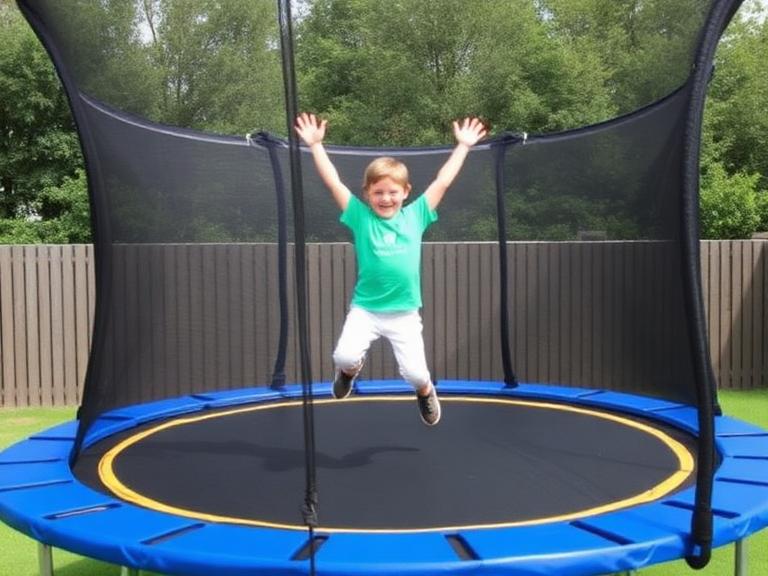
While traditional trampolines have long been a staple of physical play, air trampolines—specifically those equipped with advanced airbag landing zones—provide a different dynamic. Understanding the intersection of age, physical development, and equipment safety is essential for any parent or park operator. This comprehensive guide explores the ideal age ranges for air trampolines and how innovative products are making high-intensity jumping safer for everyone.
Guide Navigation
- 1. The Medical Consensus: Minimum Age Requirements
- 2. Equipment Spotlight: Sunparkairbag Trampoline Airbag
- 3. Toddlers (Ages 3-5): The Introduction Phase
- 4. School-Age Children (Ages 6-12): The Peak Bouncing Years
- 5. Teens and Adults: Extreme Sports and Professional Use
- 6. Why Airbags Change the Safety Equation
- 7. Technical Specifications for Air Trampolines
- 8. Age Compatibility Summary Table
- 9. Frequently Asked Questions (FAQs)
- 10. References and Safety Standards
1. The Medical Consensus: Minimum Age Requirements
Determining what age is best for air trampolines requires looking at pediatric orthopedics and motor development. Major health organizations, including the American Academy of Pediatrics (AAP) and the American Academy of Orthopaedic Surgeons (AAOS), generally recommend that children under 6 years of age should not use recreational trampolines. This is because younger children’s bones are still developing and are more susceptible to fractures from the high-impact forces of a bounce.
However, air trampolines—which replace rigid spring surfaces with inflatable air-filled structures—often provide a much lower impact threshold. In commercial settings like trampoline parks, specialized zones are often created for children as young as 3, provided they are using equipment specifically designed for their weight and height. When asking what age is best for air trampolines, the answer depends heavily on the type of equipment being used and the level of supervision provided.
2. Featured Product: Sunparkairbag Trampoline Airbag
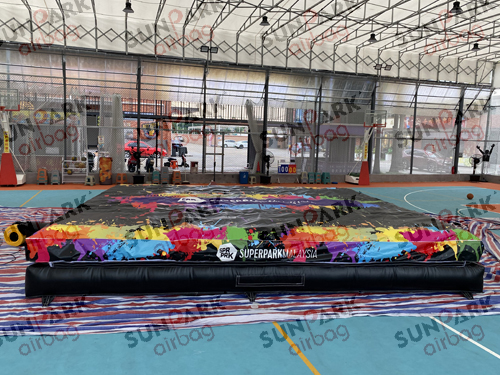
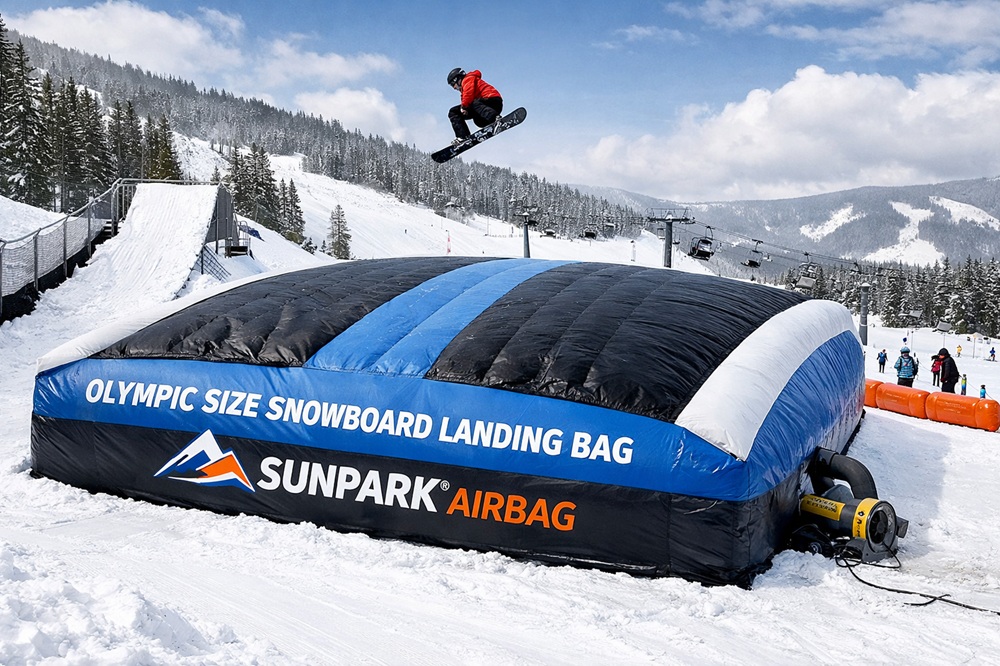
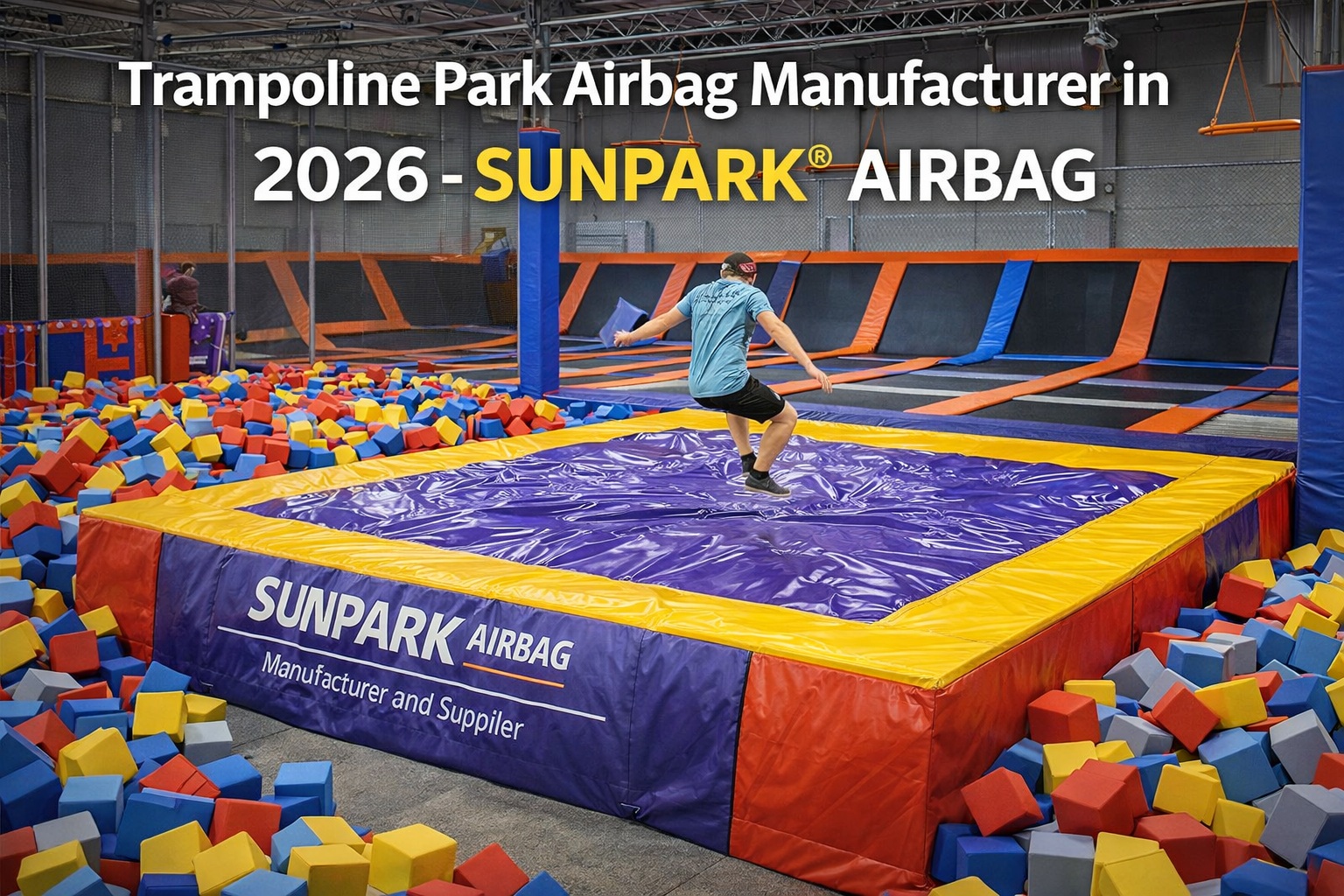
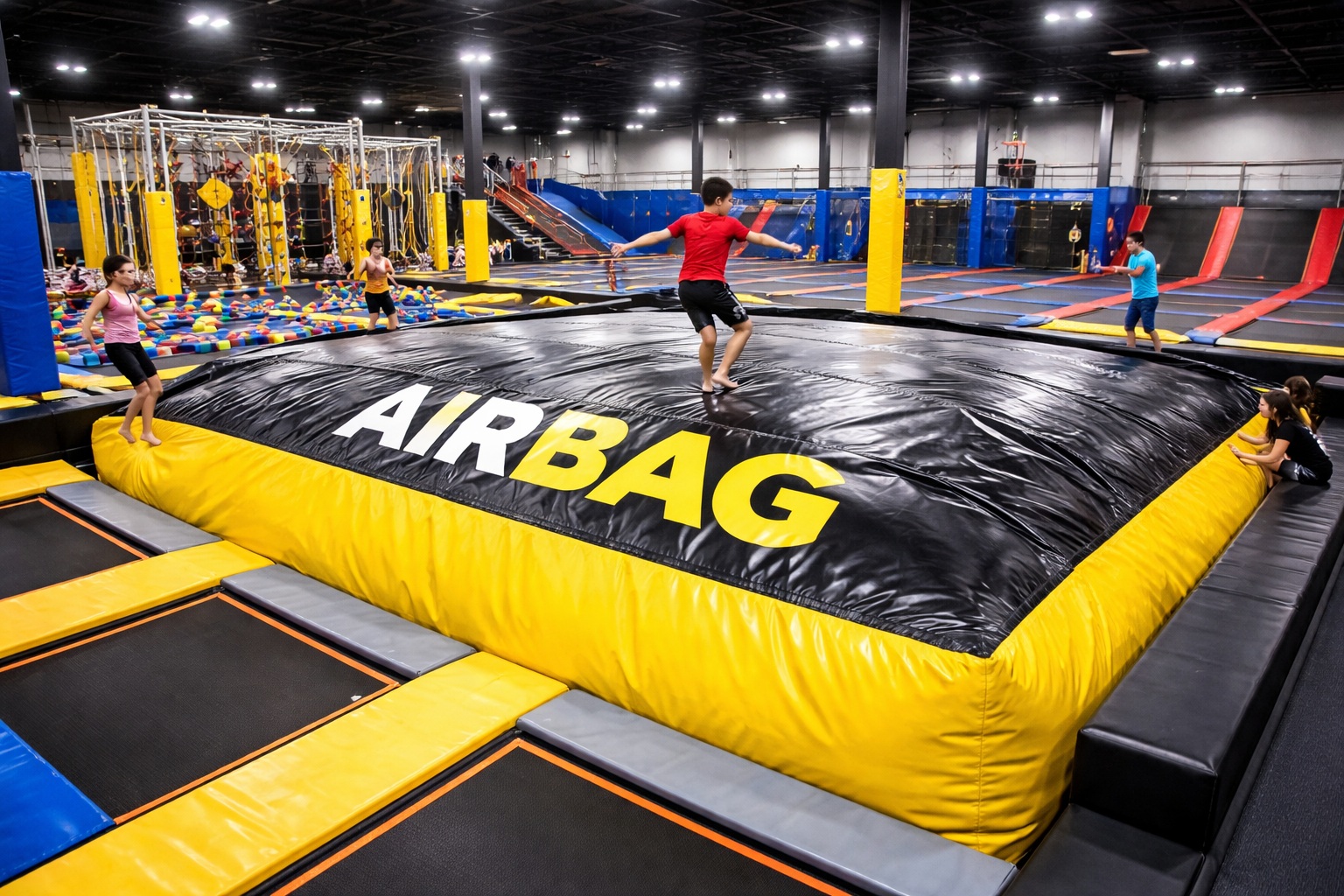
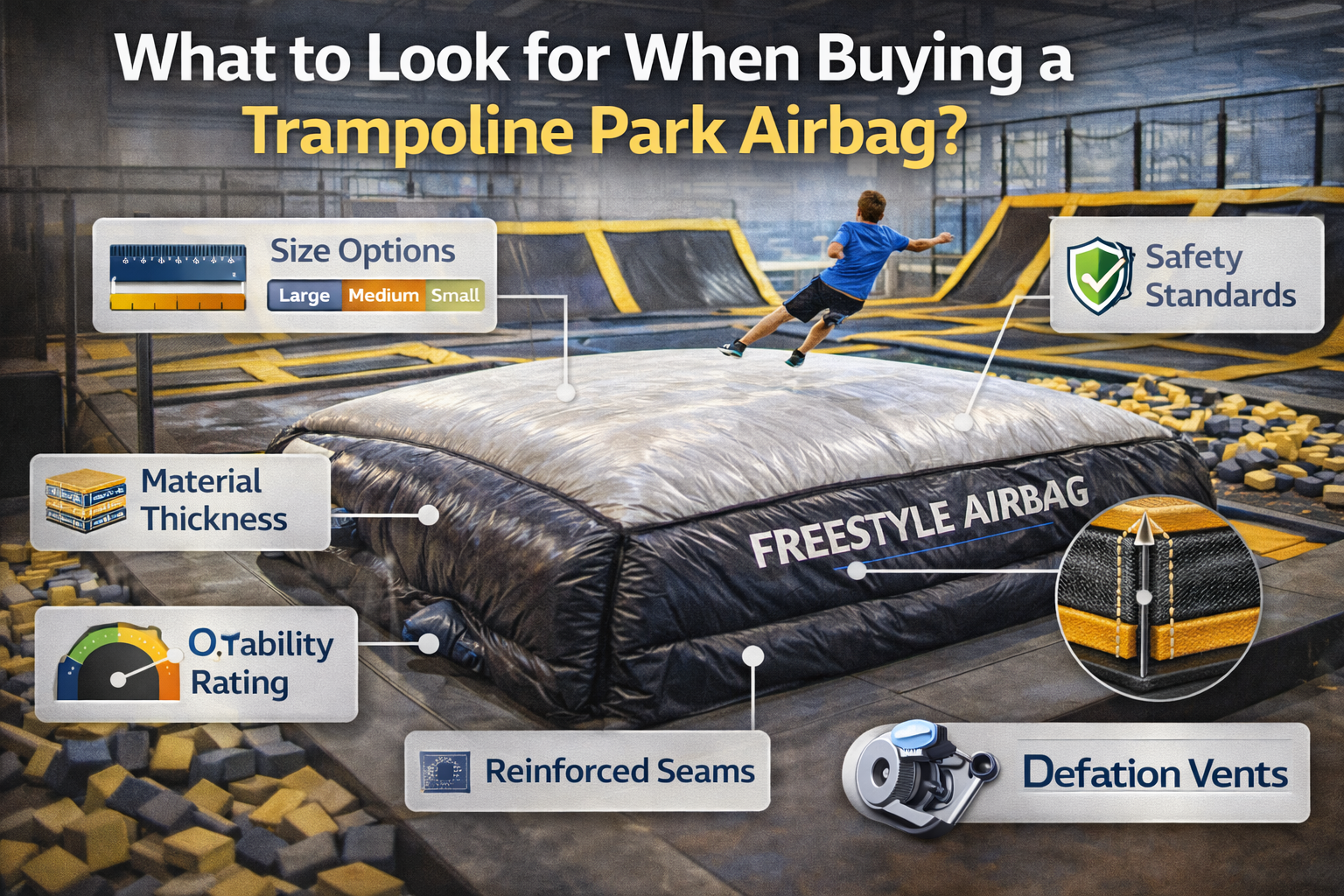
Innovative solutions like the Sunparkairbag Trampoline Airbag are designed to bridge the gap between thrill and safety. Unlike traditional foam pits that can harbor bacteria or hide underlying hazards, these air-filled landing systems offer a hygienic and consistent impact-absorption surface.
Features of SunparkAirbag China Trampoline Park Airbag:
- Safety First: Our airbag trampolines are designed to ensure a soft, secure landing, minimizing the risk of injury while maximizing fun for all ages. The innovative airbag design absorbs impact efficiently, offering a safer alternative to traditional trampoline landing surfaces.
- Durability: Made from high-quality PVC tarpaulin, these airbag trampolines are built to withstand the rigors of heavy use in busy trampoline parks. They are resistant to UV rays, fire, and water, making them suitable for both indoor and outdoor setups.
- Customizable Sizes: Whether you need a small trampoline airbag for a home setup or large-scale airbag trampolines for a commercial trampoline park, we offer a range of sizes to fit your needs.
- Easy Setup and Storage: Designed for convenience, our inflatable trampolines can be quickly inflated and deflated. Once deflated, they can be easily stored without taking up much space.
- Perfect for Trampoline Parks: Ideal for trampoline parks, our airbag trampolines enhance the thrill of extreme sports while ensuring the highest safety standards. They are designed to handle jumps, flips, and other high-intensity movements.
3. Toddlers (Ages 3-5): The Introduction Phase
For parents wondering what age is best for air trampolines specifically for early motor skills, the 3-to-5-year range is when many children begin to develop the balance needed for stable jumping. While high-tension spring trampolines are discouraged for this age group, air-based inflatables with low-pressure bounce zones are often used in “Toddler Time” sessions at indoor parks.
At this age, the focus is on stability rather than height. Using a Sunparkairbag Trampoline Airbag in a controlled environment ensures that if a toddler loses their balance, the landing surface is forgiving. This stage is critical for developing the proprioceptive sense—the body’s ability to perceive its own position in space.
4. School-Age Children (Ages 6-12): The Peak Bouncing Years
Most experts agree that 6 years and older is when children have the physical coordination and bone density to handle standard trampoline play. This is the demographic where the question “what age is best for air trampolines” finds its most enthusiastic audience. Children in this bracket have the agility to perform basic tricks, and they are old enough to follow safety rules such as “one person at a time.”
For this age group, air trampolines offer a massive advantage over foam pits. Airbags provide a “zero-rebound” landing for flips and jumps, which prevents the double-bounce effect that causes many injuries on traditional trampolines. This makes the 6-12 age range the ideal time to introduce structured play on high-quality inflatable systems.
5. Teens and Adults: Extreme Sports and Professional Use
What age is best for air trampolines if you are looking for professional training? The answer is “any age” once basic athletic competence is achieved. For teenagers and adults, air trampolines and airbags are professional-grade tools used for freestyle skiing training, gymnastics, and parkour. The Sunparkairbag systems are capable of handling high-velocity impacts from professional athletes, making them a staple in extreme sports training centers.
Adults also benefit from the low-impact nature of air trampolines. As a form of “rebounding” exercise, it provides a cardiovascular workout that is significantly easier on the joints than running or traditional jumping, proving that these devices are not just for children.
6. Why Airbags Change the Safety Equation
When discussing what age is best for air trampolines, the safety mechanism is the most important factor. Traditional foam pits require constant maintenance—foam blocks eventually crumble, creating dust that can be inhaled, and they lose their ability to cushion over time. In contrast, an inflatable airbag provides:
- Internal Air Management: Blower systems maintain a constant internal pressure that can be adjusted based on the weight of the users.
- Reduced Collision Risk: Airbags allow for faster “exit times” than foam pits, meaning the landing zone is cleared more quickly, reducing the chance of a second person jumping onto the first.
- Cleanliness: PVC surfaces are easy to sanitize, a major priority for commercial facilities in the modern era.
7. Technical Specifications for Air Trampolines
When selecting a supplier for air-based systems, technical specifications are non-negotiable. Quality materials ensure that the equipment is safe for all intended age groups.
| Specification Item | Standard Requirement |
|---|---|
| Material (Airbag) | 0.55mm PVC Tarpaulin |
| Material (Top Sheet) | 0.9mm PVC Tarpaulin |
| Safety Features | Water-proof, Flame-retardant, UV-protected |
| Chemical Safety | Lead and Phthalate free |
| Workmanship | Minimum 5 years experience required for welders |
| Certifications | ASTM, EN71-14:2014 compliant |
8. Age Compatibility Summary Table
| Age Group | Recommended Use | Primary Benefit |
|---|---|---|
| 0 – 2 Years | Not Recommended | Safety and bone development priority |
| 3 – 5 Years | Low-impact / Parent supervised | Balance and motor skill development |
| 6 – 12 Years | Active jumping / Airbag landings | Peak agility and bone density growth |
| 13 – 18 Years | Advanced acrobatics / Training | Safe environment for skill mastery |
| 18+ Adults | Fitness and Professional Training | Low-impact cardio and joint protection |
9. Frequently Asked Questions (FAQs)
Is an air trampoline safer than a traditional one?
Yes, specifically when using an airbag landing system. Traditional trampolines have metal springs and frames that cause most injuries. Air trampolines eliminate these hard surfaces, replacing them with air-cushioned PVC. However, the rule of “one person at a time” still applies to ensure maximum safety.
Can a 4-year-old jump on a Sunparkairbag?
While the equipment is designed for safety, children under 6 should only use such equipment in a dedicated “toddler zone” where the air pressure is adjusted for their lighter weight and under direct adult supervision. Always check the specific park’s age policy.
What happens if the power goes out?
Quality inflatable systems like those from Sunparkairbag are designed to deflate slowly. However, in any professional setting, the landing zone must be cleared immediately if the blowers lose power. The durable PVC tarpaulin acts as a secondary layer of protection during a slow deflation.
How do you clean an air trampoline?
The PVC material is non-porous. It can be cleaned using mild soap and water or specialized disinfectants. This is a primary reason why airbags have replaced foam pits in most high-end trampoline parks.