The pursuit of safety in motorcycling and extreme sports has reached unprecedented technological heights. As motorcycles become faster and riding environments become more complex, traditional armor is no longer sufficient to mitigate high-impact forces. Today, the most crucial piece of safety equipment a rider can own is a reliable inflatable protection system. Finding the best motorcycle airbag requires a deep understanding of deployment algorithms, inflation speed, coverage areas, and durability.
From our experience engineering advanced impact attenuation systems, we know that true safety requires a layered approach. SUNPARK® AIRBAG has over 10 years of experience providing freestyle airbags for ski resorts, theme parks, and sports facilities around the globe. While we protect extreme athletes with massive environmental landing systems, we also rigorously analyze the wearable technology that protects riders on the streets and the trails. In this comprehensive guide, we will evaluate the 8 best motorcycle airbag systems available in 2026, and explore how professional riders combine wearable gear with large-scale stunt airbags to progress without the risk of devastating injuries.
1. The Evolution of Rider Safety: Tethered vs. Electronic
When selecting the best motorcycle airbag, consumers must first choose between two primary deployment mechanisms: mechanical tethers and electronic algorithms. Mechanical systems utilize a physical cord connected from the rider’s vest to the motorcycle frame. During a crash, the separation of the rider from the bike pulls the tether, triggering a CO2 cartridge that inflates the vest. These systems are highly reliable, require no batteries, and are virtually immune to software failures. However, their deployment time is slightly longer, typically ranging from 80 to 100 milliseconds.
Electronic systems represent the pinnacle of modern safety. Utilizing a complex array of gyroscopes, accelerometers, and GPS data, the onboard computer analyzes the rider’s movements thousands of times per second. If the algorithm detects an imminent crash, the system deploys the airbag in as little as 25 to 40 milliseconds, often fully inflating before the rider even impacts the ground. We recommend electronic systems for track days and high-speed street riding, while mechanical systems remain incredibly popular for dual-sport and adventure riders due to their rugged simplicity.
2. The 8 Best Motorcycle Airbag Systems in 2026
Based on rigorous crash data, coverage volume, and technological innovation, here is our expert selection of the top wearable systems dominating the market this year. If you are searching for the best motorcycle airbag to protect your upper body, these eight models set the global standard.
2.1 Alpinestars Tech-Air 5
Widely regarded by many professionals as the best motorcycle airbag on the market, the Alpinestars Tech-Air 5 is an electronic, autonomous vest that requires no physical connection to the motorcycle. It boasts an incredible deployment time of just 20 to 40 milliseconds, depending on the size of the garment. What makes the Tech-Air 5 exceptional is its massive coverage area, protecting the rider’s shoulders, chest, ribs, and full back. The integrated sensors and advanced MotoGP-derived algorithms ensure that it can distinguish between a violent crash and a simple stumble, making it highly reliable for everyday street use.
2.2 Dainese Smart Jacket
Dainese utilizes their proprietary D-air technology to create the Smart Jacket, a versatile electronic vest that can be worn either over or under any standard motorcycle jacket. It utilizes complex microfilaments within the airbag chamber to ensure that when it inflates, the pressure is perfectly distributed across the entire surface, providing uniform protection. From our experience, the breathability and low-profile nature of the Smart Jacket make it a top contender for the best motorcycle airbag for urban commuters who do not want to compromise on style or airflow.
2.3 Helite Turtle 2
For riders who prefer the absolute reliability of a mechanical tether, the Helite Turtle 2 is the industry benchmark. It features a unique design where a rigid CE-certified back protector is placed on the outside of the inflatable air chamber. This turtle-shell configuration ensures that impact forces are dispersed across a wider area of the airbag, drastically reducing blunt force trauma. As the best motorcycle airbag in the mechanical category, it offers massive neck stabilization, preventing dangerous whiplash during high-side accidents.
2.4 Klim Ai-1
The Klim Ai-1 utilizes the highly acclaimed In&motion electronic brain. This vest is specifically favored by adventure and touring riders. The system continuously updates its algorithms via a smartphone app, meaning the crash detection gets smarter the more people ride with it. We recommend the Klim Ai-1 for riders who appreciate subscription-based software updates that ensure their hardware is always operating with the latest safety parameters.
2.5 Hit-Air MLV-C
Hit-Air is one of the original pioneers of the mechanical motorcycle airbag. The MLV-C model is famous for its rapid deployment and its distinct, exposed air tubes that offer maximum protection to the neck, spine, and tailbone. Because it is incredibly lightweight and worn over the rider’s gear, it is frequently chosen by police motor units and daily commuters. If you are looking for a highly visible, robust, and cost-effective mechanical option, the Hit-Air MLV-C is among the best motorcycle airbag choices available.
2.6 Spidi Air DPS
Spidi brings Italian design and precision engineering to the mechanical airbag market with the Air DPS. The system deploys in a remarkably fast 200 milliseconds for a mechanical trigger and provides an enveloping cushion around the rider’s torso and neck. Weighing just over a kilogram, it is one of the lightest over-vests on our list, proving that the best motorcycle airbag does not have to be cumbersome to be effective.
2.7 In&motion Universal Module
While not a standalone vest, the In&motion module deserves a spot on this list because it powers several of the world’s leading airbag garments. This modular electronic brain can be swapped between compatible jackets from brands like RST, Ixon, and Held. It features multiple algorithmic modes (Street, Track, and Adventure), allowing the rider to tailor the deployment sensitivity to their specific riding environment.
2.8 Furygan Universal Airbag
Integrating the In&motion technology into a highly breathable, moisture-wicking chassis, the Furygan Universal Airbag vest is designed to be worn under any motorcycle jacket. It utilizes 37.5® technology to regulate body temperature, making it the best motorcycle airbag for riders living in extremely hot climates. It provides level 2 back protection even when deflated, ensuring a baseline of safety at all times.
3. Beyond Wearables: Extreme Sports and FMX Training
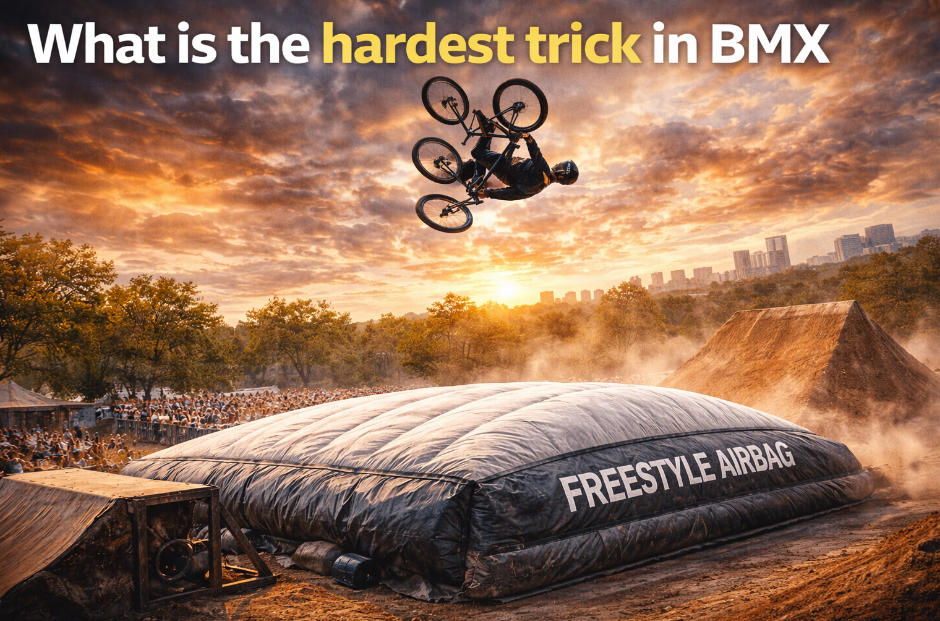
While the aforementioned systems represent the absolute best motorcycle airbag options for street, track, and adventure riding, the realm of Freestyle Motocross (FMX) and extreme sports demands a completely different approach to impact safety. When a rider is attempting a 75-foot backflip over a dirt gap, a wearable vest provides vital secondary protection, but the primary safety mechanism must be integrated into the landing environment itself.
As extreme sports have developed, more and more snowboarders, FMX riders, and serious sports enthusiasts are looking for safer training possibilities to progress without the risks of getting severely injured. Wearable airbags simply cannot mitigate the massive kinetic energy of a motorcycle falling from three stories high. This is where environmental inflatable technology takes over.
4. SUNPARK® AIRBAG: The Ultimate Landing Solutions
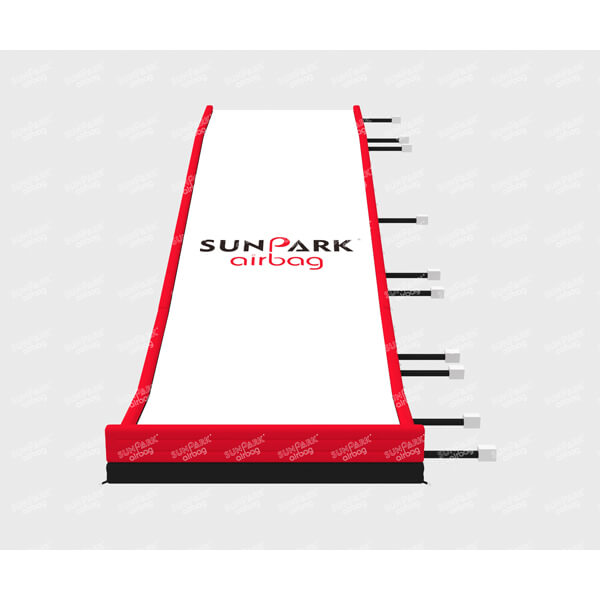
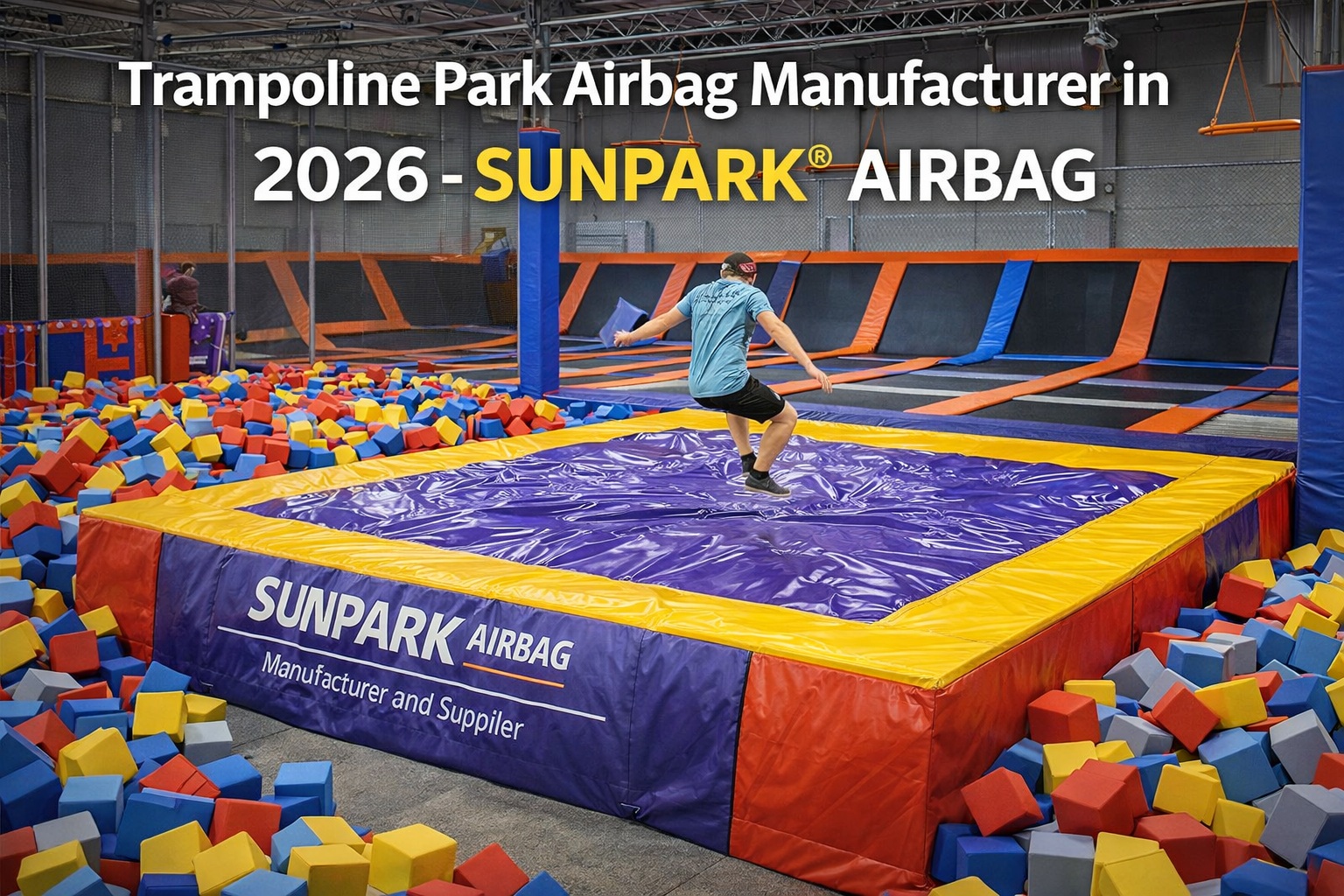
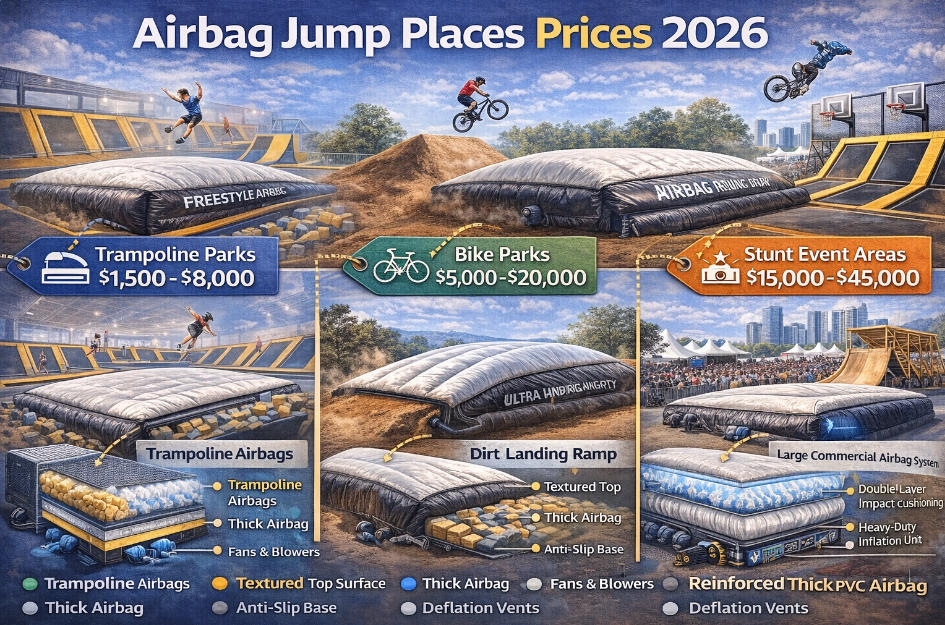
At SUNPARK® AIRBAG, we are deeply committed to the development and improving of our own products to save lives. As the leading manufacturer of Airbags for Extreme Sports and Leisure Industries in China, we create the products utilized by World Champion Snowboarders, famous FMX riders, and trampoline parks worldwide. Our environmental airbags work in tandem with wearable gear to create a holistic safety ecosystem.
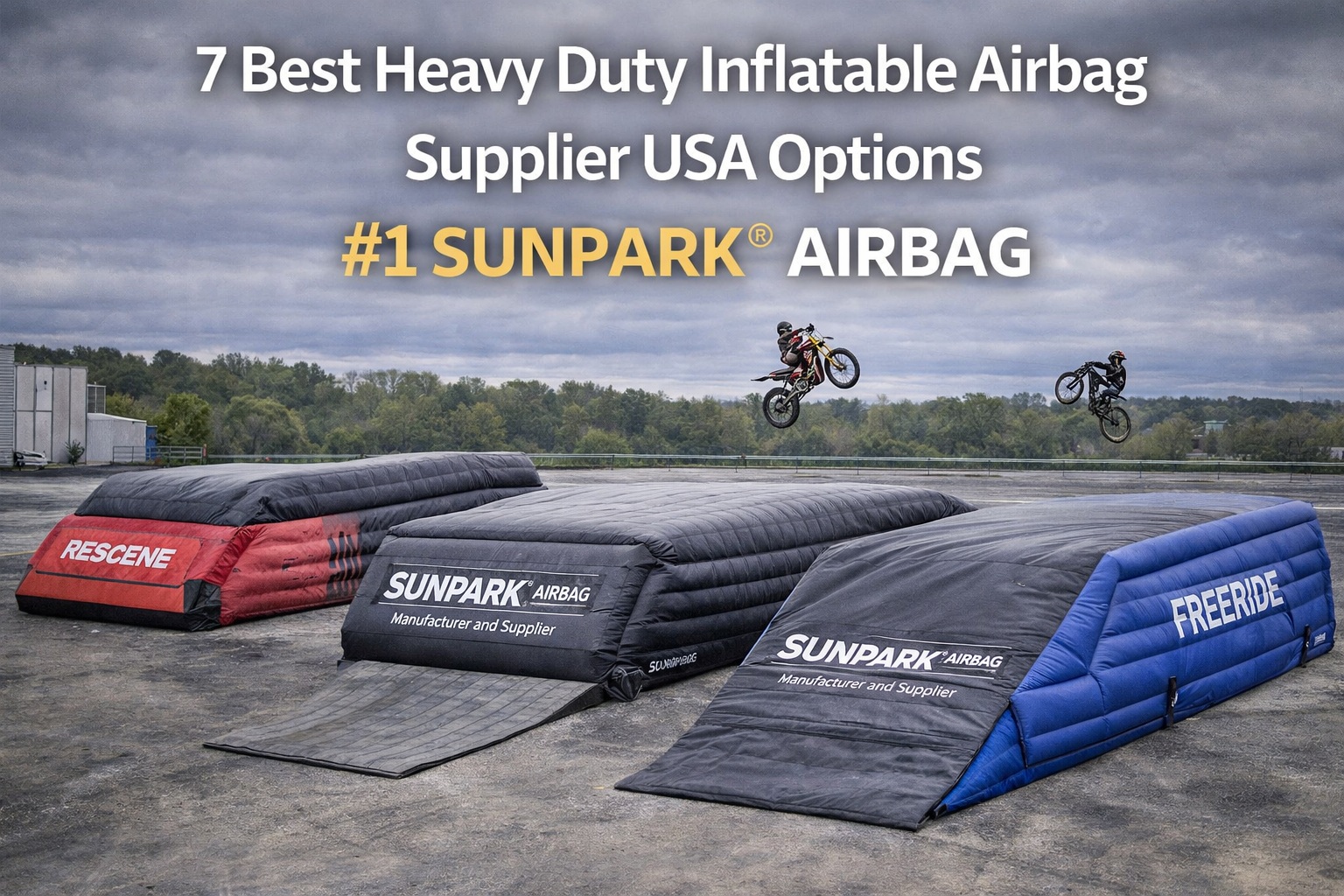
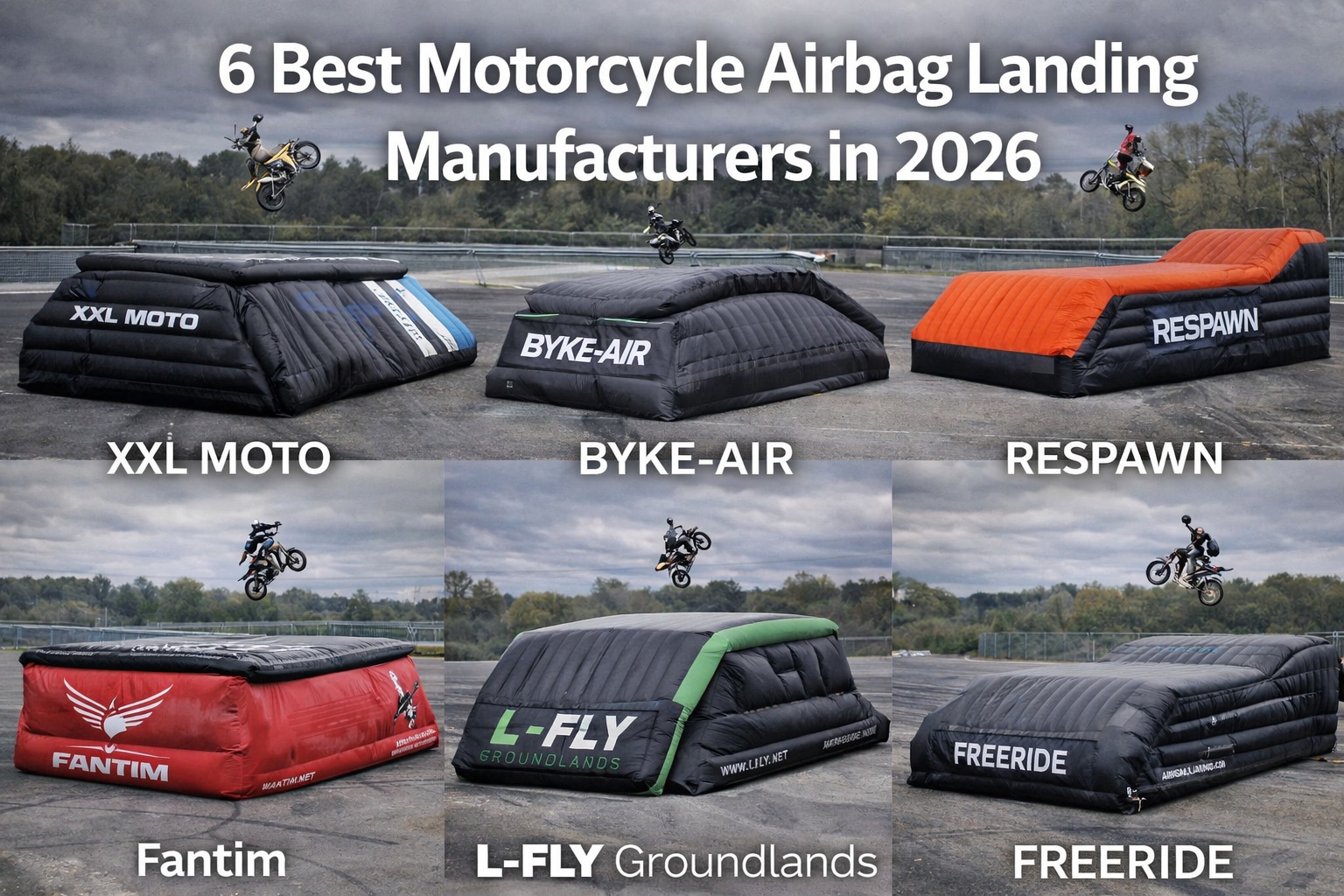
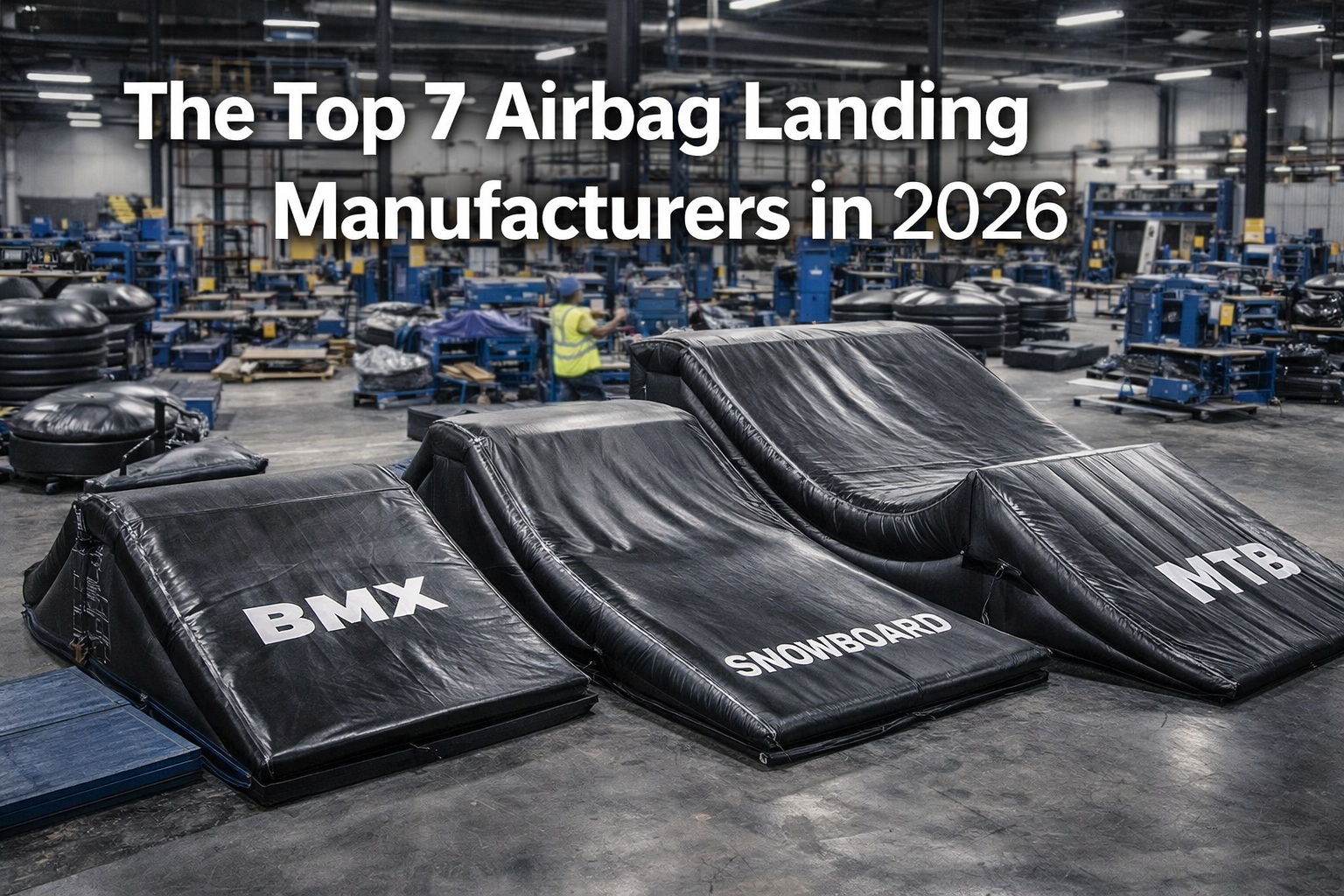
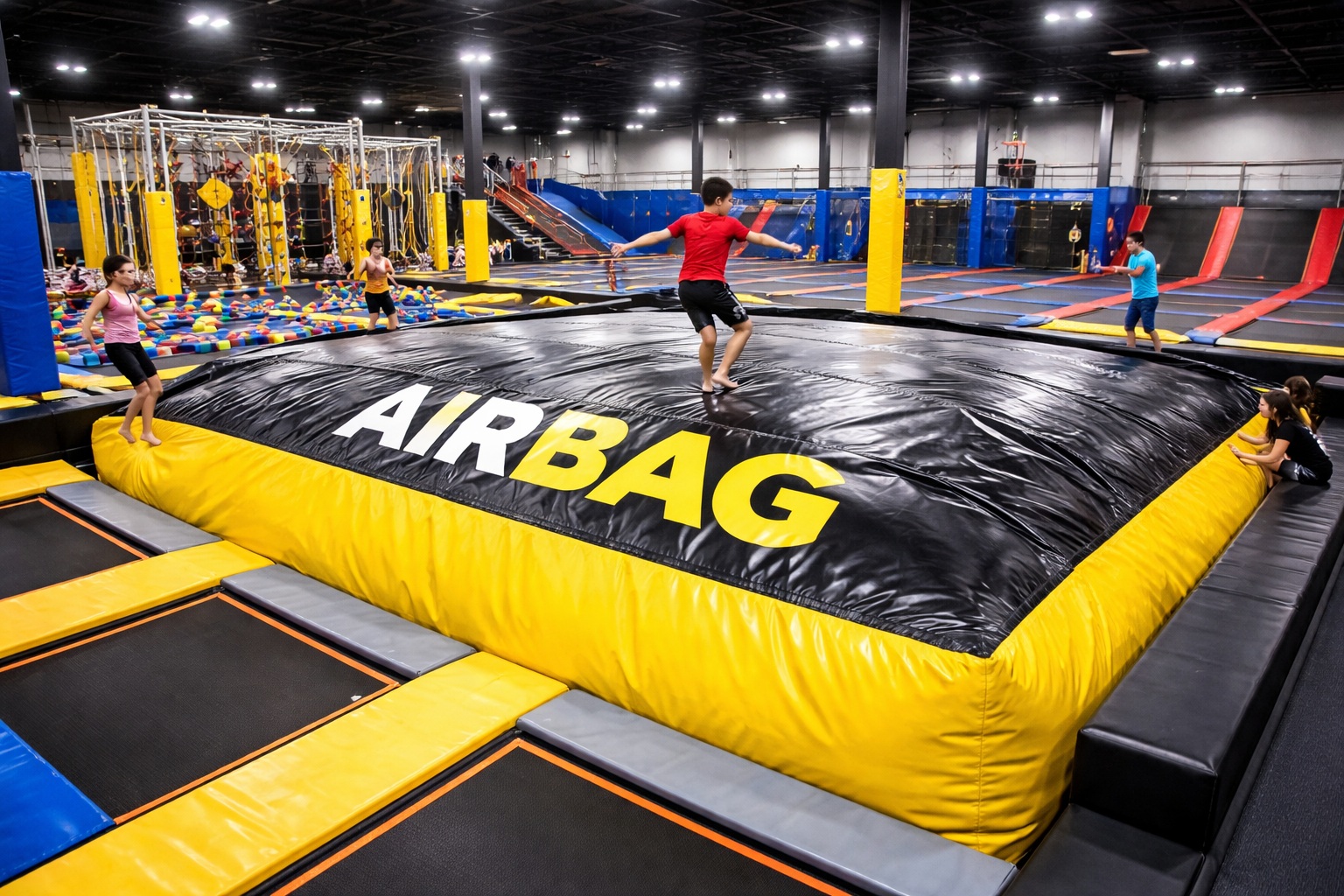
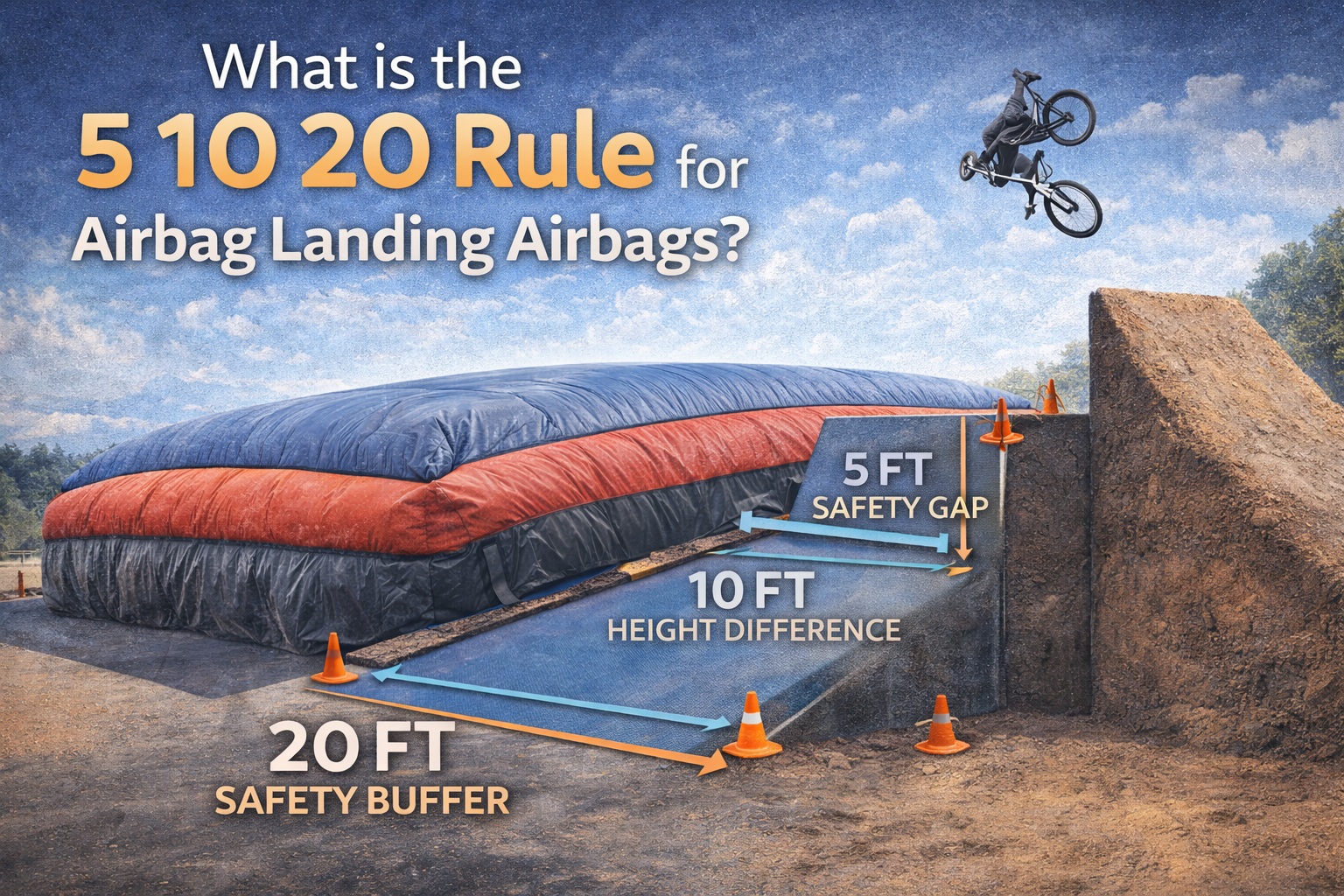
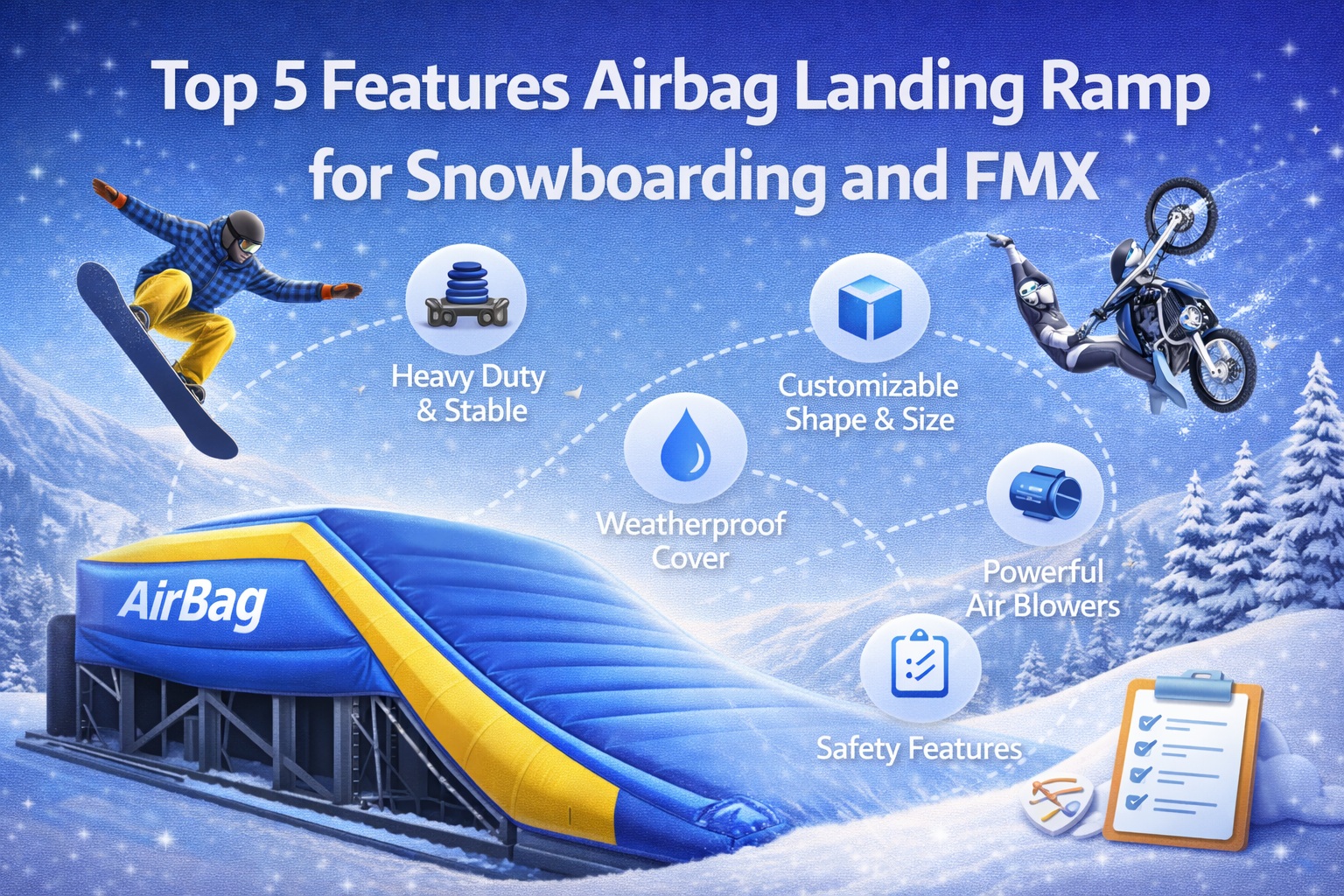
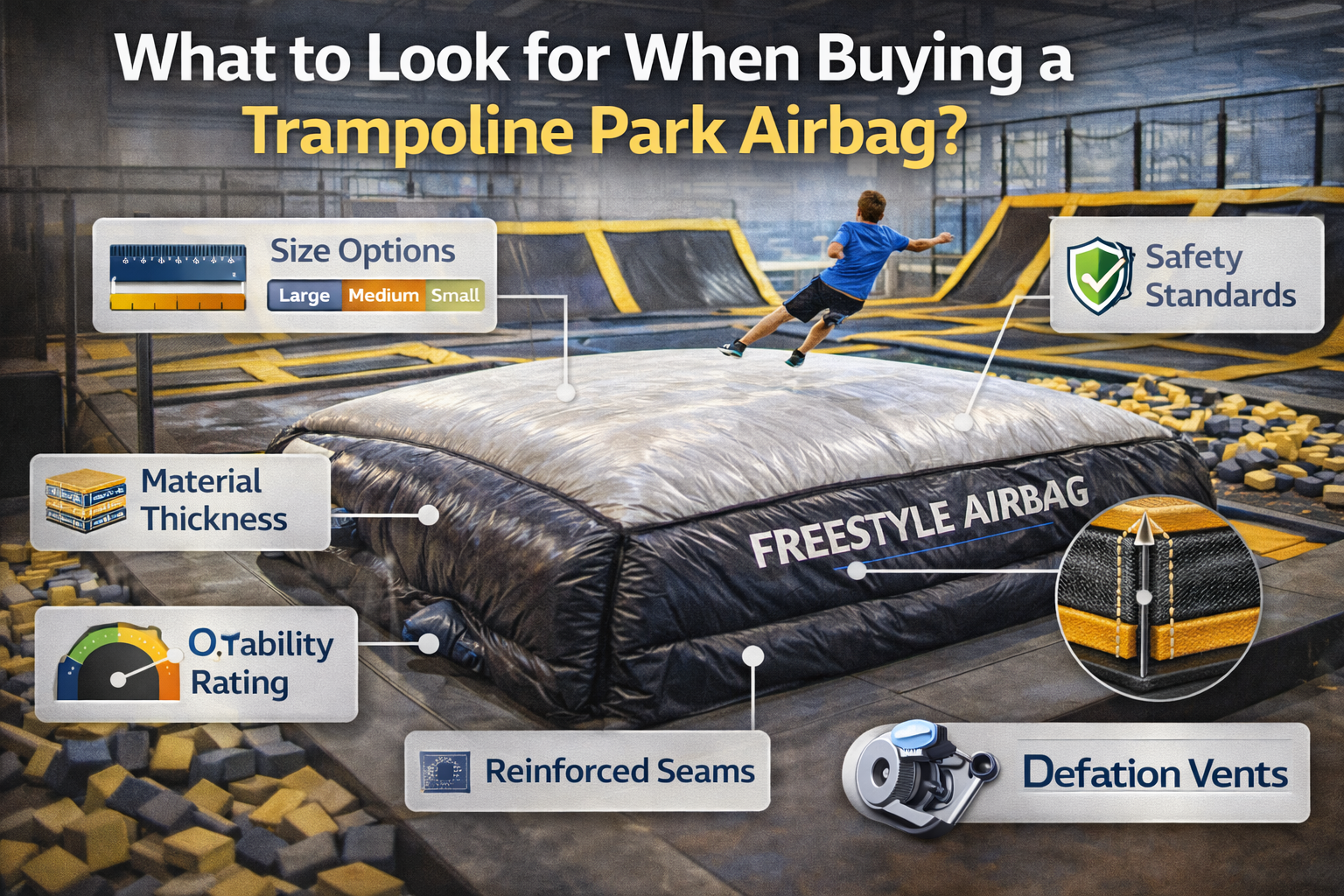
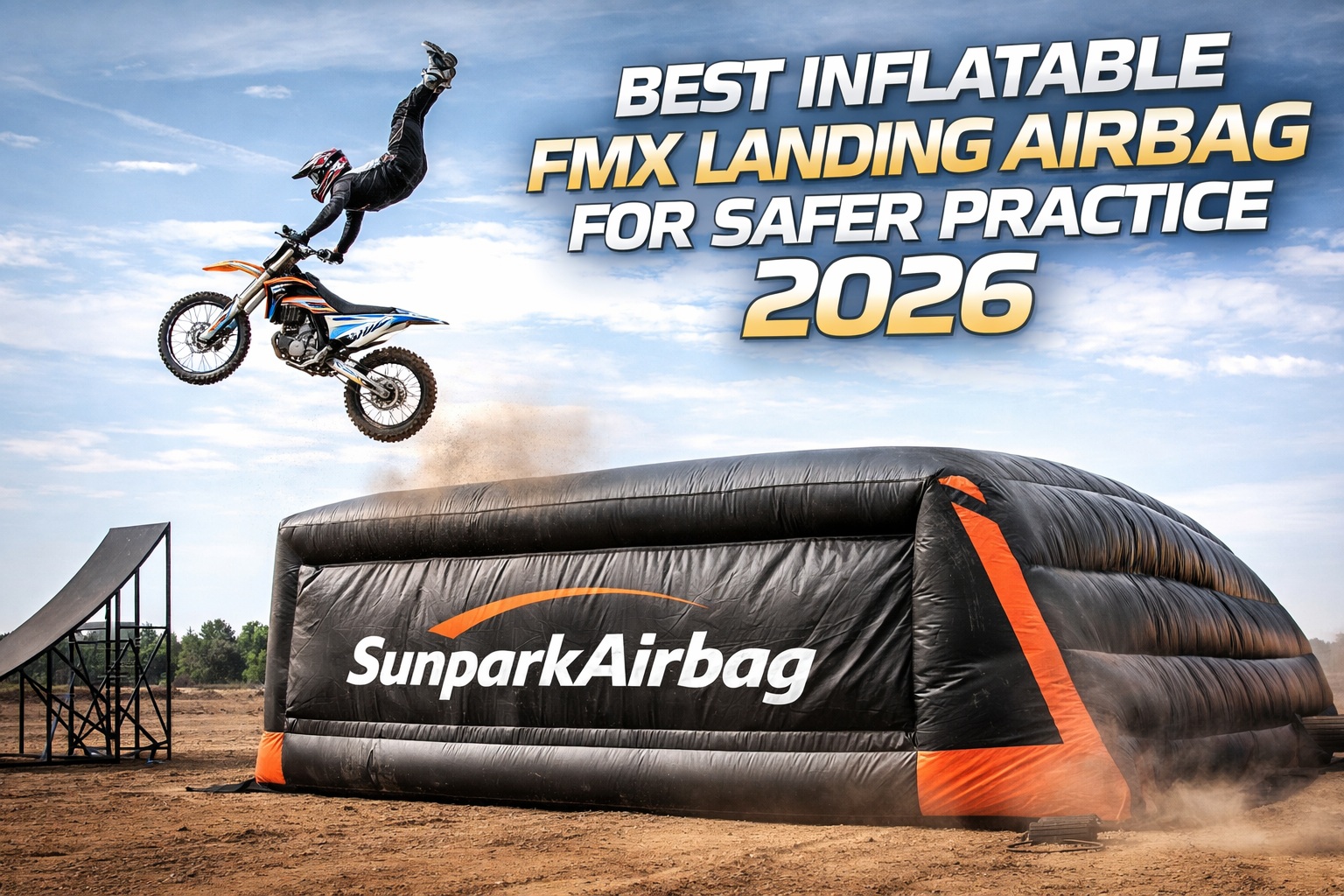
For motorcycle stunt training, our Airbag Landing and Inflatable Landing systems replicate the exact slope of a dirt landing but absorb the catastrophic forces of a crashed bike and rider. The Stunt Airbag is engineered with complex internal baffling to ensure the rider does not bounce dangerously upon impact, but instead decelerates safely. For high-altitude drops and dismounts, our Free Fall Airbag and Foam Pit Jump Airbag provide a massive, soft catchment area.
From our experience, every training facility has unique geographical and spatial requirements. This is why we specialize in designing the Custom Airbag, tailored specifically to the exact trajectory and velocity of the intended stunts. While you should absolutely invest in the best motorcycle airbag for your torso, investing in a SUNPARK® AIRBAG guarantees that your practice environment is engineered for ultimate survivability.
5. Summary Table: Wearable Airbag Comparison
To assist you in selecting the best motorcycle airbag for your specific riding style, we have compiled this comparative table of our top 8 wearable recommendations.
| Airbag Model | Technology Type | Deployment Time | Best Suited For |
|---|---|---|---|
| Alpinestars Tech-Air 5 | Electronic Autonomous | 20 – 40 ms | Street & Sport Riding |
| Dainese Smart Jacket | Electronic Autonomous | 45 ms | Urban Commuting |
| Helite Turtle 2 | Mechanical Tether | 100 ms | Touring & Reliability |
| Klim Ai-1 | Electronic Algorithm | < 60 ms | Adventure & Off-Road |
| Hit-Air MLV-C | Mechanical Tether | 100 ms | Law Enforcement & Commuting |
| Spidi Air DPS | Mechanical Tether | 200 ms | Lightweight Street Riding |
| In&motion Module | Electronic Brain | < 60 ms | Multi-Jacket Versatility |
| Furygan Universal | Electronic Algorithm | < 60 ms | Hot Climate Riding |
6. Frequently Asked Questions (FAQs)
What is the best motorcycle airbag for off-road riding?
For slow-speed, technical off-road riding, mechanical tethered systems are often preferred because they will not accidentally deploy during minor drops or aggressive body movements. However, electronic systems with dedicated “Adventure” algorithms, like the Klim Ai-1, are rapidly becoming the best motorcycle airbag choice for dual-sport enthusiasts.
Can a wearable motorcycle airbag replace traditional body armor?
No. We recommend using the best motorcycle airbag in conjunction with CE-certified hard armor. The airbag excels at absorbing massive blunt force impacts and stabilizing the neck and spine, while traditional hard armor is necessary to protect against deep abrasion and sharp punctures from debris.
How does a SUNPARK® Airbag Landing differ from a wearable airbag?
A wearable airbag protects the rider’s vital organs during a crash on a rigid surface. A SUNPARK® Airbag Landing is a massive, highly engineered environmental inflatable placed on the ground to catch both the 250-pound motorcycle and the rider during extreme aerial stunts, preventing the impact with the rigid ground entirely.
Are electronic airbags reusable after a deployment?
Yes, but most electronic systems require the manufacturer or a certified dealer to inspect the bladder and replace the argon/CO2 canisters to ensure structural integrity is maintained. Mechanical systems can typically be repacked and re-armed by the user in a matter of minutes by simply replacing the threaded CO2 cartridge.
7. Industry References
To further explore the safety standards, testing methodologies, and extreme sports integration associated with impact attenuation, we recommend consulting the following authoritative resources: