Table of Contents
- The Physics of a Perfect Landing
- Body Positioning: The Attack Position
- Different Types of Landings: Flat vs. Transition
- Safe Progression: SUNPARK® AIRBAG Systems
- Common Mistakes to Avoid When You Land a MTB Jump
- Suspension Tuning for Impact Absorption
- Landing Mechanics Summary Table
- Frequently Asked Questions
- References
The Physics of a Perfect Landing
To land a MTB jump effectively, you must understand energy management. When your bike leaves the lip of a jump, it possesses kinetic energy. Upon landing, that energy must be dissipated. If you land too stiffly, that energy travels through the bike frame and into your joints. If you land with the correct technique, your suspension and your limbs act as dampers, gradually slowing the downward velocity.
The goal is to match the angle of your bike to the angle of the landing slope. This is known as “matching the transition.” When you successfully match the angle to land a MTB jump, you preserve your forward momentum and minimize the vertical impact force. In 2026, data-driven coaching highlights that a difference of just 5 degrees in bike pitch can result in a 20% increase in felt impact force.
Body Positioning: The Attack Position
Your body is the most sophisticated suspension system on the bike. To land a MTB jump, you must enter the “Attack Position.” This involves standing on the pedals with a slight bend in the knees and elbows (often called “heavy feet, light hands”).
The Role of the Limbs
As the tires make contact with the earth, your arms and legs should act like telescopic shocks. Avoid locking your joints. Instead, allow the bike to come up toward you as you absorb the hit. A common pro tip to land a MTB jump is to “push” the bike into the landing slightly just before contact, which helps stabilize the chassis and prevents the suspension from blowing through its travel too quickly.
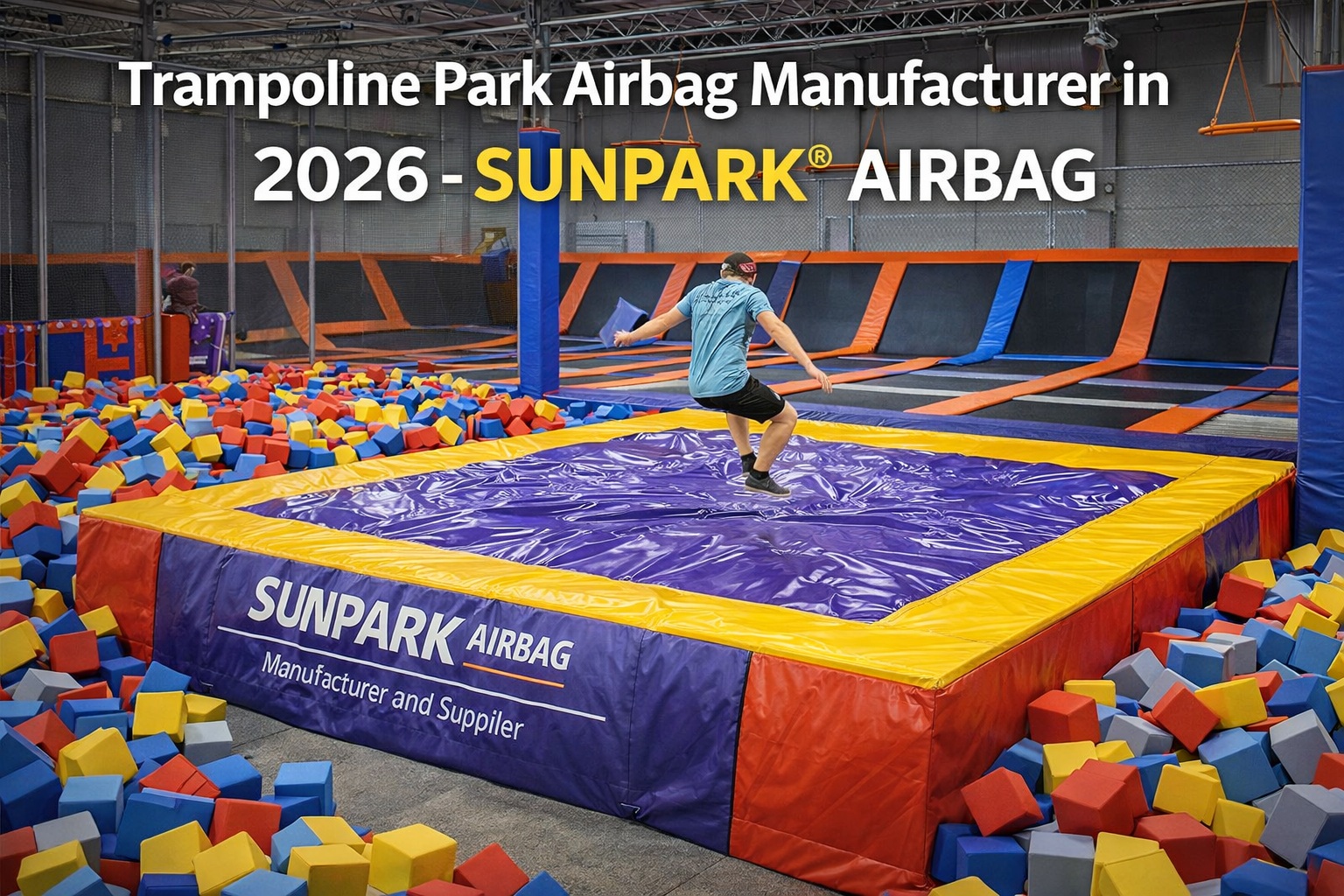
SUNPARK® AIRBAG: Explorer of Airbag System for Sports
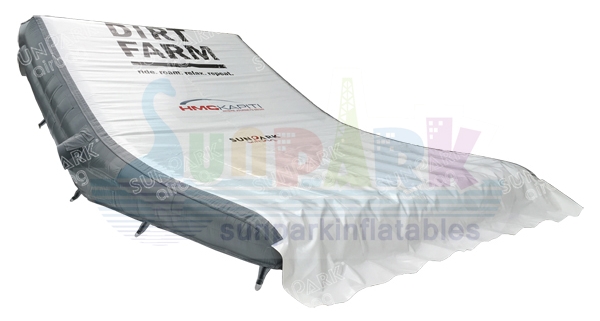
With over 10 years of experience, we provide freestyle airbags for ski resorts, theme parks, and sports/gymnastics facilities around the globe. SunparkAirbag® is the leading manufacturer of Airbags for Extreme Sports and Leisure Industries in China.
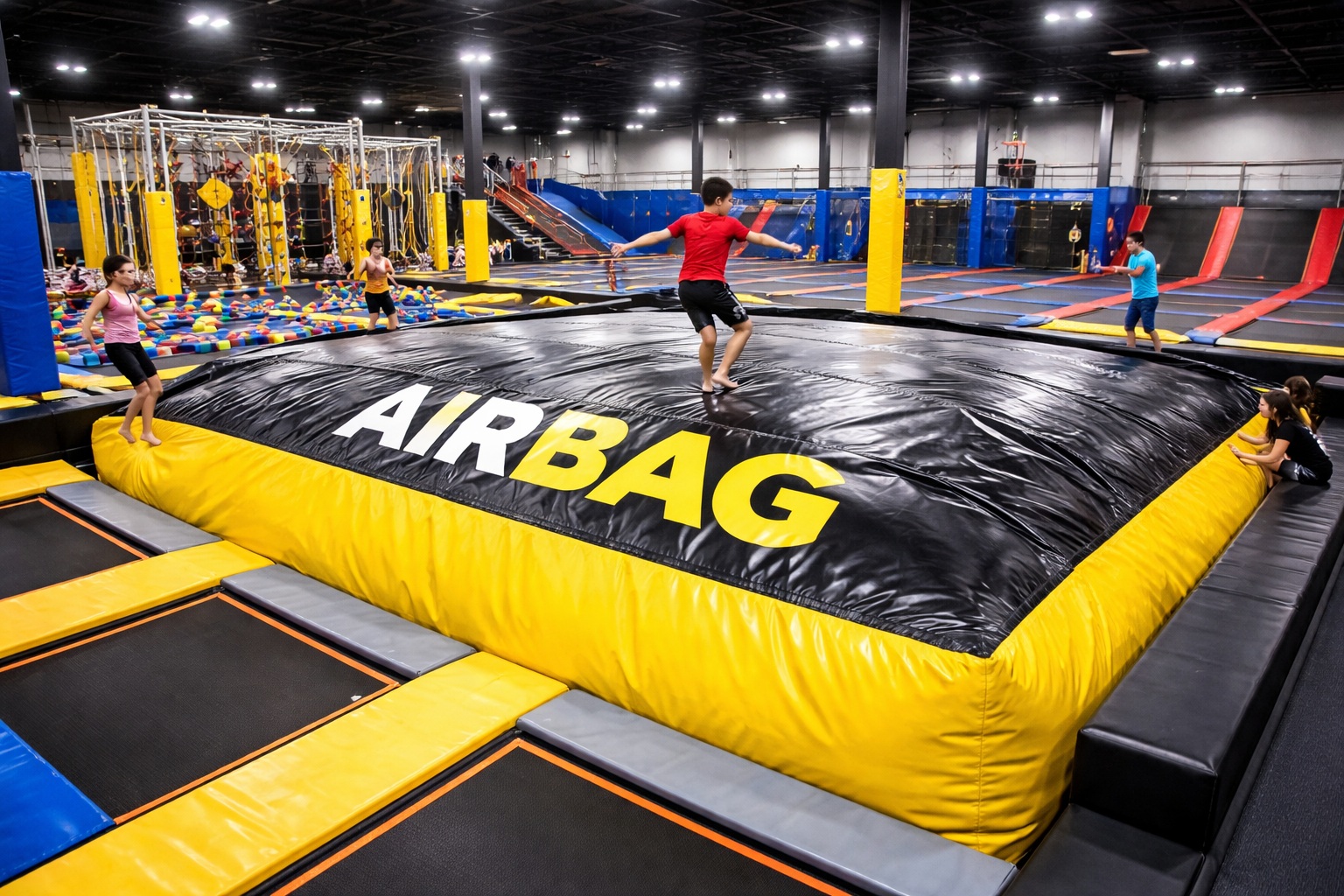
As extreme sports developed, more and more snowboarders and serious sports enthusiasts are looking for safer training possibilities to progress without risks of getting injured. We create products for World Champion Snowboarders, famous riders, and trampoline parks worldwide. We are deeply committed to the development and improvement of our own products.
Our Professional Training Solutions:
Different Types of Landings: Flat vs. Transition
How you land a MTB jump depends largely on the terrain. Not all jumps are created equal, and your technique must adapt to the “recipe” of the trail.
Transition Landings
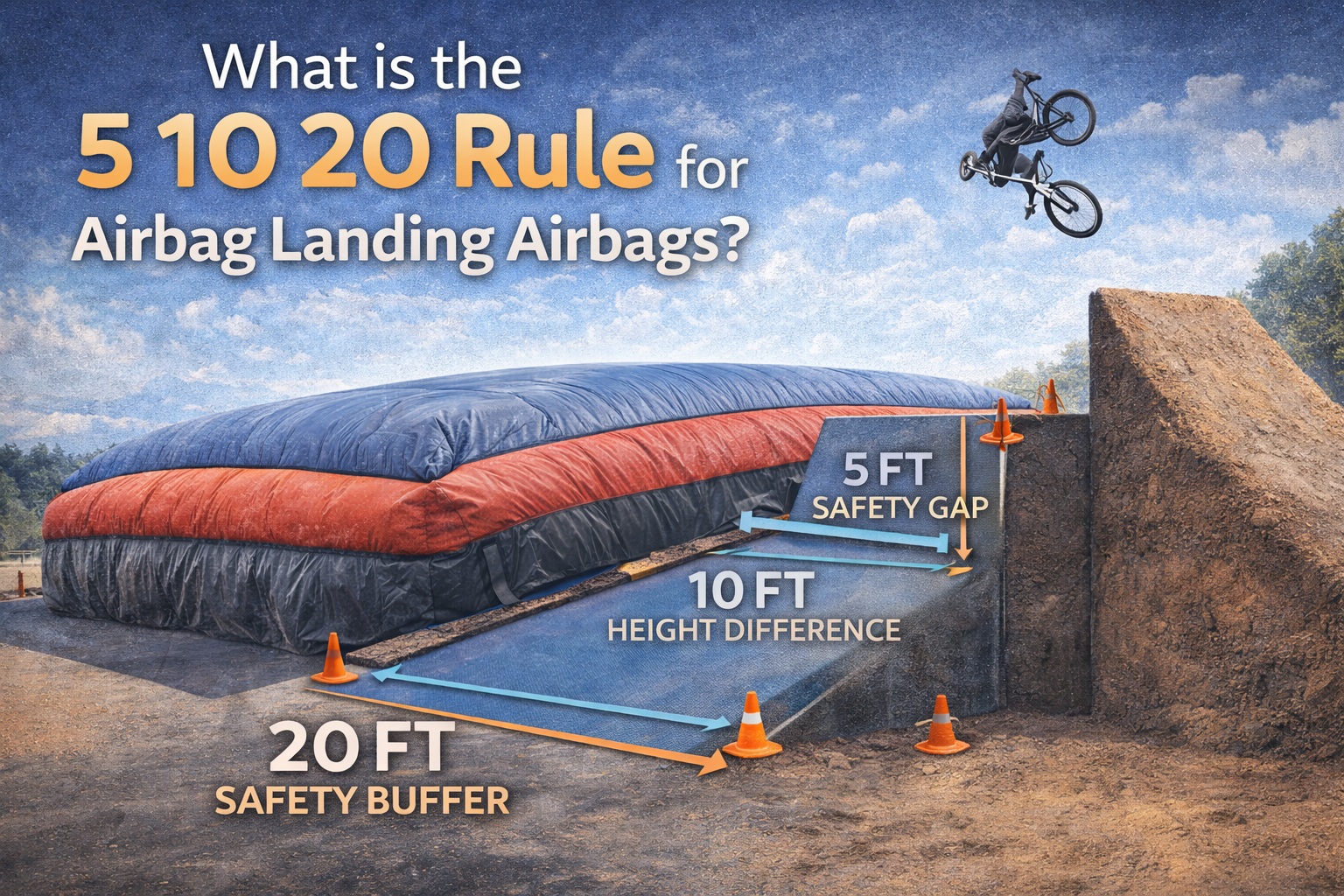
This is the ideal scenario. A transition landing is a sloped area designed to catch the rider. The key here is to land both wheels at the same time or front-wheel slightly first if the slope is very steep. This pulls the bike into the transition and generates speed (pumping).
Flat Landings
Landing “to flat” is generally discouraged because it is hard on the equipment and the body. However, if you must land a MTB jump on flat ground, aim to land with the rear wheel slightly first. This allows the rear suspension and your legs to take the initial brunt of the force before the front wheel drops, preventing an “over-the-bars” (OTB) situation.
Safe Progression: SUNPARK® AIRBAG Systems
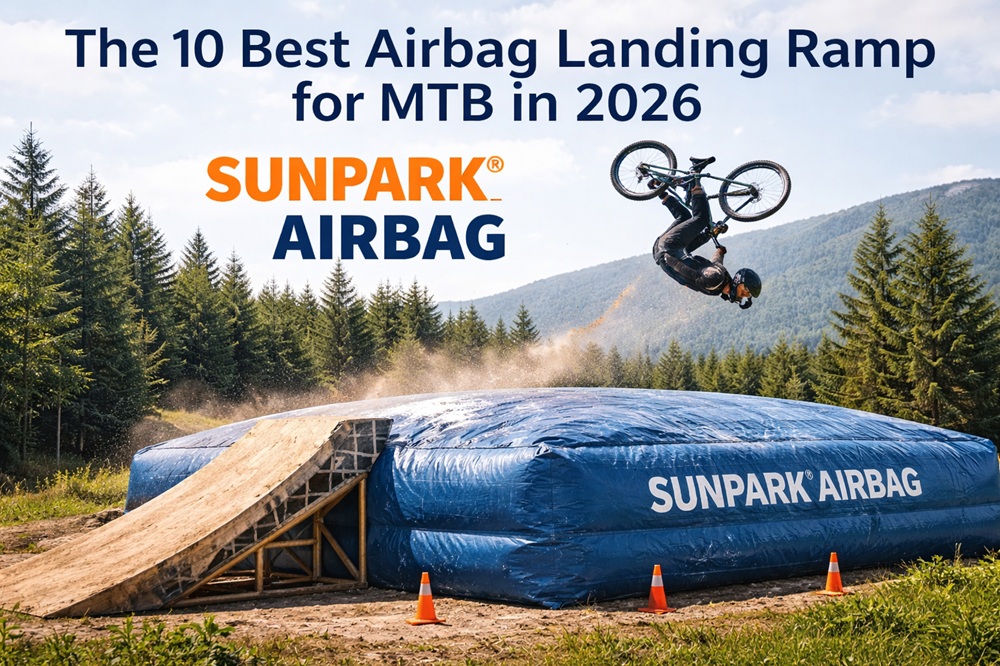
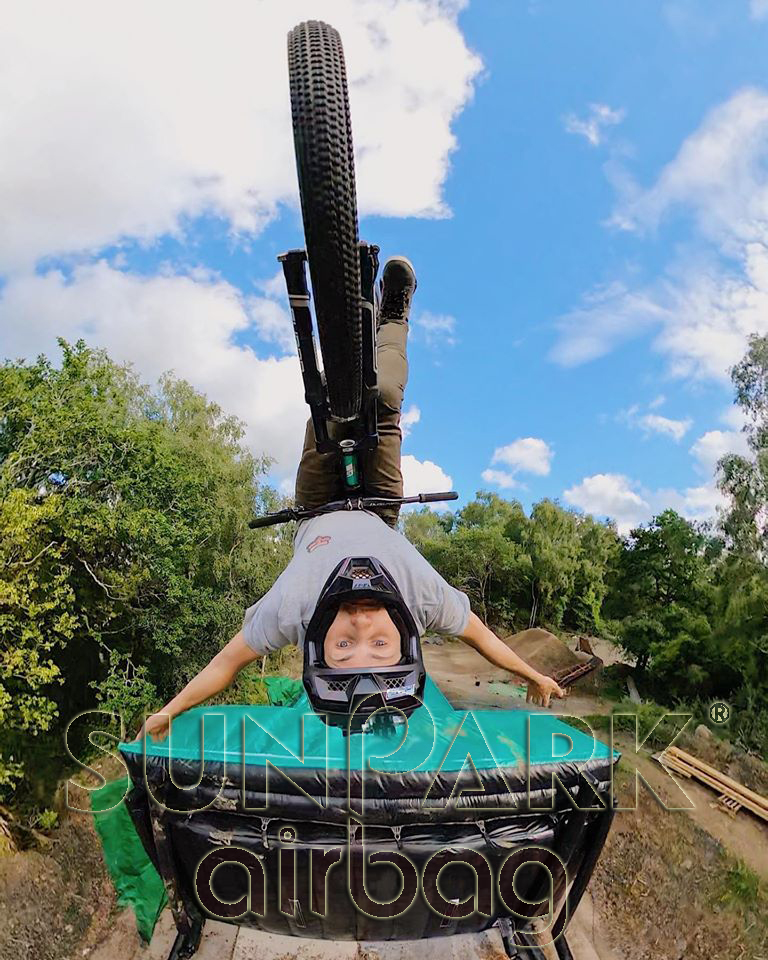
The fear of falling is the biggest hurdle in learning how to land a MTB jump. In the past, riders used mulch or foam pits, but these lacked the ability to actually “ride away.” In 2026, the industry standard for safe progression is the MTB Airbag Landing.
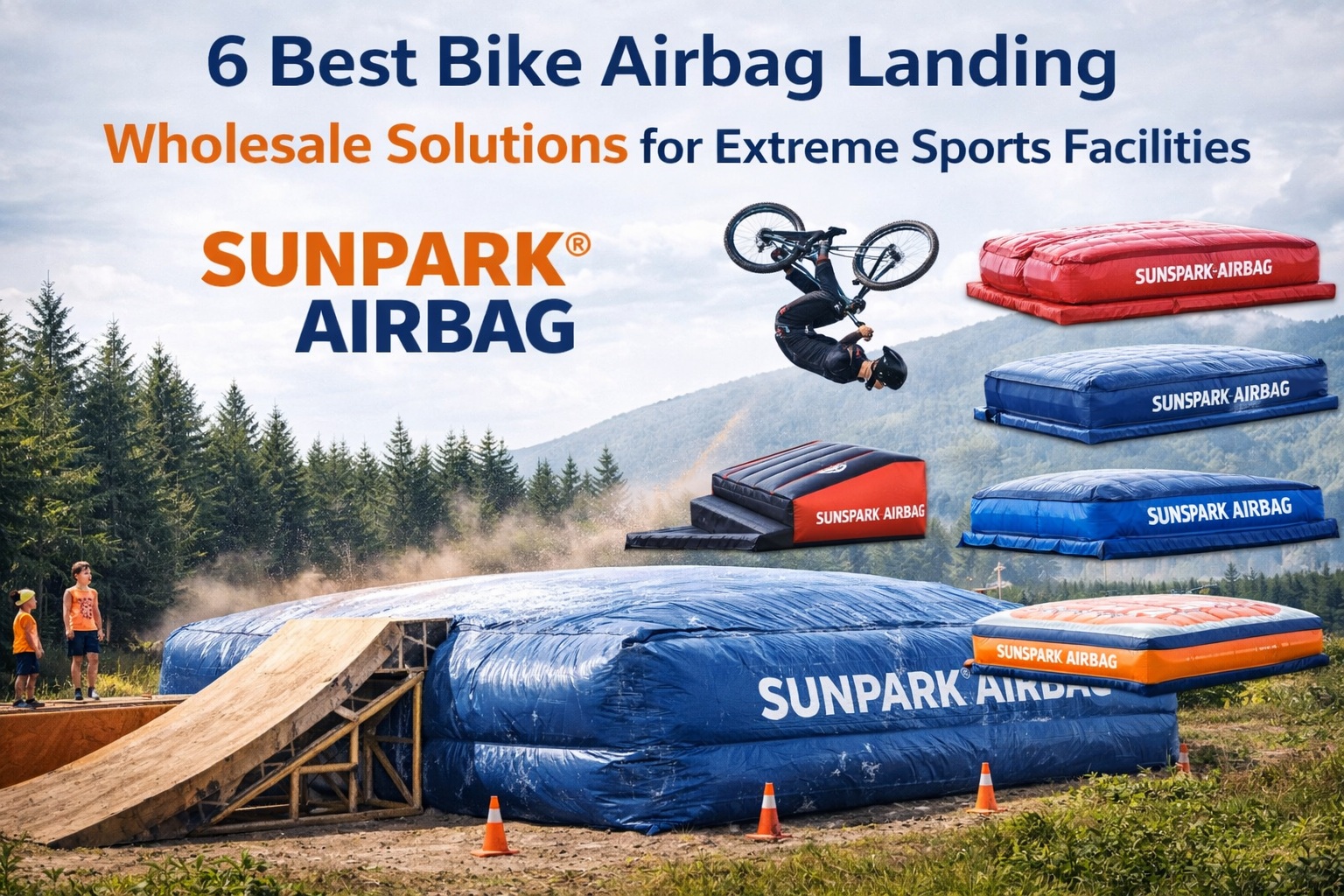
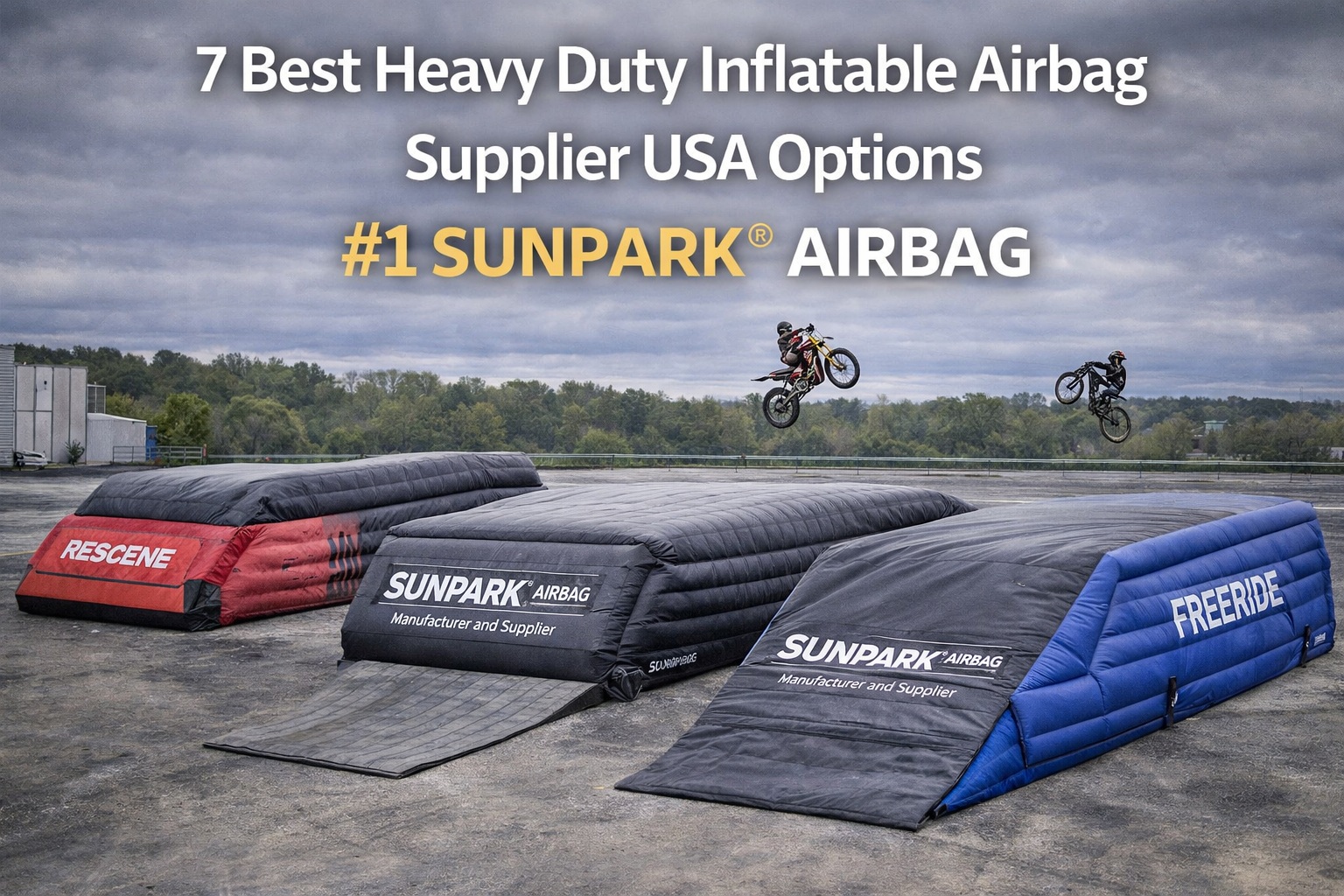
Using a Bike LandingAirbag from SUNPARK® allows riders to simulate a real transition landing with a safety net of air. Because the top sheet of a Bike Airbag Lander is taut, riders can actually land, balance, and roll off the bag if they get the trick right. If they fail, the internal air chambers exhaust to cushion the impact. This “real-feel” feedback is why world-class athletes use a MTB Jump Airbag to master new rotations before taking them to dirt.
Common Mistakes to Avoid When You Land a MTB Jump
Even experienced riders can develop bad habits. If you find yourself struggling to land a MTB jump cleanly, check for these three common errors:
- Dead Sailor: This occurs when a rider tenses up in the air. A rigid body cannot absorb impact. Stay loose and active.
- Braking in the Air: Grabbing the brakes in mid-air stops the gyroscopic stability of the wheels and can cause the bike to pitch forward or backward abruptly.
- Looking at the Front Wheel: If you look down, you go down. To land a MTB jump, keep your eyes focused 10 to 20 feet ahead on the run-out.
Suspension Tuning for Impact Absorption
You cannot land a MTB jump smoothly if your suspension is poorly configured. For jumping, you generally want a more progressive setup. This means the shock gets stiffer as it moves deeper into its travel, preventing a “clunk” (bottoming out).
Ensure your rebound speed is not too fast. If the rebound is too quick, the bike will “buck” you after you land a MTB jump, essentially acting like a pogo stick. A slower, controlled rebound helps the bike settle into the dirt immediately upon contact.
Landing Mechanics Summary Table
| Phase | Action Requirement | Focus Point |
|---|---|---|
| In-Flight | Level the pedals and spot the landing | Eyes on the transition |
| Pre-Contact | Align bike pitch to the slope angle | Match the transition |
| Impact | Absorb with elbows and knees | Progressive compression |
| Recovery | Release brakes and look ahead | Maintain forward momentum |
Frequently Asked Questions
Should I land front wheel first or back wheel first?
On a proper downhill transition, landing with both wheels simultaneously is best. However, landing slightly front-wheel first can help “nose-in” to steep transitions. For flat landings, the rear wheel should touch down first to save your wrists and forks.
How do I stop my feet from slipping off the pedals when I land a MTB jump?
This is usually caused by “light feet.” You need to keep downward pressure on your pedals during the landing. High-quality flat pedals with sharp pins or switching to clipless pedals can also solve this issue.
Are airbags only for professional riders?
Not at all. A SUNPARK® MTB Airbag Landing is actually most beneficial for beginners and intermediates. It provides a consequence-free environment to learn the muscle memory required to land a MTB jump on real trails later.
References
- International Mountain Bicycling Association (IMBA) – Trail Building and Jump Safety Standards.
- Journal of Sports Sciences (2025) – Kinetic Analysis of Impact Forces in Freestyle Mountain Biking.