In the evolving landscape of action sports, the margin for error has shrunk while the amplitude of tricks has skyrocketed. For bike park owners and event organizers, this presents a critical challenge: how do you provide a safe progression environment without sacrificing the realistic feel of riding? The era of the foam pit—dusty, unsanitary, and difficult to exit—is rapidly ending. The modern standard is the inflatable landing airbag.
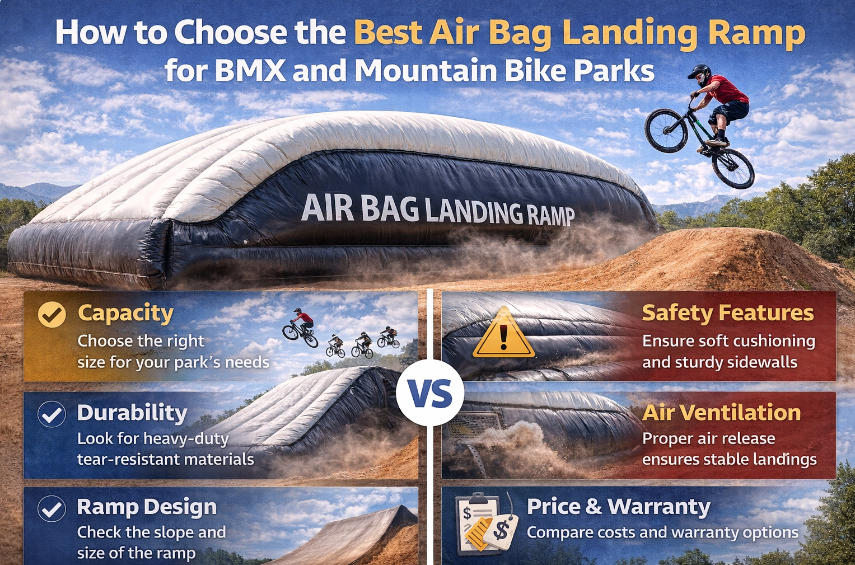
However, selecting the best BMX air bag landing ramp is not as simple as purchasing a bouncy castle. Bike impacts involve metal pedals, sharp pegs, and heavy frames traveling at high velocities. From our experience at SUNPARK® AIRBAG, manufacturing for world champion snowboarders and extreme sports facilities for over a decade, we know that geometry, material science, and airflow technology are the deciding factors between a successful training tool and a costly liability. This guide provides a comprehensive technical breakdown of what to look for when investing in an airbag landing system.
- 1. Geometry and Design: The “Ride-Away” Factor
- 2. Material Durability: Withstanding Metal and Torque
- 3. Airflow Systems: Adjustable Pressure Vents
- 4. Customization and Site Integration
- 5. Safety Certifications and Standards
- 6. The Manufacturer’s Perspective: Why Quality Matters
- 7. Summary Comparison Table
- 8. Frequently Asked Questions
- 9. References
1. Geometry and Design: The “Ride-Away” Factor
The most critical distinction between a generic stunt bag and a professional bike landing is the geometry. A standard “flat” airbag is designed for free-fall impact absorption, where the goal is to stop the athlete completely. In BMX and MTB training, the goal is often to land the trick and ride away. Therefore, the best BMX air bag landing ramp must feature a calculated slope that mimics a dirt landing.
We recommend looking for Inflatable Landing systems that offer a realistic transition curve. The angle of the landing ramp should generally fall between 25 and 35 degrees, depending on the trajectory of the jump. If the airbag is too flat, the rider will “case” or come to an abrupt halt upon landing, which can cause whiplash even on a soft surface. If it is too steep without a proper run-out, the rider risks sliding off the end uncontrollably.
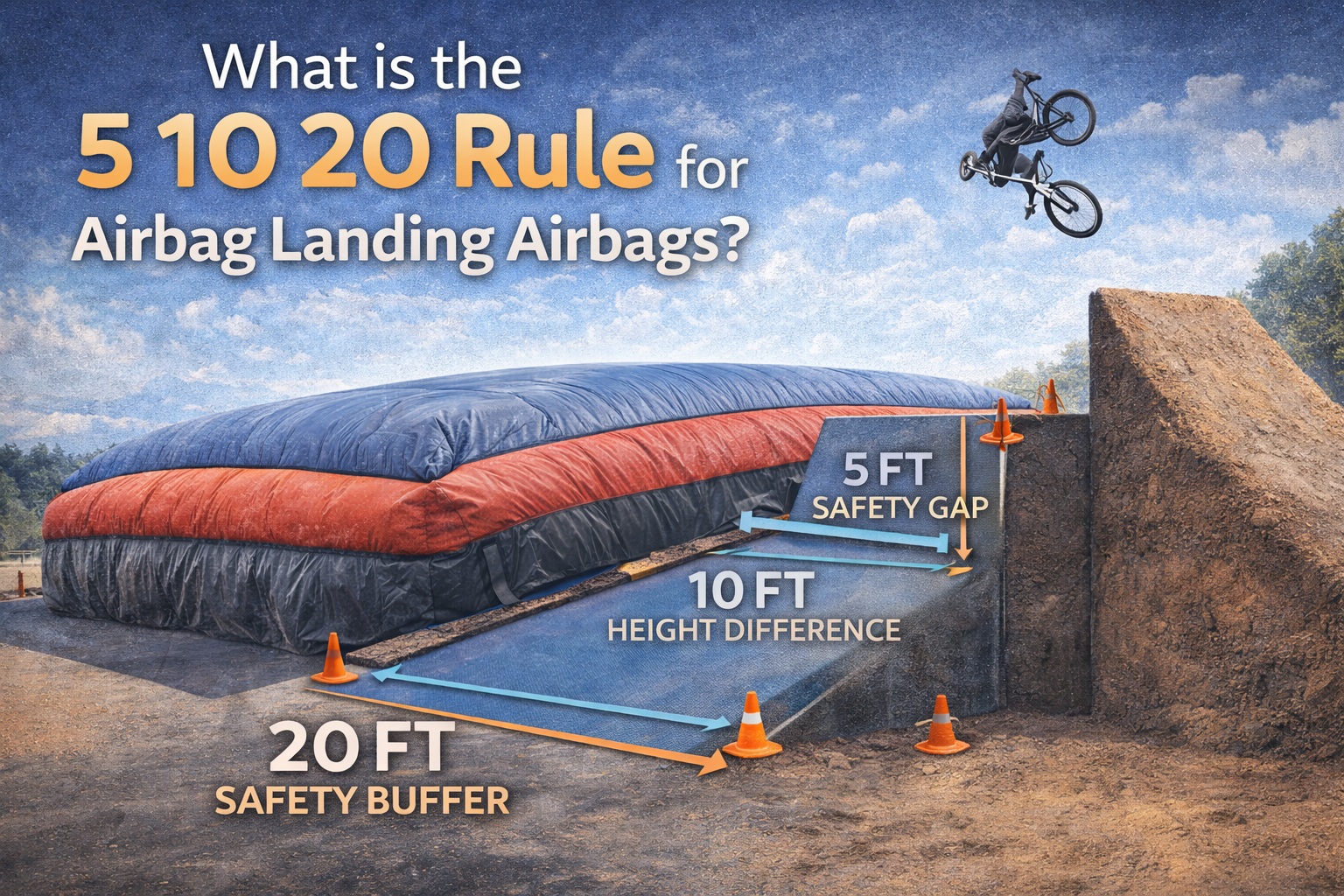
Furthermore, the width is non-negotiable. For learning off-axis rotations (like 360s or backflips), riders rarely land in a straight line. We advise a minimum width of 15 to 20 feet (4.5 to 6 meters) to provide a margin of error. A proper Airbag Landing should also feature raised safety barriers or “guard rails” on the sides to prevent athletes from sliding off the edge during a crash.
2. Material Durability: Withstanding Metal and Torque
Unlike gymnastics or snowboarding, wheeled sports introduce hard, abrasive materials to the landing surface. BMX pegs, MTB derailleur hangers, and pedal pins act like serrated knives against fabric. Investing in an airbag made from standard bouncy castle vinyl is a financial mistake that will lead to rapid failure.
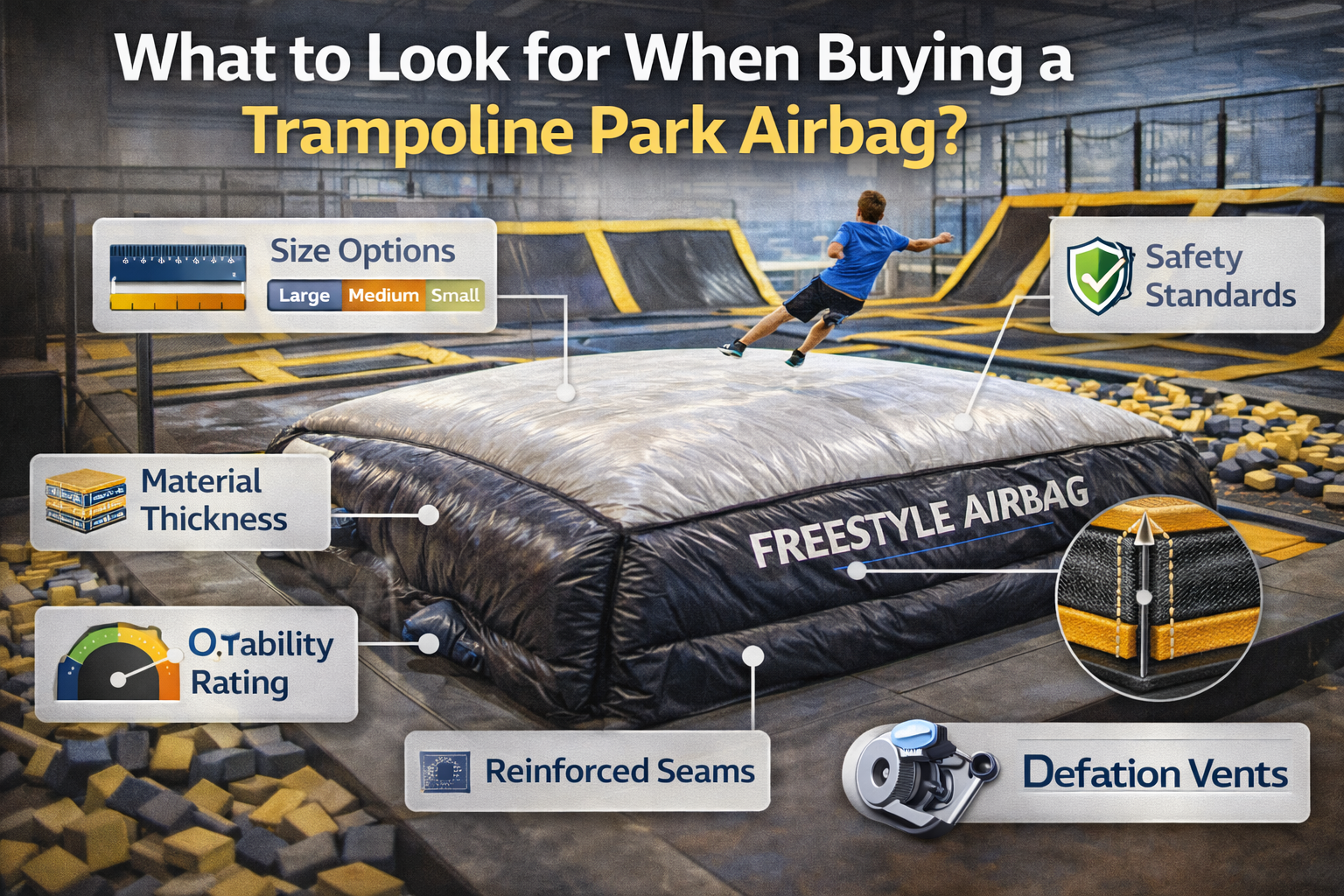
From our extensive manufacturing experience, the top sheet—the layer the bike actually touches—must be engineered from high-grade, heavy-duty materials. We utilize proprietary composite materials that offer high tensile strength and tear resistance. Specifically, look for a top sheet that is:
- Replaceable: The top sheet is a sacrificial layer. It will eventually wear out. The best systems allow you to zip off the damaged top sheet and zip on a new one without replacing the entire airbag.
- Low Friction: It must be slippery enough to prevent the tires from “grabbing” and throwing the rider over the handlebars, but not so slippery that walking back up is impossible.
- UV Resistant: For outdoor parks, UV degradation is the silent killer of PVC. Ensure the material is treated for long-term sun exposure.
3. Airflow Systems: Adjustable Pressure Vents
The “feel” of the landing is dictated by internal air pressure. A static sealed bag (like a pool float) is dangerous for landings because it acts like a trampoline—bouncing the rider back into the air. The best BMX air bag landing ramp uses a continuous airflow system with adjustable vents.
The Importance of Shock Absorption
When a rider lands, the airbag must deform to absorb the kinetic energy. This is achieved by air escaping through controlled vents. If the vents are too small, the bag is too hard (high bounce). If they are too big, the bag is too soft (rider hits the ground).
We recommend systems that feature adjustable airflow valves. This allows facility operators to “tune” the landing based on the skill level of the riders:
- Soft Mode: For beginners learning new inversions. Maximum absorption, no ride-away.
- Firm Mode: For advanced riders perfecting landings. Firm enough to ride down, soft enough to cushion a mistake.
Our Custom Airbag solutions integrate multiple blower inputs and variable vent systems to ensure consistent pressure across the entire surface, preventing “dead spots” where a rider could bottom out.
4. Customization and Site Integration
Every bike park is unique. A “one-size-fits-all” product rarely fits perfectly into an existing jump line or foam pit depression. This is where customization becomes a key buying factor. The best BMX air bag landing ramp is one that fits your specific infrastructure.
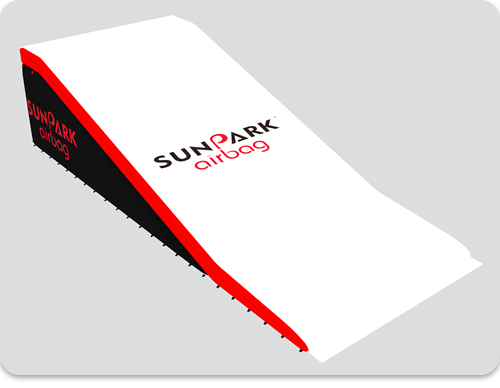
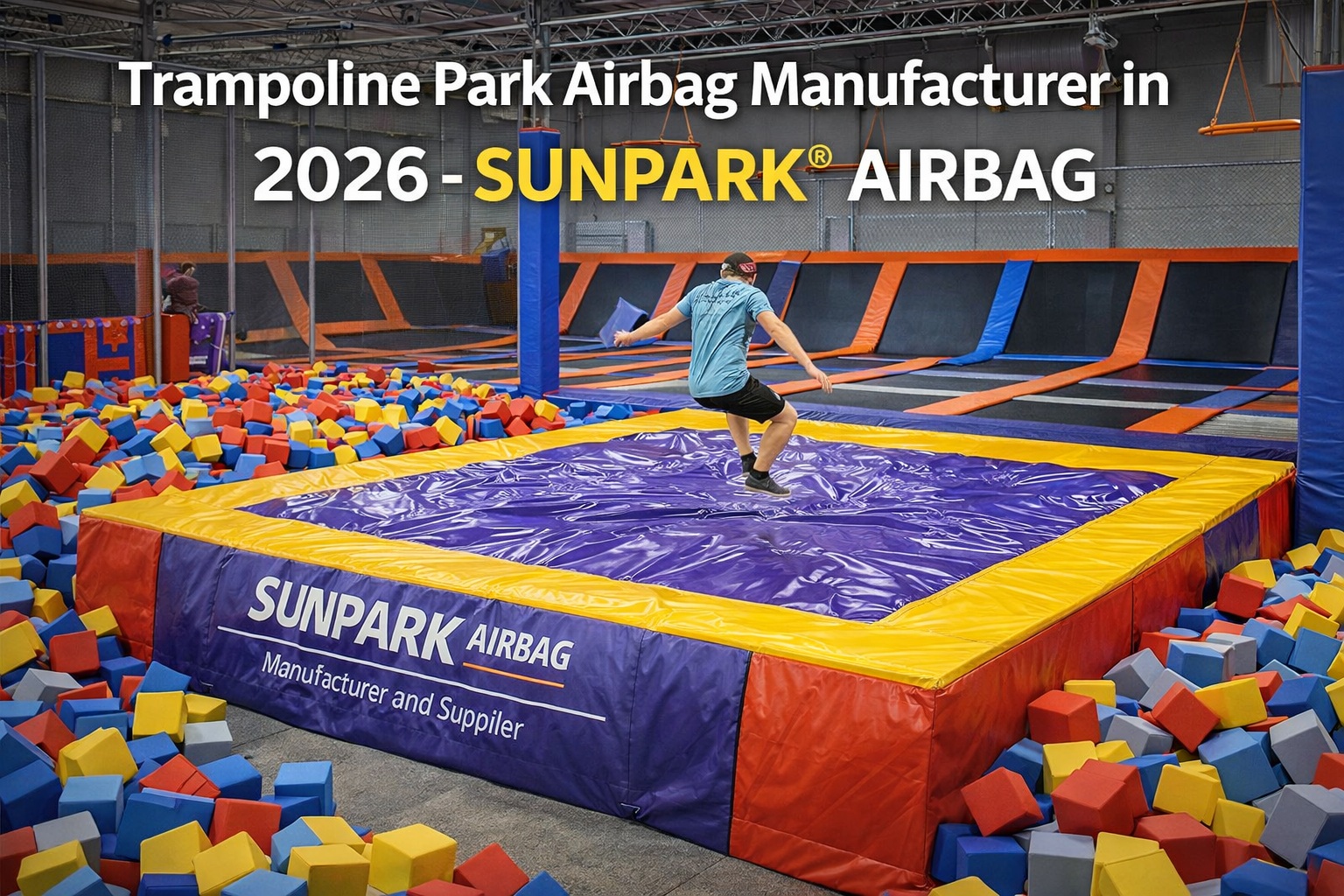
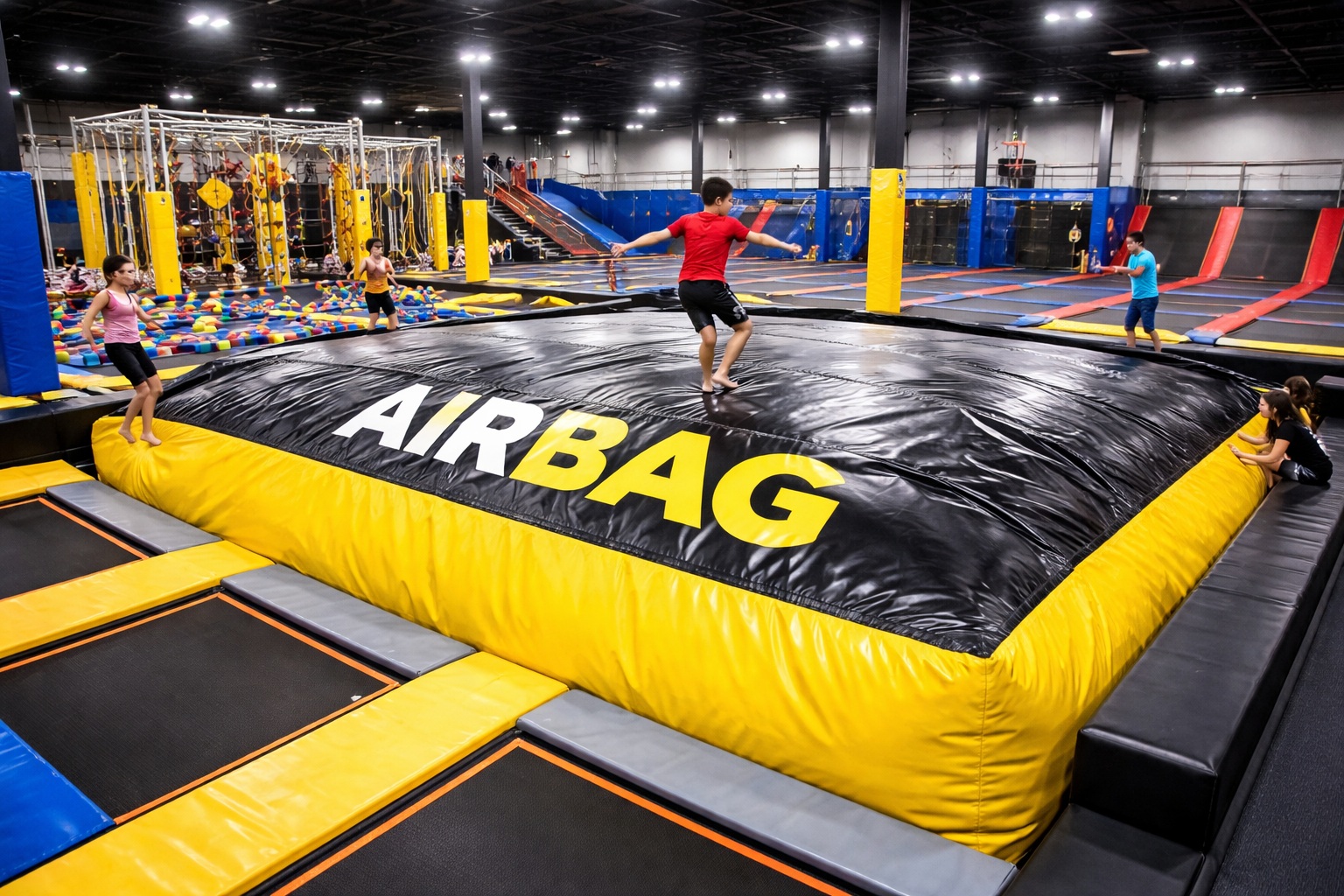
At SunparkAirbag®, we specialize in Foam Pit Jump Airbag retrofits. These are designed to sit inside an existing foam pit cavity. This is an incredibly cost-effective upgrade for indoor parks, as it eliminates the hygiene issues and maintenance costs of foam blocks while utilizing the existing pit space. For outdoor venues, standalone inflatable ramps with their own structural support are preferred.
Consider the following when ordering:
- Landing Angle Matching: The airbag angle should match the trajectory of your takeoff ramp.
- Branding: Custom printing allows parks to sell sponsorship space on the large surface area of the landing.
- Mobility: Do you need to move the ramp for events? If so, look for modular designs that pack down easily.
5. Safety Certifications and Standards
Liability is a major concern for any extreme sports facility. Using uncertified equipment is a legal risk. When choosing a supplier, ensure their products meet international safety standards for inflatable amusement devices and impact attenuation.
We are deeply committed to the development and improving of our products to meet the rigorous demands of global markets. Look for manufacturers who supply major theme parks or ski resorts, as these entities have the strictest safety audits. A Free Fall Airbag or landing ramp should come with documentation regarding material fire retardancy (crucial for indoor parks) and anchor point load ratings.
6. The Manufacturer’s Perspective: Why Quality Matters
As the leading manufacturer of Airbags for Extreme Sports and Leisure Industries in China, with over 10 years of experience, we have seen the evolution of the market. We have seen cheap knock-offs fail catastrophically, seams bursting under the pressure of a heavy mountain bike landing. Quality manufacturing involves double or quadruple stitching at high-stress points, RF welding for airtight seams, and the use of Plato PVC (the industry gold standard).
We create products for World Champion Snowboarders and famous riders because they demand consistency. A rider hitting a jump at 30mph needs to know the landing will react exactly the same way every time. Our Airbag Landing systems are engineered for this consistency, providing a stable platform that encourages progression.
7. Summary Comparison Table
To help summarize the options, here is a comparison of the different types of landing systems available.
| Feature | Foam Pit | Standard Flat Airbag | Sloped Inflatable Landing (Recommended) |
|---|---|---|---|
| Ride-Away Ability | None (Must climb out) | None (Stop on impact) | High (Simulates dirt landing) |
| Impact Absorption | High (but inconsistent) | High | Adjustable (Soft to Firm) |
| Hygiene | Poor (Dust, bacteria) | Excellent | Excellent |
| Durability vs Bikes | Low (Foam degrades) | Medium (Depends on topsheet) | High (Reinforced Topsheet) |
| Setup Time | Fixed (Permanent) | Fast | Fast |
| Maintenance Cost | High (Foam replacement) | Low | Low |
8. Frequently Asked Questions
Can you put a BMX airbag outside?
Yes, but you must choose the right model. Outdoor airbags require UV-resistant materials and a proper anchoring system to prevent wind uplift. We also recommend covering the airbag with a tarp when not in use to extend the life of the top sheet and prevent water accumulation in the vent systems.
How long does a bike landing airbag last?
With proper maintenance and indoor use, the main body of a high-quality airbag can last 5 to 10 years. The top sheet (the impact surface) is a consumable item and typically needs replacement every 1-3 years depending on the volume of traffic and the aggressiveness of the riders (e.g., metal pedals vs. plastic pedals).
Is an airbag safer than a foam pit?
From our experience, yes. Airbags provide a consistent surface that eliminates the “entanglement” injuries common in foam pits (where a bike gets stuck while the rider keeps moving). They also eliminate the hygiene risks associated with foam dust and bacteria.
Do I need a custom airbag?
If you are retrofitting an existing foam pit, a Custom Airbag is highly recommended to ensure there are no gaps between the bag and the pit walls. For open spaces, standard sizes (e.g., 5m x 10m landing) are usually sufficient and more cost-effective.
9. References
- Journal of Sports Engineering and Technology. “Impact Attenuation in Action Sports Landings.”