The indoor entertainment industry is experiencing a dynamic resurgence. As we enter 2026, the demand for active entertainment venues—specifically trampoline parks—continues to climb. However, the financial landscape has shifted. Rising construction costs, advanced safety standards, and the need for high-tech attractions have changed the investment equation. Entrepreneurs asking “how much does it cost to build a trampoline park” in 2026 need to look beyond simple square footage estimates and consider the full ecosystem of modern family entertainment centers (FECs).
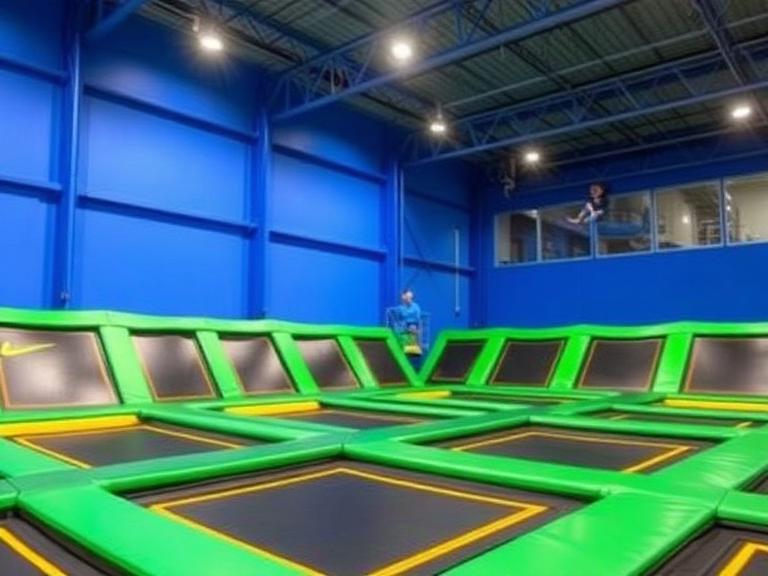
Generally, the total capital required to open a competitive trampoline park in 2026 ranges from $1.5 million to over $3 million for a standard 25,000 to 35,000 square foot facility. Smaller, boutique setups may launch for under $750,000, while massive franchise locations with multi-attraction models can exceed $5 million. This guide breaks down every dollar, from the first bounce of the airbag to the final insurance premium.
- 2026 Market Outlook & Investment Trends
- Summary Cost Breakdown Table
- 1. Location and Facility Build-Out Costs
- 2. Equipment: The Heart of the Park
- Featured Safety Technology: SUNPARK® AIRBAG
- 3. Soft Costs: Insurance, Legal, and Licensing
- 4. Operational Expenses and Staffing
- 5. Franchise vs. Independent: The Price Difference
- 6. Revenue Potential and ROI
- Frequently Asked Questions (FAQs)
2026 Market Outlook & Investment Trends
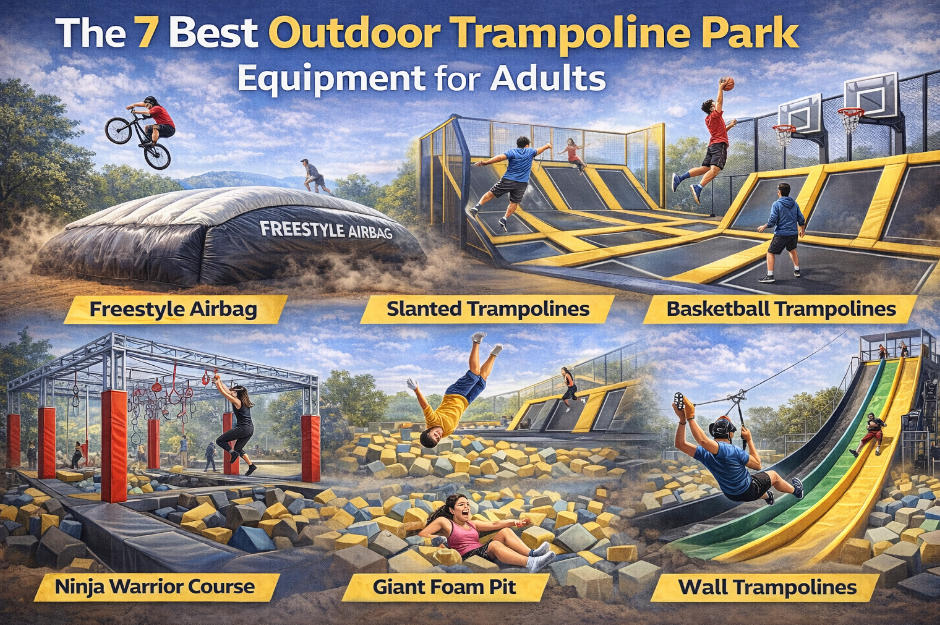
In 2026, a trampoline park is no longer just a room full of interconnected trampolines. The market has matured into “Adventure Parks.” To be competitive, new builds must integrate ninja warrior courses, climbing walls, VR zones, and professional-grade airbag landing systems. This diversification increases upfront equipment costs but significantly boosts retention and average ticket value.
Investors should note that safety compliance is stricter than ever this year. Insurance premiums have stabilized but remain high for venues that rely on outdated foam pits. This has driven a massive industry shift toward airbag technology, which reduces liability and maintenance costs over time.
Summary Cost Breakdown Table
The following table provides a high-level estimate for a standard 25,000 sq. ft. facility in a mid-sized US or European city.
| Expense Category | Low End Estimate | High End Estimate | Description |
|---|---|---|---|
| Trampoline & Adventure Equipment | $450,000 | $900,000+ | Main courts, airbags, ninja courses, installation. |
| Facility Build-Out | $300,000 | $700,000 | HVAC, lighting, bathrooms, reception, café. |
| Rent & Deposit (3 Months) | $75,000 | $150,000 | First, last, and security deposit ($25k-$50k/mo). |
| Technology (POS, Website) | $30,000 | $60,000 | Ticketing software, turnstiles, servers. |
| Marketing & Pre-Opening | $40,000 | $100,000 | Digital ads, grand opening events, signage. |
| Insurance & Legal | $20,000 | $50,000 | Liability premiums and formation fees. |
| Furniture & Fixtures | $50,000 | $120,000 | Lockers, tables, party rooms, kitchen gear. |
| Total Estimated Startup | $965,000 | $2,080,000+ | Varies by location and finish quality. |
1. Location and Facility Build-Out Costs
The single biggest variable in the cost to build a trampoline park is real estate. You generally need 25,000 to 40,000 square feet with a ceiling height of at least 18-20 feet clear span. In 2026, finding warehouse space zoned for commercial entertainment can be challenging.
Lease vs. Buy
Most operators lease. Expect to pay between $8 to $18 per square foot annually depending on the region. A deposit typically requires 3 to 6 months of rent upfront. For a 30,000 sq. ft. facility, your monthly rent could range from $20,000 to $45,000.
Renovations (The Build-Out)
Warehouses are rarely ready for the public. You must budget for:
- HVAC: High-activity zones require powerful cooling. Expect to spend $100,000+ on climate control.
- Electrical & Lighting: LED lighting upgrades and power drops for arcade games.
- Bathrooms & Party Rooms: You will likely need to build multiple ADA-compliant restrooms and private party rooms, costing $50,000 – $150,000.
2. Equipment: The Heart of the Park
This is where your customer experience is defined. In 2026, equipment costs average between $60 to $100 per square foot of active play area. For a standard park, the equipment package usually costs between $500,000 and $850,000.
Modern Safety Standards: Airbags vs. Foam Pits
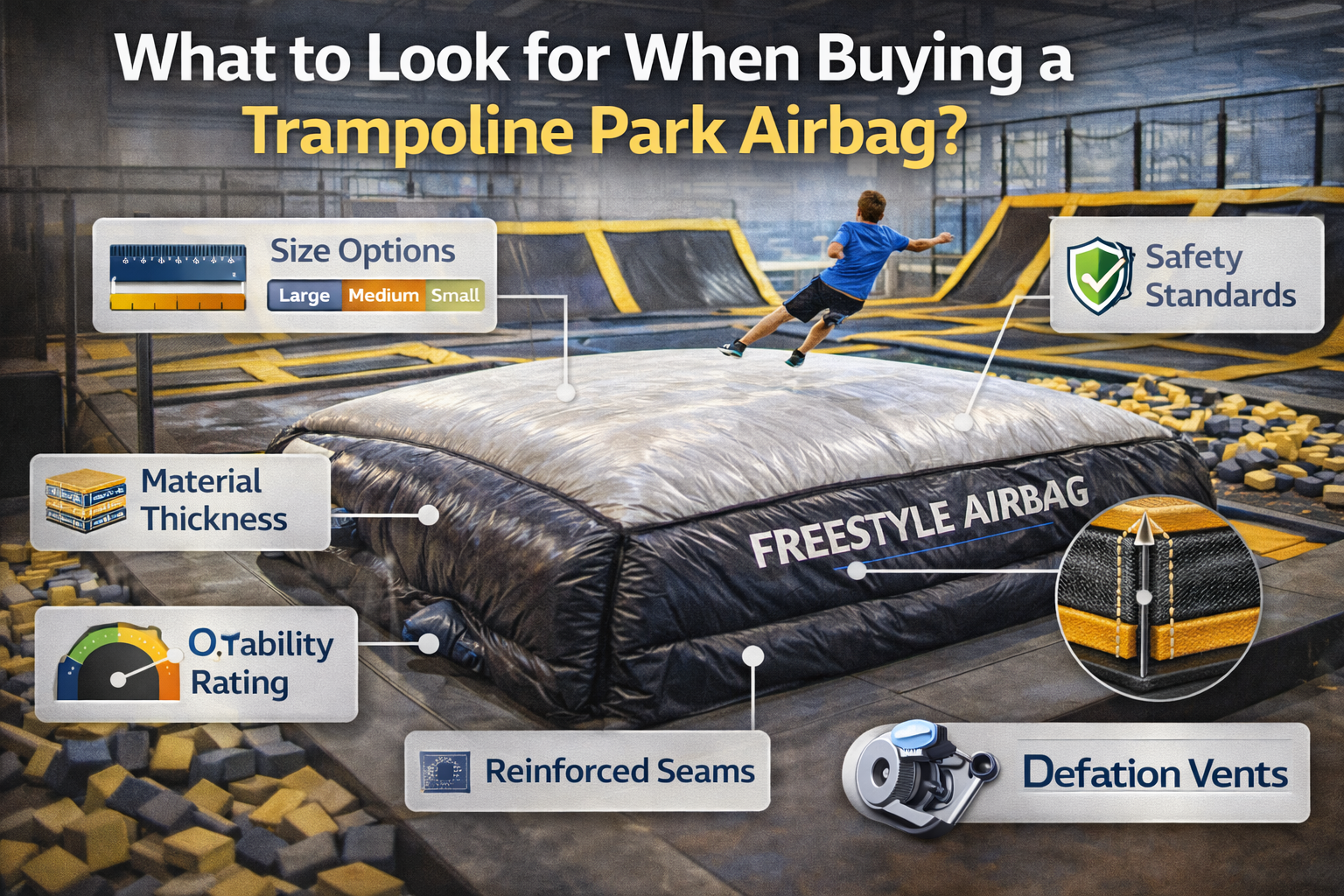
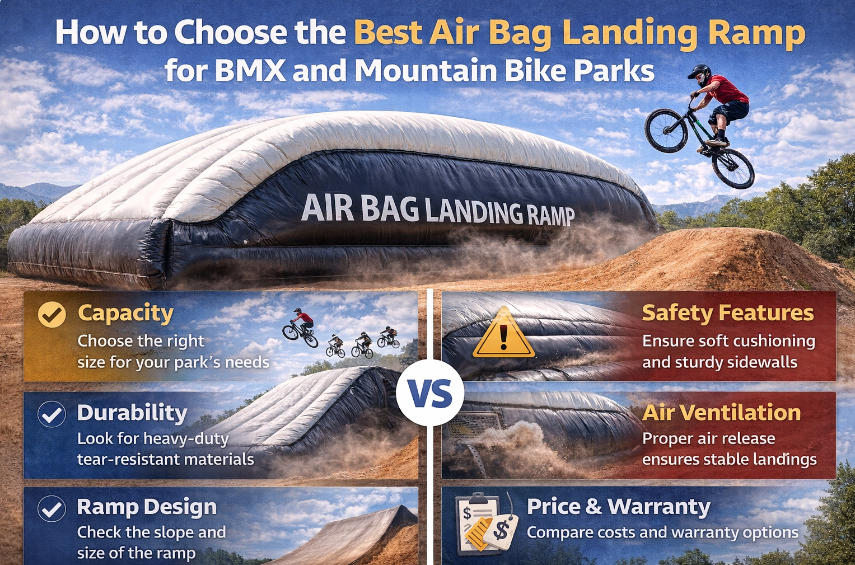
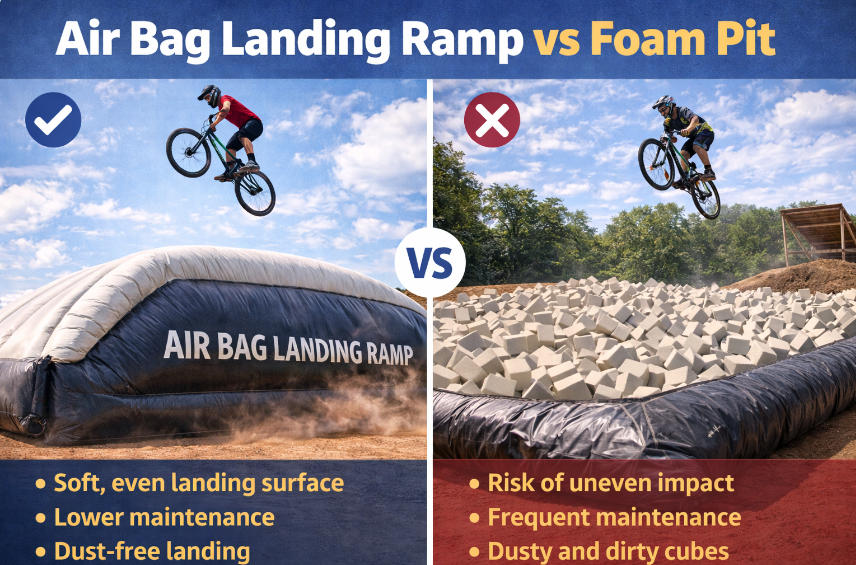
One of the most critical cost and safety decisions in 2026 is the landing zone. Traditional foam pits are becoming obsolete due to hygiene issues, fire risks, and high maintenance costs (foam cubes degrade and must be replaced frequently). The modern standard is the airbag system.
Airbags are easier to clean (sanitization is a priority post-2020), offer consistent impact absorption, and lower insurance liabilities. While the initial investment for a high-quality airbag is higher than a foam pit, the ROI is realized within 1-2 years through reduced maintenance labor and replacement costs.
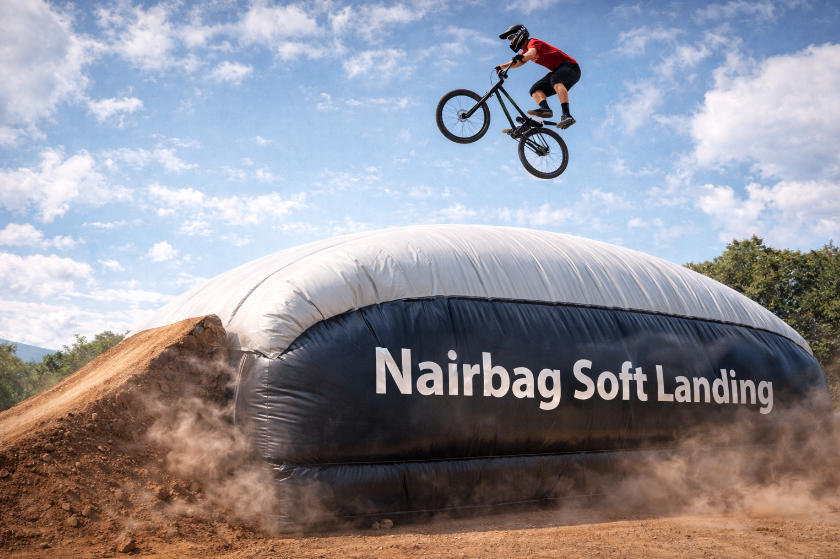
When budgeting for your park’s safety infrastructure, choosing a reputable manufacturer is non-negotiable. SUNPARK® AIRBAG stands as a premier solution provider in 2026.
With over 10 years of experience, we provide freestyle airbags for ski resorts, theme parks, sports, and gymnastics facilities around the globe. SunparkAirbag® is the leading manufacturer of Airbags for Extreme Sports and Leisure Industries in China. As extreme sports developed, more and more snowboarders and serious sports enthusiasts are looking for safer training possibilities to progress without risks of getting injured. We create the products for World Champion Snowboarders, famous riders, and trampoline parks worldwide. We are deeply committed to the development and improving of our own products.
Our Products Include:
- Airbag Landing: Soft, hygienic landings for main courts.
- Inflatable Landing: Portable solutions for events or flexible spaces.
- Foam Pit JumpAirbag: The modern replacement for dirty foam pits.
- Stunt Airbag: For high-performance zones.
- Free Fall Airbag: For high-platform jumps.
- Custom Airbag: Branded solutions tailored to your park’s theme.
Investing in SunparkAirbag® technology not only enhances safety but also signals to insurers and customers that your facility utilizes top-tier professional equipment.
3. Soft Costs: Insurance, Legal, and Licensing
Many new owners underestimate the “invisible” costs. In 2026, liability insurance is a major line item. Because trampoline parks are considered high-risk venues, annual premiums can range from $15,000 to $50,000 depending on your safety protocols and equipment choices.
- Permits & Architecture: You will need architects to draw up plans for city approval. Expect to spend $15,000 – $30,000 on blueprints and permits.
- Legal Fees: Creating liability waivers, forming the business entity, and reviewing lease agreements will cost $5,000 – $15,000.
4. Operational Expenses and Staffing
Once built, the park costs money to run every day. Your “burn rate” before profitability is a critical calculation.
- Staffing: You will need court monitors, front desk staff, party hosts, and a general manager. Monthly payroll often sits between $30,000 and $60,000.
- Utilities: Lighting and cooling a massive warehouse is expensive. Budget $4,000 – $8,000 monthly.
- Marketing: In the digital age, if you aren’t on social media, you don’t exist. Allocate 5-8% of gross revenue to marketing.
5. Franchise vs. Independent: The Price Difference
Should you go it alone or join a big brand?
Franchise Costs
Joining a major franchise (like Sky Zone or Urban Air) offers brand recognition but comes with a hefty price tag. You will pay an initial franchise fee of $40,000 – $60,000, plus ongoing royalties of 6-8% of your gross sales. However, franchises often have better financing relationships and lower equipment costs due to bulk buying power.
Independent Costs
Going independent saves you the royalty fees and allows total creative freedom. You can source your own equipment from manufacturers like SUNPARK® AIRBAG without restriction. However, you lack the corporate support manual, meaning you must build your own marketing and safety protocols from scratch.
6. Revenue Potential and ROI
Despite the high startup costs, the ROI for trampoline parks remains attractive in 2026. A well-run park in a good location can generate $1.5 million to $3 million in annual revenue. With profit margins averaging 20-30%, owners can see a full return on investment in 18 to 36 months.
Key Revenue Streams:
- General Admission: Hourly jump tickets.
- Birthday Parties: The bread and butter of the industry (often 30-40% of revenue).
- Café/Concessions: High-margin food and drink sales.
- Corporate Events: Team building exercises.
Frequently Asked Questions (FAQs)
Q: How much land do I need for a trampoline park?
A: You typically need a building footprint of 25,000 to 40,000 square feet. Adequate parking is also essential—calculate roughly 1 parking spot per 150-200 sq. ft. of facility space.
Q: Why are foam pits being replaced by airbags?
A: Foam pits require constant cleaning and foam replacement, and they can hide dangerous objects. Airbags, like those from SUNPARK®, are hygienic, durable, and allow for a higher throughput of jumpers, making them the superior financial and safety choice in 2026.
Q: Can I get a loan to build a trampoline park?
A: Yes, SBA loans and equipment financing are common. However, banks typically require the owner to put down 20-30% of the total capital as a down payment. You will need a strong business plan and personal liquidity.
Q: What is the most expensive part of building the park?
A: Aside from the long-term cost of rent, the trampoline equipment package and the HVAC/facility build-out are the two largest upfront expenses.
Conclusion
Determining the cost to build a trampoline park in 2026 reveals a high-barrier-to-entry business, but one with substantial rewards. With startup costs averaging near $2 million for a premier facility, success relies on efficient spending—particularly in choosing durable, low-maintenance safety equipment like modern airbag systems. By carefully balancing your location costs, equipment quality, and operational efficiency, you can build a thriving entertainment hub that serves your community for years to come.