Procuring safety infrastructure for extreme sports facilities requires rigorous technical evaluation and precise financial forecasting. Facility managers, ski resort operators, and trampoline park owners are continuously balancing athlete safety with capital expenditure. In recent years, the transition from archaic foam pits to advanced inflatable safety systems has accelerated rapidly. Consequently, understanding the structural variables that dictate the airbag landing price has become a critical skill for procurement officers. A miscalculation in equipment sourcing can lead to catastrophic safety failures or severe budget overruns.
From our experience working with Olympic-level training centers and massive commercial ski resorts, the initial airbag landing price is only one metric in a comprehensive lifecycle cost analysis. An inferior product may boast a lower upfront cost but will invariably require expensive top-sheet replacements, constant blower maintenance, and yield a poor user experience. In this authoritative guide, we dissect the technological advancements of 2026, analyze the specific materials driving the current airbag landing price, and provide a clear roadmap for selecting the exact safety infrastructure your facility requires.
Table of Contents
- 1. The Engineering Evolution of Action Sports Safety
- 2. Technical Variables Influencing the Airbag Landing Price in 2026
- 3. Cost-Benefit Analysis: Foam Pits vs. Inflatable Landings
- 4. Strategic Product Selection for Your Facility
- 5. Summary Table: 2026 Airbag Landing Price Matrix
- 6. Frequently Asked Questions (FAQs)
- 7. Industry Safety References
1. The Engineering Evolution of Action Sports Safety
The biomechanics of extreme sports have reached unprecedented levels. Snowboarders, BMX riders, and gymnasts are executing maneuvers that subject the human body to massive kinetic forces upon deceleration. Traditional landing mediums, such as foam blocks or heavily mulched dirt, lack the dynamic energy dissipation required to absorb these impacts safely. Advanced inflatable systems utilize proprietary venting technology to simultaneously catch and decelerate the athlete, preventing joint compression and whiplash.
As the demand for professional-grade training environments has surged, manufacturing techniques have evolved. We have seen a shift away from single-chamber inflatables toward complex, multi-chambered shock-absorption matrices. This engineering progression directly impacts the airbag landing price. When you evaluate an Airbag Landing system today, you are looking at highly engineered pneumatic chambers constructed from military-grade polymers, not simply a balloon filled with air. Understanding this technology is essential to justifying the capital investment to your stakeholders.
2. Technical Variables Influencing the Airbag Landing Price in 2026
When clients contact us to inquire about the airbag landing price, they often expect a flat rate. However, precision engineering is customized to the specific kinetic requirements of the sport. We recommend that facility managers evaluate the following technical variables, as they are the primary drivers of the final airbag landing price.
Material Formulation and Tensile Strength
The foundational cost of any inflatable safety device lies in its base textile. In 2026, high-end airbags utilize advanced Plato PVC tarpaulin or Thermoplastic Polyurethane (TPU) blends. These materials are heavily treated for UV resistance, anti-fungal properties, and extreme temperature tolerance. If you are operating a ski resort, the material must remain pliable at sub-zero temperatures. A higher grade of cold-resistant PVC will naturally increase the airbag landing price, but it guarantees the system will not crack or delaminate during a harsh winter season.
Internal Pillar and Chamber Architecture
The interior of a professional airbag is a labyrinth of internal pillars and baffles. These structures distribute the force of impact laterally across the entire surface area. A basic, open-chamber bag is inexpensive but provides a harsh, bouncy landing. Conversely, our advanced setups feature independent air pillars that absorb kinetic energy without catapulting the rider back into the air. The complexity of this internal sewing and high-frequency welding significantly influences the overall airbag landing price, reflecting the thousands of hours of R&D required to perfect the deceleration curve.
Variable Frequency Blowers and Air Retention
An inflatable system requires continuous airflow. The quality of the accompanying blower systems is a major component of the airbag landing price. We integrate variable frequency drive (VFD) blowers that automatically adjust air output based on the barometric pressure and the specific weight of the rider. This ensures the bag is never over-inflated (which causes a hard landing) or under-inflated (which risks a bottom-out). Investing in these smart-blower systems increases the initial airbag landing price but drastically reduces long-term electrical operational costs.
3. Cost-Benefit Analysis: Foam Pits vs. Inflatable Landings
Many legacy facilities still rely on polyurethane foam pits for gymnastics and freestyle training. While the initial material cost of foam blocks may seem lower than a modern airbag landing price, the operational reality is drastically different. From our experience, foam pits are an immense logistical liability. They accumulate toxic dust, harbor bacteria, present a massive fire hazard, and require complete replacement every two to three years as the foam degrades into powder.
When executing a cost-benefit analysis, you must factor in the maintenance labor. Extracting an athlete from a foam pit takes several minutes, severely bottlenecking the training throughput of your facility. By upgrading to an Inflatable Landing or a Foam Pit Jump Airbag, athletes can exit the landing zone in seconds. This increases the total volume of jumps per hour, maximizing your facility’s operational revenue. Therefore, while the upfront airbag landing price is higher, the Return on Investment (ROI) is typically achieved within the first 18 to 24 months of operation through increased ticket sales and eliminated foam replacement costs.
4. Strategic Product Selection for Your Facility
To optimize your capital expenditure, you must align the product with your operational requirements. At SUNPARK® AIRBAG, we have delineated our product lines to address specific athletic disciplines, ensuring you do not pay a premium airbag landing price for features your facility does not require.
Professional Airbag Landing and Inflatable Landing Solutions
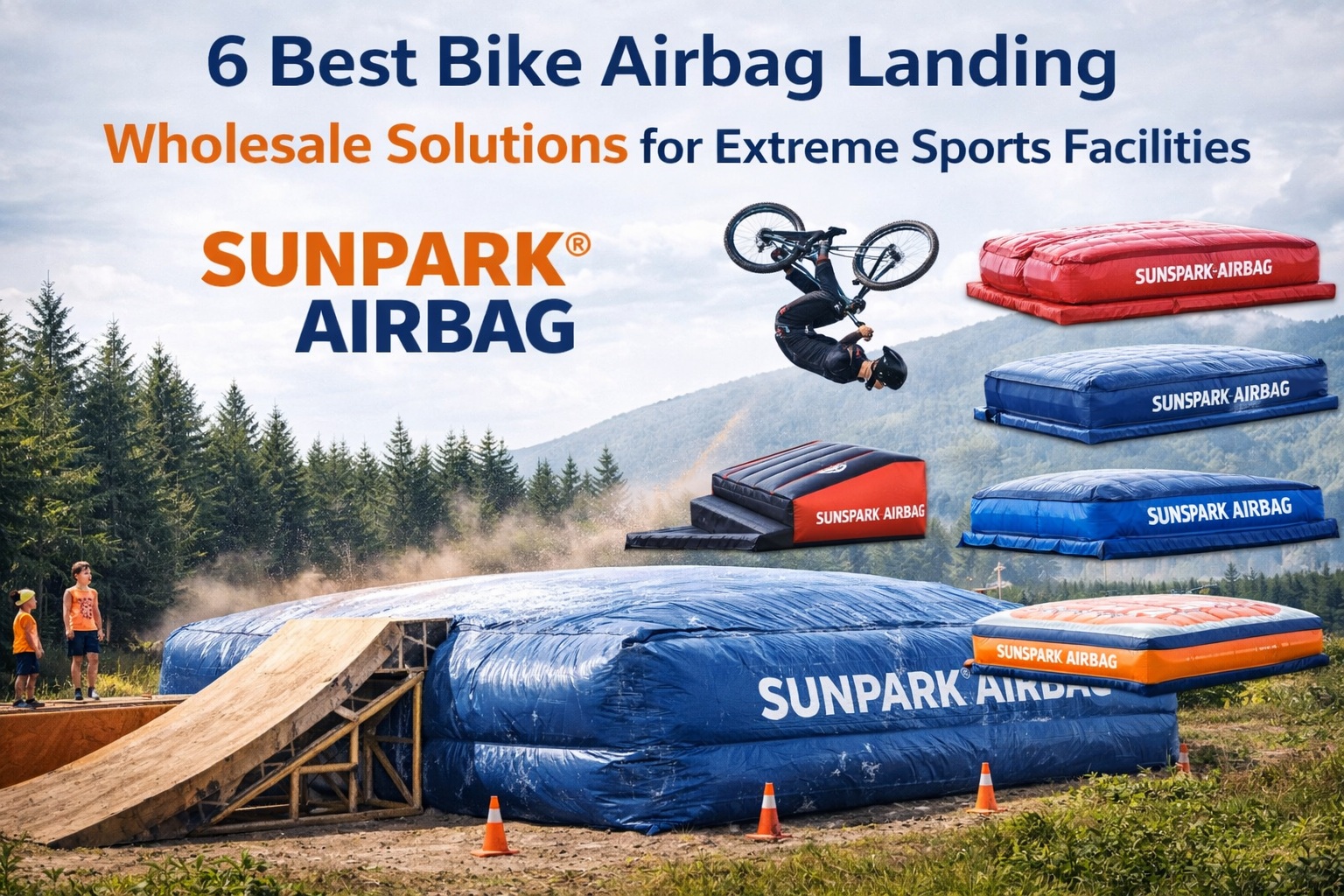
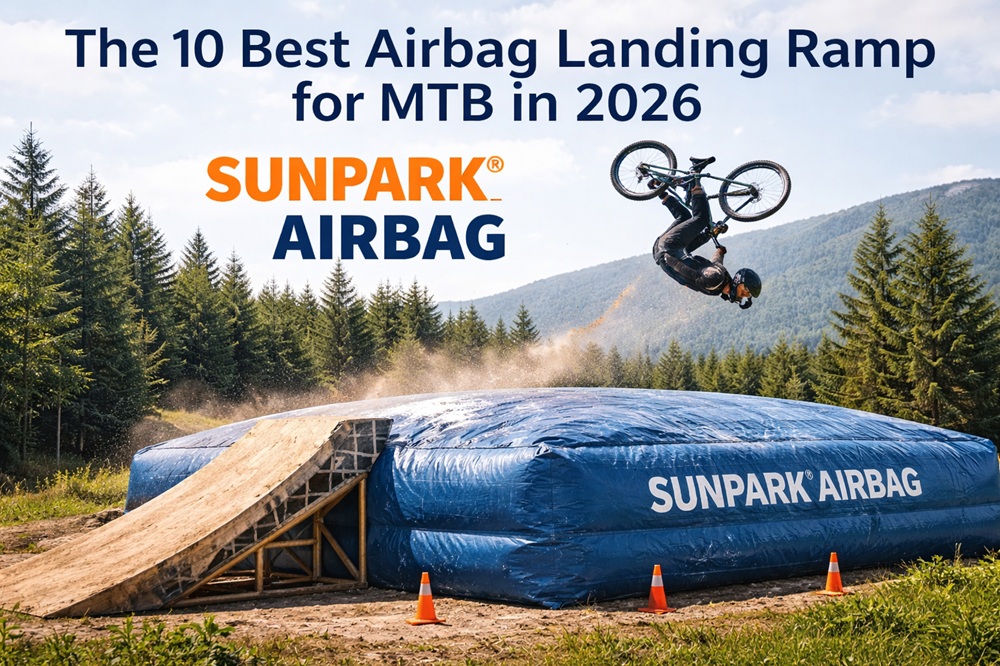
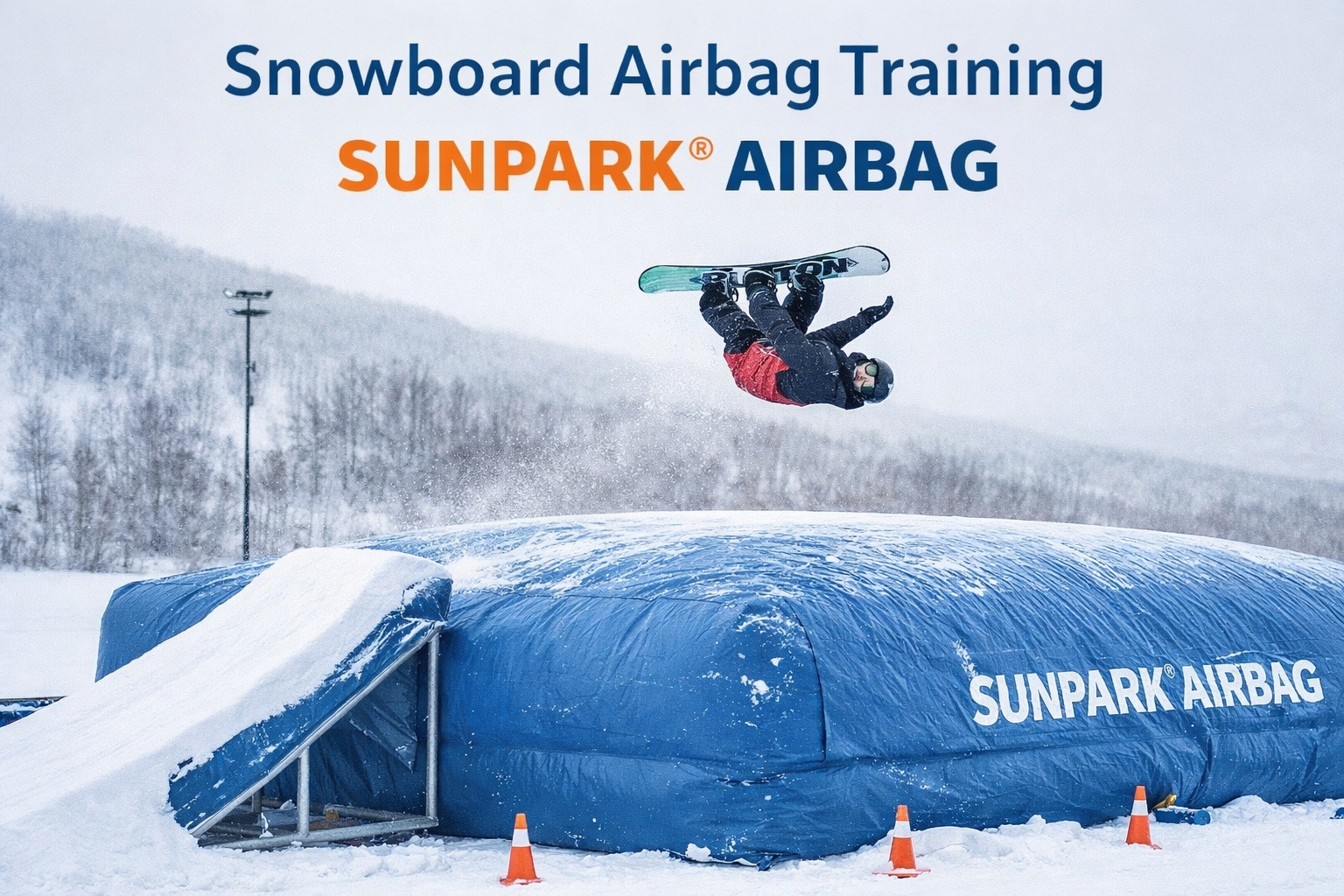
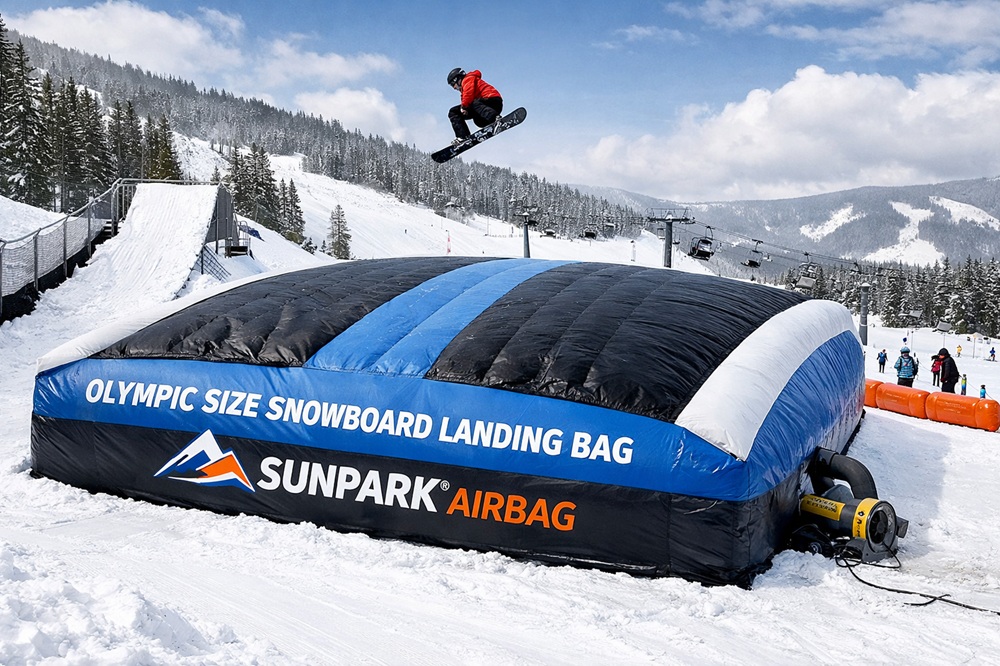
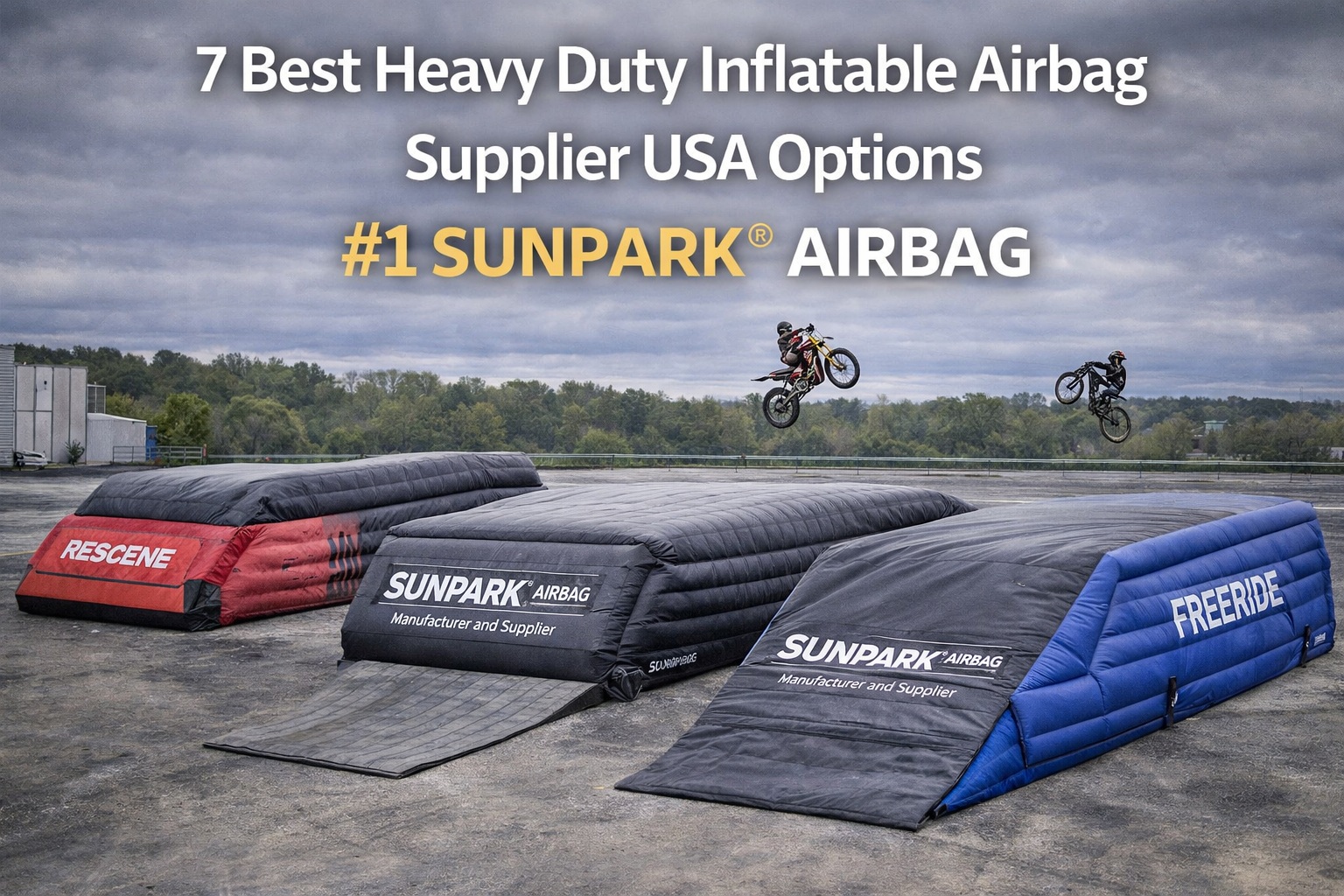
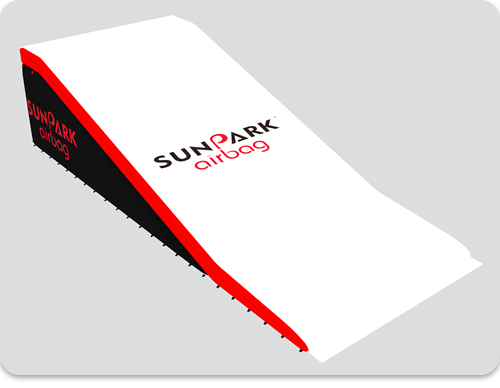
For ski resorts, BMX dirt jump trails, and professional skate parks, our flagship Airbag Landing systems replicate the exact geometry of a real dirt or snow transition. These are massive, sloped systems that allow riders to land and ride out of their tricks smoothly. Due to their immense scale and complex slope geometry, these systems command the highest airbag landing price but offer the most realistic training environment for World Champion snowboarders and elite athletes.
Foam Pit Jump Airbag Upgrades
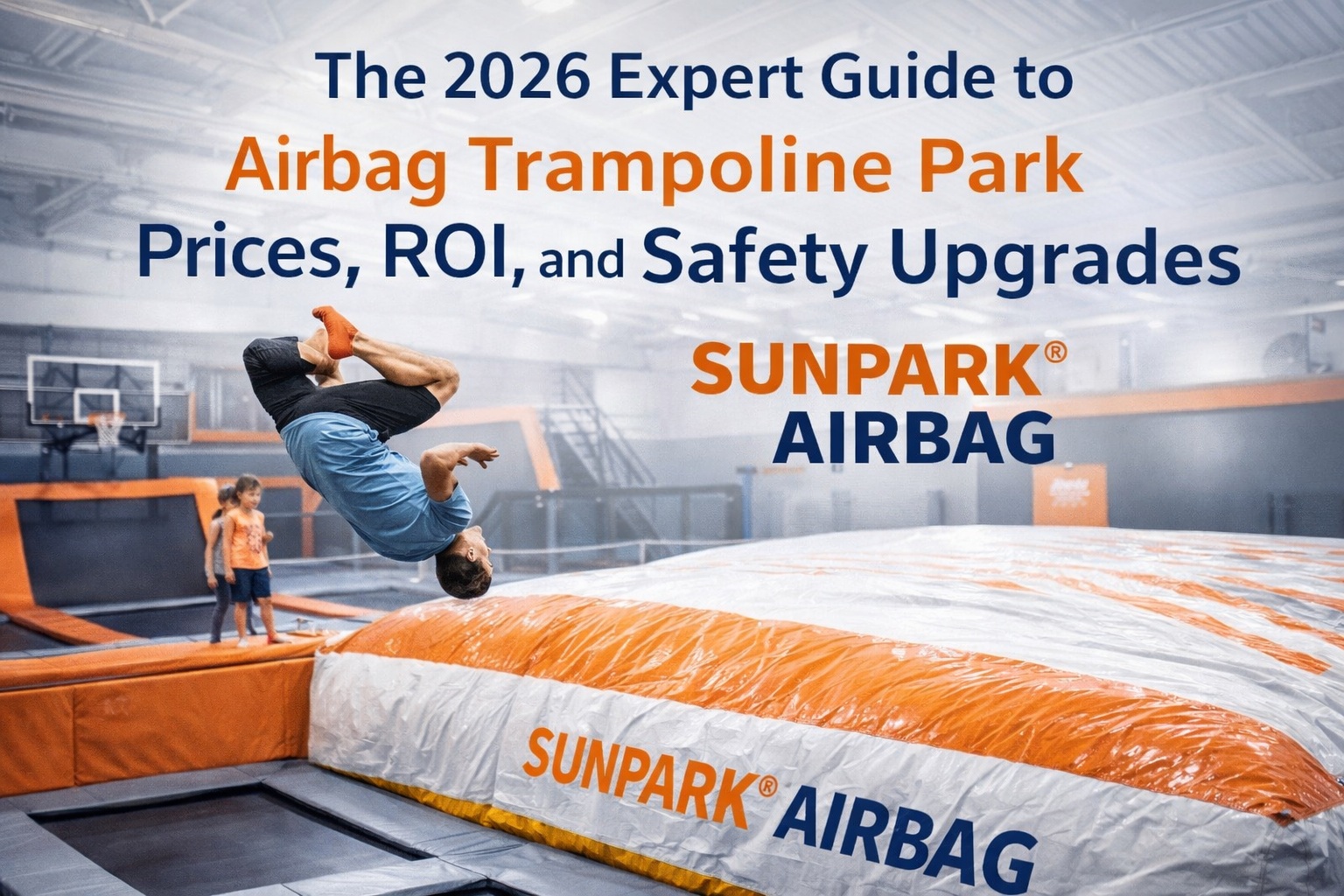
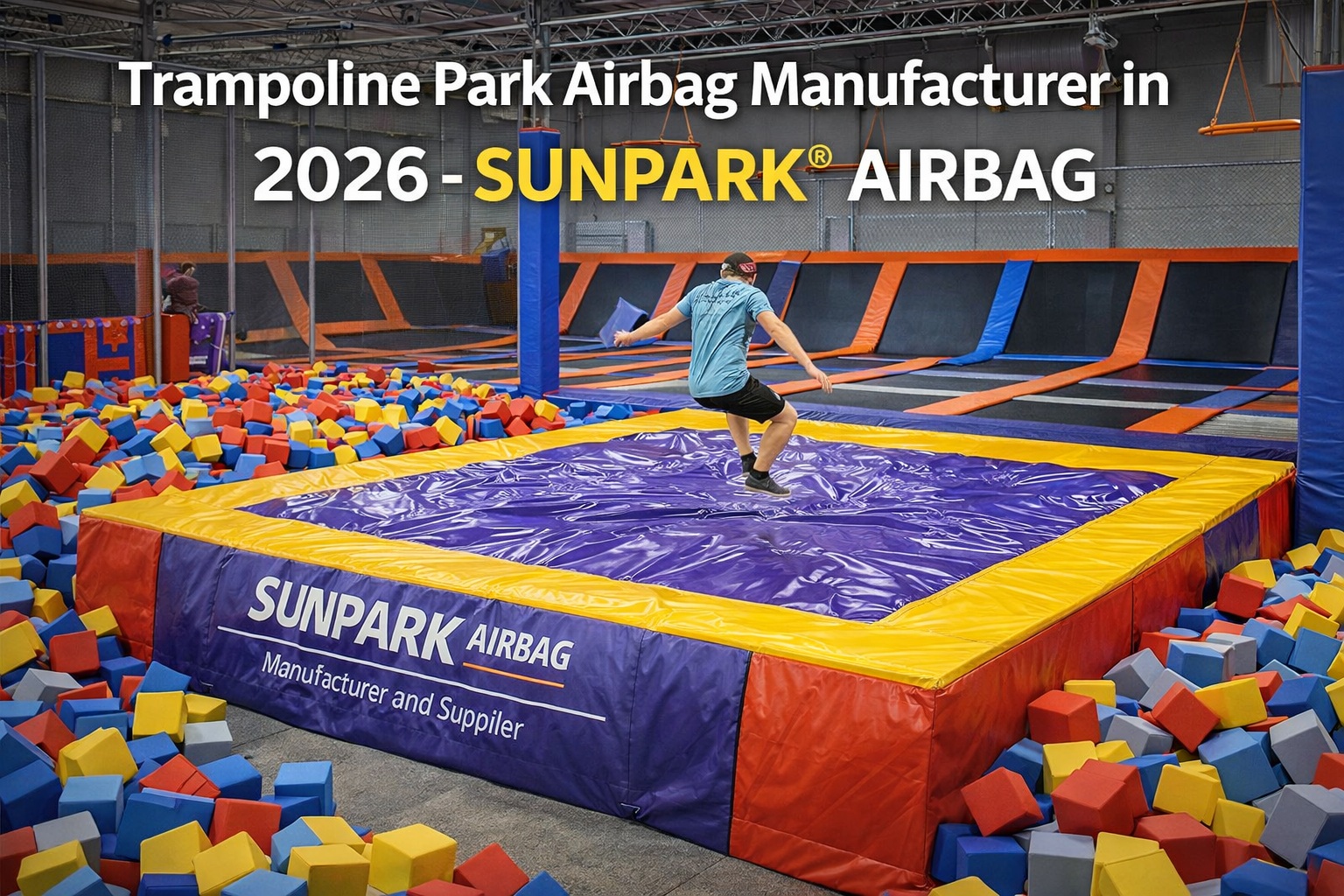
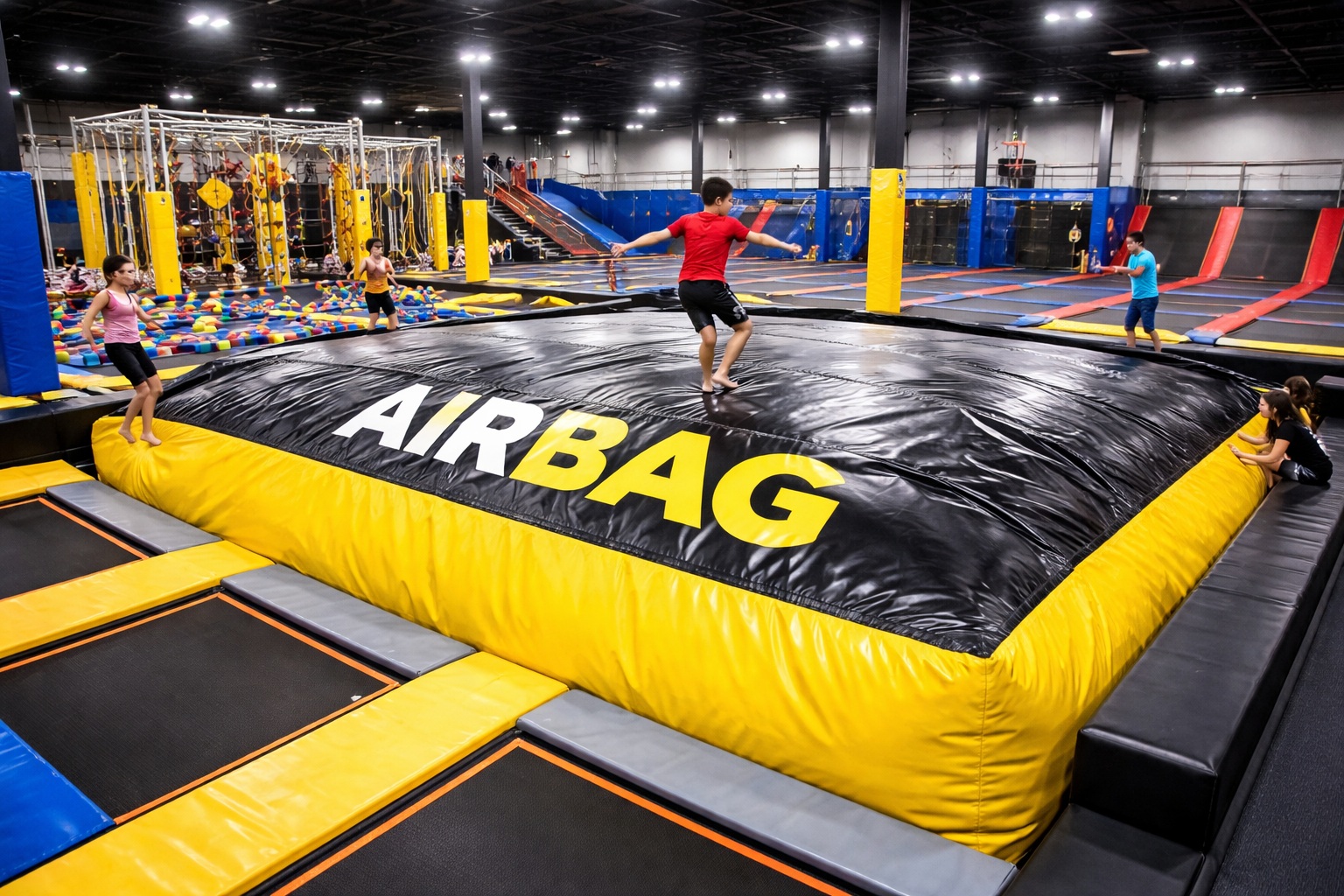
For indoor trampoline parks and gymnastics centers looking to modernize, the Foam Pit Jump Airbag is the optimal solution. These airbags are custom-manufactured to drop directly into your existing concrete or wooden pit infrastructure. By utilizing a flat-top design with internal shock-absorbing pillars, they provide a hygienic, rapid-exit landing zone. Because these bags are typically smaller and do not require sloped architecture, the airbag landing price is highly accessible for mid-sized commercial facilities.
Stunt Airbag and Free Fall Airbag Variants
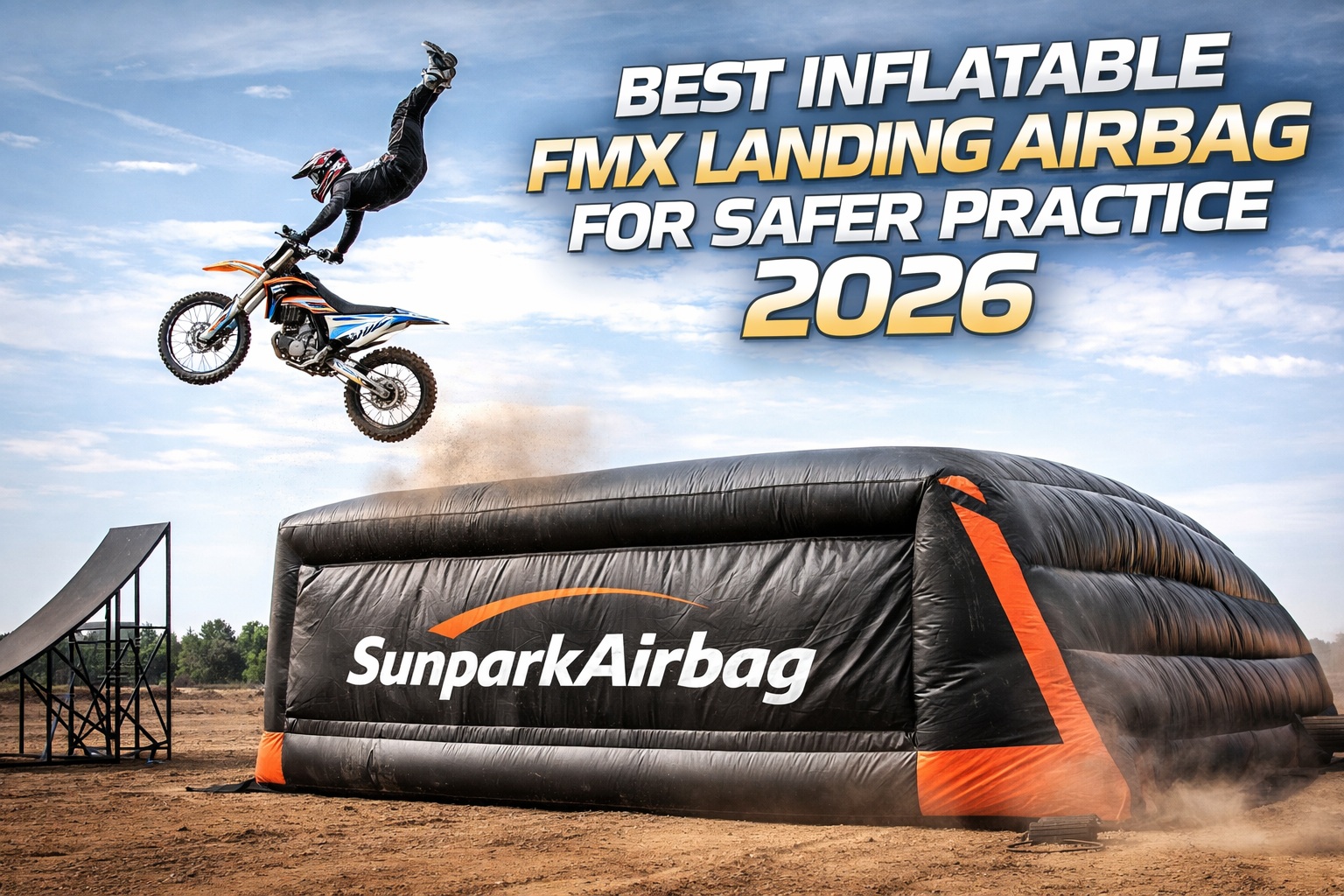
The cinematic stunt industry and extreme leisure sectors (such as high-dive platforms and zero-gravity free fall towers) require specialized deceleration. Our Stunt Airbag and Free Fall Airbag models are engineered to catch falling mass from extreme heights without a forward trajectory. These bags feature heavily reinforced top sheets and rapid-deflation pressure valves. The airbag landing price for these units is calculated based on the maximum height rating required by the facility’s safety engineers.
Custom Airbag Developments
No two facilities are identical. If your architecture features unique pillars, irregular pit shapes, or specific branding requirements, we provide Custom Airbag services. We deploy our engineering team to digitally map your space, ensuring a flawless fit. While customization incurs a slight premium on the base airbag landing price, it ensures absolute maximization of your facility’s square footage.
5. Summary Table: 2026 Airbag Landing Price Matrix
To assist your procurement team in financial forecasting, we have compiled a generalized matrix reflecting the structural elements that dictate the airbag landing price across our primary product categories.
| Product Category | Primary Application | Key Engineering Features | Relative Airbag Landing Price Tier |
|---|---|---|---|
| Airbag Landing (Sloped) | Ski Resorts, BMX Parks, Mega Ramps | Ride-out transition, extreme cold tolerance, massive volume. | Premium (High Capital Investment) |
| Foam Pit Jump Airbag | Trampoline Parks, Gymnastics Centers | Flat-top, drop-in design, hygienic top sheet. | Moderate (Rapid ROI via foam replacement savings) |
| Free Fall Airbag / Stunt Airbag | Stunt Training, High Dive, Leisure Parks | Vertical impact absorption, rapid pressure release valves. | High (Determined by required fall height rating) |
| Custom Airbag | Irregular Facilities, Branded Events | Bespoke dimensions, custom top sheet graphics. | Variable (Based on engineering complexity) |
6. Frequently Asked Questions (FAQs)
Why does the airbag landing price vary so much between different manufacturers?
From our experience, extreme discrepancies in the airbag landing price usually indicate a compromise in material thickness, internal stitching quality, or blower capacity. Low-cost alternatives often use thin, non-treated PVC that will tear under repetitive impact and lack the sophisticated internal air pillars necessary for safe deceleration. SunparkAirbag® utilizes only commercial-grade, multi-layer textiles engineered for decade-long durability.
Are the top sheets replaceable, and how does this affect long-term costs?
Yes. The top sheet absorbs the most abrasive friction from snowboards, bikes, and shoes. We engineer our airbags with fully removable, Velcro-secured top sheets. Instead of replacing the entire system, you only purchase a new top sheet when it wears out. This modular design drastically lowers the long-term airbag landing price and extends the lifecycle of your investment.
How does cold weather affect the Airbag Landing systems used at ski resorts?
Standard PVC becomes brittle and cracks when subjected to freezing temperatures. When we quote an airbag landing price for a winter resort, we utilize specialized cold-crack resistant PVC and TPU blends that maintain their elasticity at -30 degrees Celsius. We recommend discussing your specific climate requirements with our engineers to ensure the correct material is deployed.
What is the lifespan of a SUNPARK® AIRBAG?
With proper maintenance, regular cleaning, and adherence to our operational guidelines, our commercial-grade systems routinely operate heavily for 5 to 8 years before requiring major servicing. When amortized over this lifespan, the true airbag landing price is significantly lower than continually maintaining a traditional foam pit.
7. Industry Safety References
- U.S. Consumer Product Safety Commission (CPSC) – Guidelines for Amusement Rides and Trampoline Parks
- ASTM International – Standard Practice for Design, Manufacture, Installation, Operation, Maintenance, Inspection and Major Modification of Trampoline Courts
- National Institute for Occupational Safety and Health (NIOSH) – Ergonomics and Kinetic Impact Studies