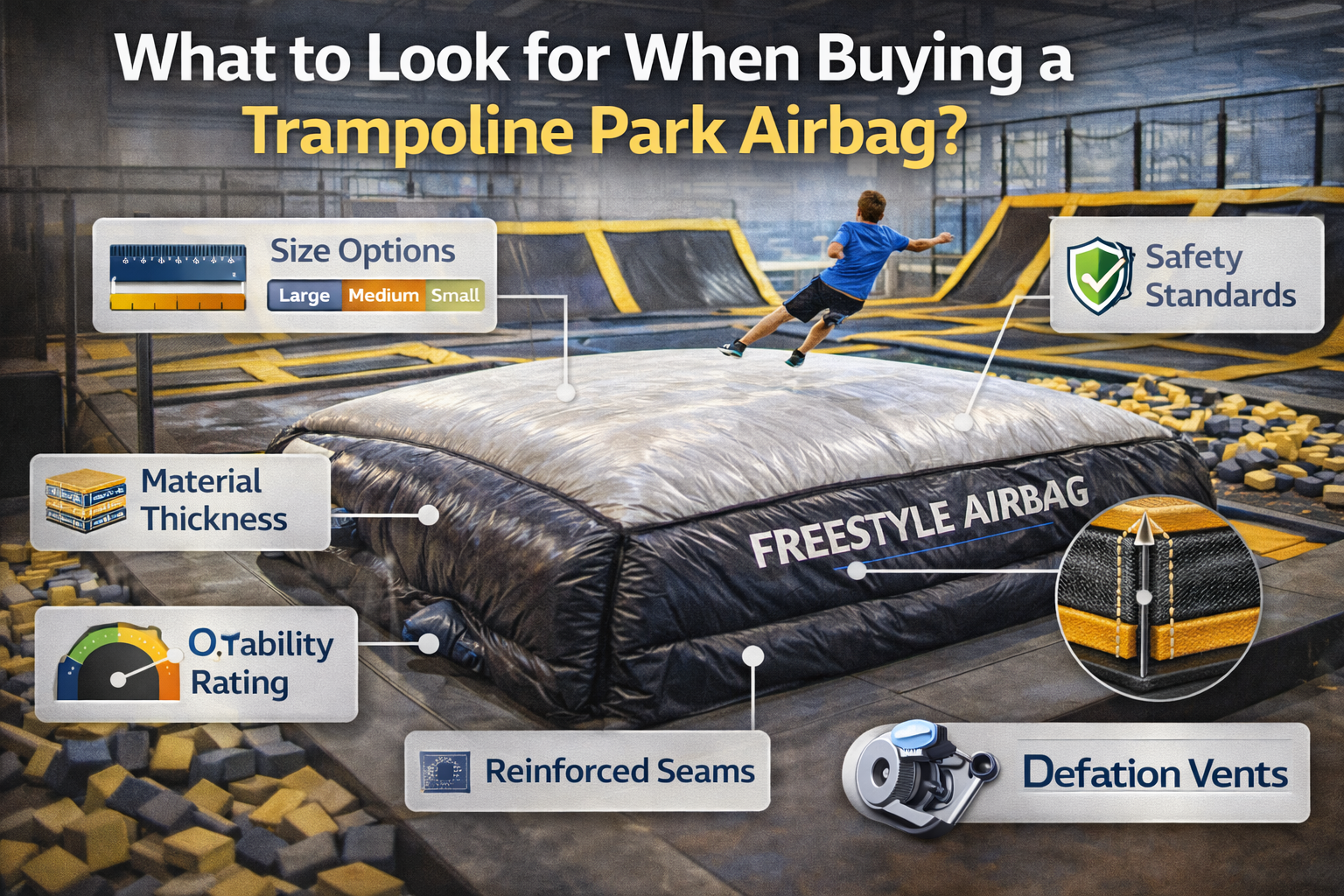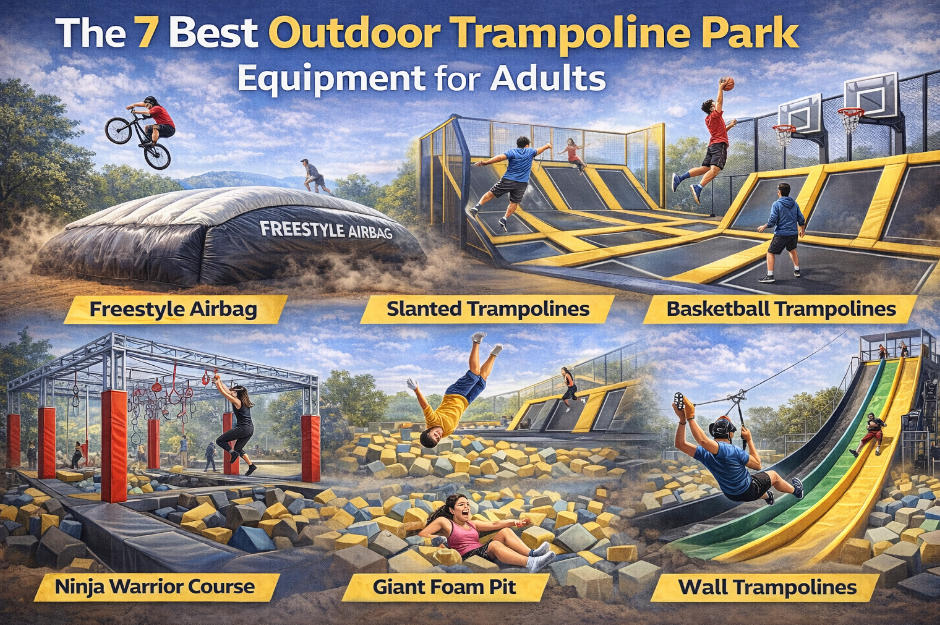
In the high-stakes world of extreme winter sports, pushing the boundaries of human performance comes with inherent physical risks. As aerial maneuvers evolve from simple spins to triple and quadruple corks, the margin for error effectively vanishes. Parents, aspiring athletes, and facility managers frequently ask industry professionals a critical question: Do snowboarders have airbags? The answer is an unequivocal yes. However, the application of this technology extends far beyond what the general public typically imagines. In the professional winter sports sector, airbags are not merely wearable avalanche survival tools; they are massive, highly engineered pneumatic landing systems that have fundamentally revolutionized freestyle progression.
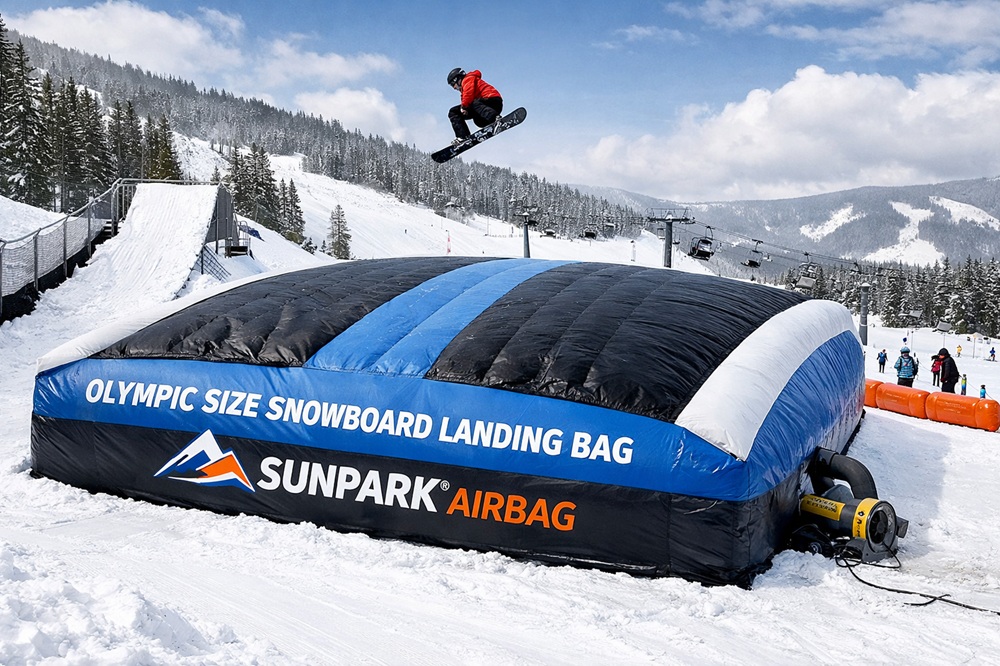
At SUNPARK® AIRBAG, we have spent over 10 years at the forefront of this technological revolution. We provide freestyle airbags for ski resorts, theme parks, sports, and gymnastics facilities around the globe. As the leading manufacturer of Airbags for Extreme Sports and Leisure Industries in China, we have witnessed firsthand how safety infrastructure dictates athletic advancement. As extreme sports developed, more and more snowboarders and serious sports enthusiasts are looking for safer training possibilities to progress without risks of getting injured. We create the products for World Champion Snowboarders, famous riders, and trampoline parks worldwide. We are deeply committed to the development and improving of our own products. In this authoritative guide, we will explore the dual meaning of the query Do snowboarders have airbags, detail the aerodynamic engineering behind modern landing systems, and explain how these massive inflatable structures are changing the face of extreme sports.
1. Understanding the Query: Do Snowboarders Have Airbags?
When consumers and industry outsiders ask, Do snowboarders have airbags, they are usually conflating two entirely different safety technologies utilized in the snow sports industry. It is vital to distinguish between personal avalanche safety gear and structural freestyle training equipment.
The first category involves wearable avalanche airbags. These are integrated into backpacks worn by backcountry snowboarders and skiers. In the event of an avalanche, the rider pulls a deployment cord, and a compressed gas cylinder rapidly inflates a durable balloon behind their head. This process utilizes the principle of inverse segregation, helping the rider stay near the surface of the moving snowpack. While crucial for backcountry survival, this is a reactive safety measure.
The second category, and the absolute focus of professional athletic progression, is the massive inflatable landing airbag. When professional coaches ask Do snowboarders have airbags, they are referring to these colossal pneumatic structures placed on the landing pitch of a ski jump. These are proactive safety tools. They allow riders to attempt highly complex, dangerous aerial maneuvers and land safely, even if their rotation is incomplete or their axis is off. At SUNPARK® AIRBAG, our engineering efforts are entirely dedicated to this second category, producing advanced systems that absorb massive kinetic energy and prevent catastrophic orthopedic injuries.
2. The Evolution of Freestyle Snowboarding Training
To understand why the answer to Do snowboarders have airbags is so critical today, we must look at the history of freestyle training. Two decades ago, athletes learning new tricks had to rely on foam pits or deep powder days. Foam pits are notoriously unhygienic, difficult to maintain, and completely useless in an actual on-snow environment. Furthermore, foam pits do not allow a rider to ride away from a successfully landed trick; the rider simply sinks into the foam.
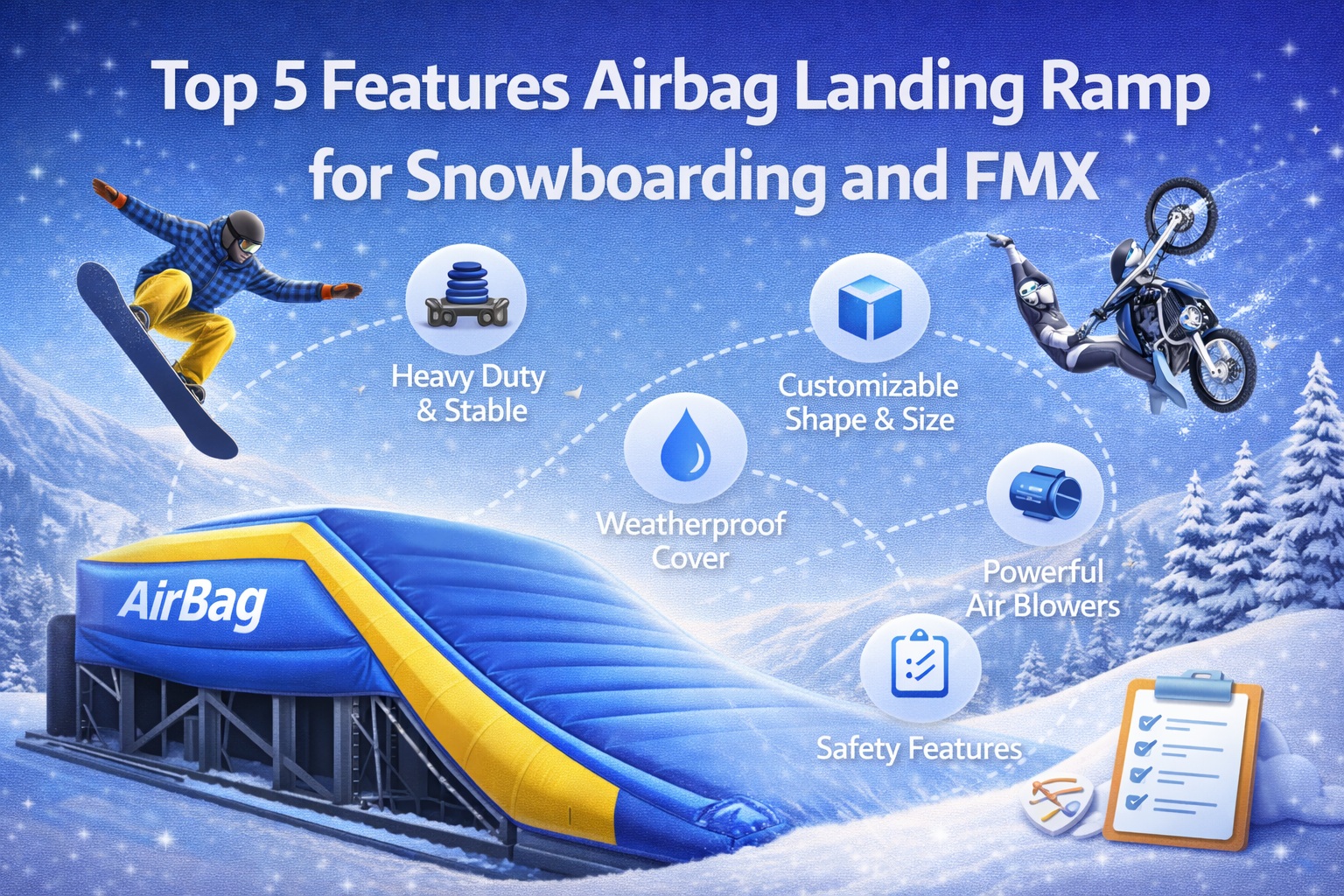
From our experience outfitting Olympic training centers, athletes cannot build muscle memory if they cannot practice the landing phase of a trick. The introduction of the freestyle landing airbag bridged this gap perfectly. By utilizing a Safer Jump Snowboarding Airbag Training system, riders can launch from a snow ramp, execute their aerial maneuvers, and land on a slanted inflatable surface that perfectly mimics the contour of a real snow landing. If they land cleanly, they can literally ride off the airbag. If they crash, the airbag absorbs the impact, allowing them to stand up, hike back to the drop-in, and try again immediately. This rapid, safe repetition is the secret behind the exponential progression of modern snowboarding tricks.
3. The Engineering Mechanics of a Freestyle Landing Airbag
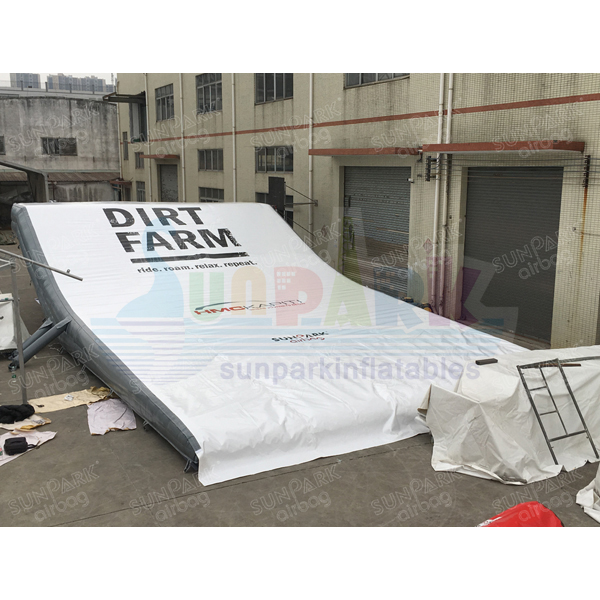
Addressing the question of Do snowboarders have airbags requires a deep dive into the pneumatic engineering that makes these structures viable. A professional landing airbag is not merely a giant balloon; it is a highly sophisticated, multi-chambered shock absorption system constructed from heavy-duty, fire-retardant, and UV-resistant Plato PVC vinyl.
3.1 Impact Attenuation and Air Release
When a snowboarder falls from a height of 30 to 50 feet, the kinetic energy transferred upon impact is immense. Our airbags utilize a continuous airflow system driven by industrial blowers. The airbag features internal air pillars and strategically placed pressure release valves. Upon impact, the valves open, expelling air to decelerate the rider smoothly rather than bringing them to an abrupt halt. This dynamic air displacement prevents severe whiplash and spinal compression.
3.2 The Importance of No-Bounce Technology
One of the fatal flaws of early airbag prototypes was the trampoline effect. If a bag was too pressurized and lacked internal baffling, a crashing rider would be catapulted back into the air, often resulting in secondary injuries. We recommend that any facility manager strictly audit the baffling technology of their potential suppliers. At SUNPARK® AIRBAG, we developed the No Bounce Inflatable Landing Ramp Airbag. This system utilizes a specific dual-chamber design. The bottom chamber remains fully pressurized to prevent bottoming out against the earth, while the top chamber is softer and highly vented, completely absorbing the rider’s downward momentum and eliminating any hazardous rebound effect.
4. Integrating Airbags into Ski Resorts and Training Facilities
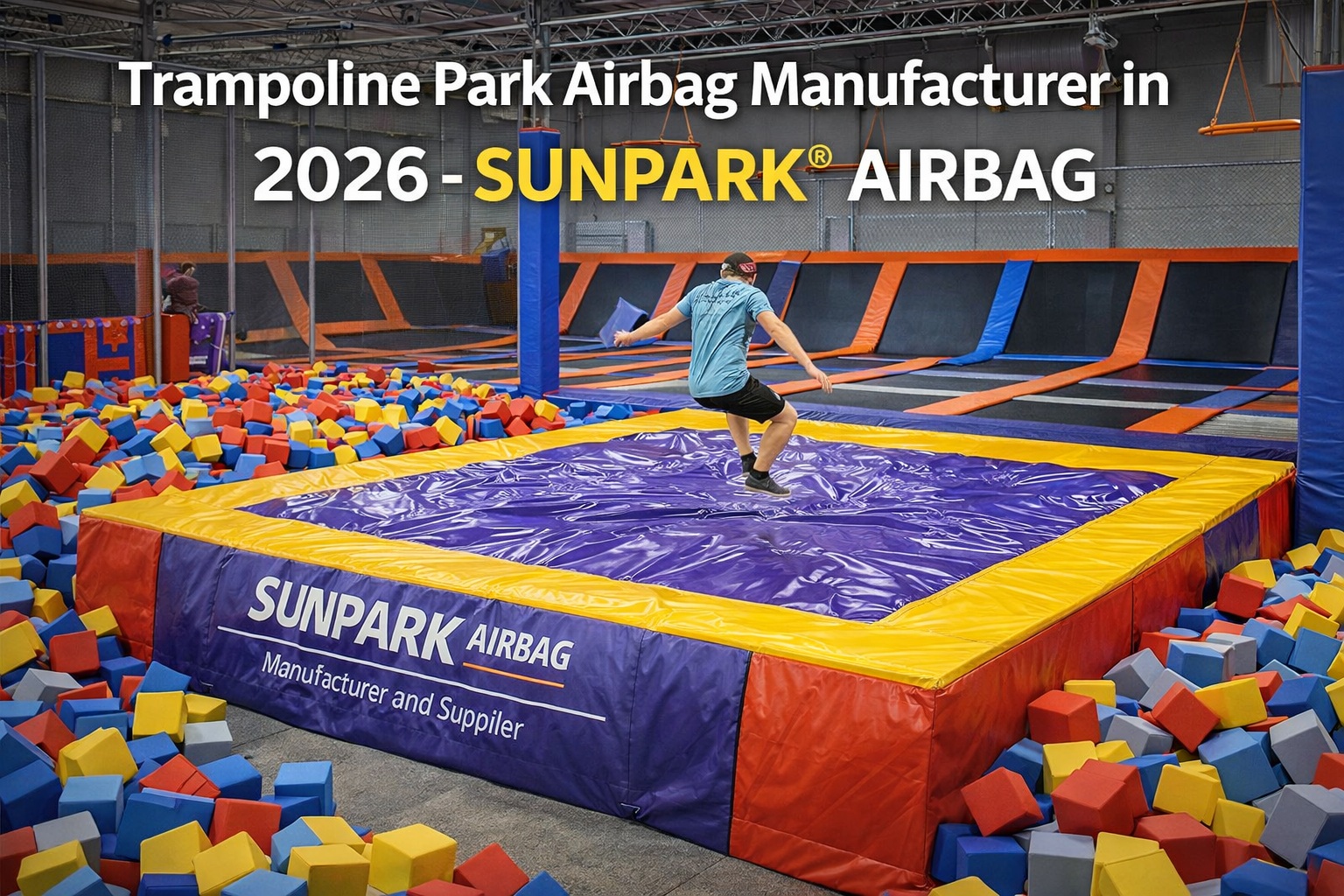
When evaluating Do snowboarders have airbags at a commercial level, ski resorts are increasingly recognizing the immense return on investment these systems provide. An Olympic Size Snowboard Landing Bag for Ski Resorts serves as a massive draw for both professional teams seeking training grounds and amateur tourists looking for a safe thrill.
From our experience, integrating these bags into a terrain park significantly reduces the resort’s liability regarding terrain park injuries. Furthermore, these setups can be utilized year-round. During the summer months, resorts transition their snow jump into a dry-slope synthetic in-run, allowing snowboarders and freeskiers to continue their training 365 days a year. We engineer our top-sheets to be highly durable, allowing the sharp metal edges of snowboards and skis to glide across the surface without puncturing the underlying pneumatic chambers.
5. Cross-Discipline Applications: FMX and BMX
While the query Do snowboarders have airbags centers on winter sports, the exact same shock-absorption principles apply to dirt and concrete action sports. The kinematic forces involved in a Freestyle Motocross (FMX) crash are devastating. Consequently, our engineering translates directly to the motorized sector.
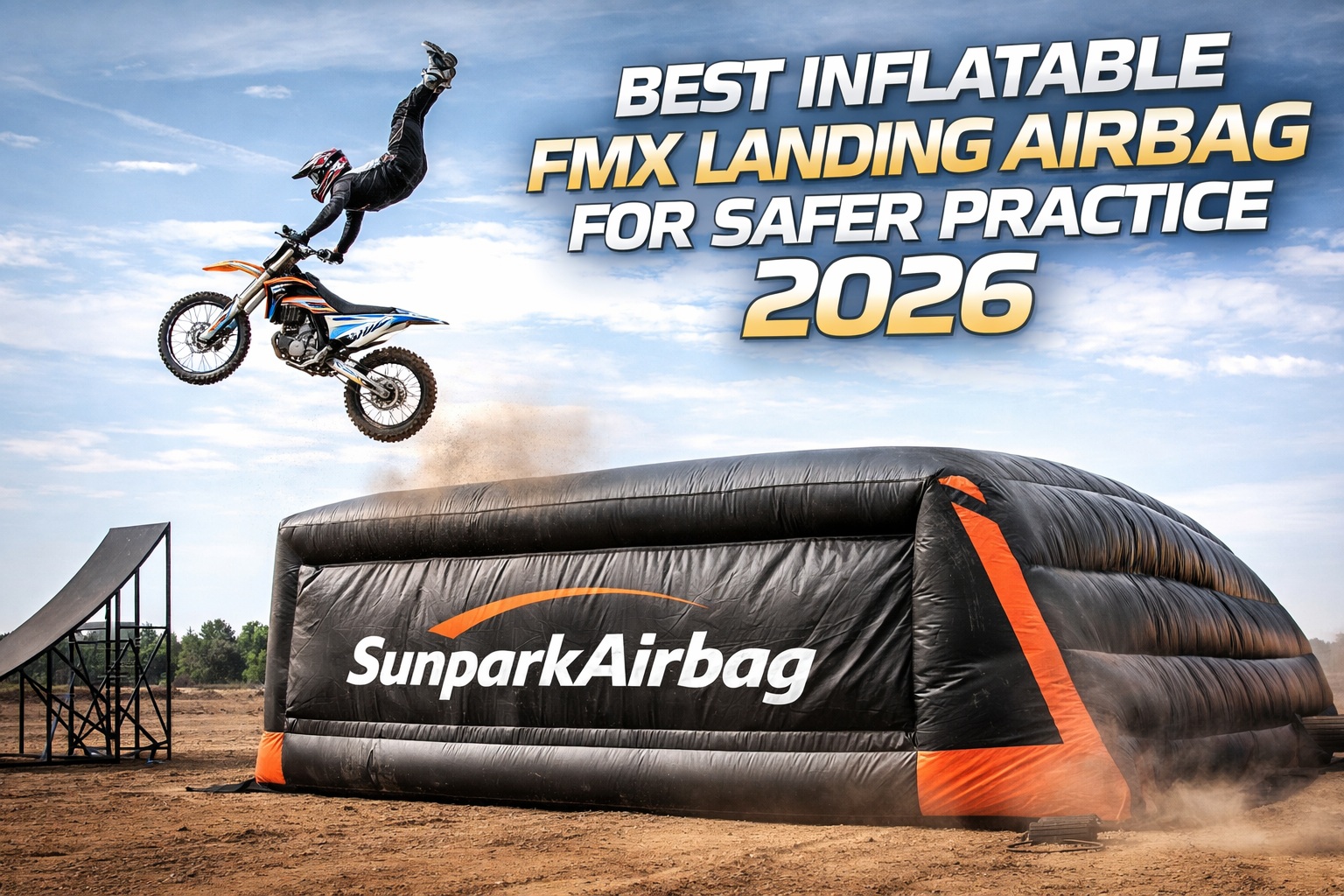
We manufacture the Inflatable FMX Landing Airbag for Safer Practice, which is structurally reinforced to withstand the 250-pound impact of a falling dirt bike, alongside the rider. The Inflatable Airbag FMX Landing Mattress utilizes the same no-bounce technology, ensuring that if a rider under-rotates a backflip, neither they nor their machine suffers catastrophic damage. This cross-discipline reliability reinforces our position that engineered pneumatic landing systems are the universal standard for extreme sports safety.
6. Summary Table: Categories of Snowboarding Airbags
To provide absolute clarity on the subject of Do snowboarders have airbags, we have categorized the distinct technologies currently utilized in the industry.
| Type of Airbag | Primary Function | User / Environment | Deployment Mechanism |
|---|---|---|---|
| Wearable Avalanche Airbag | Keeps the rider afloat during an avalanche slide via inverse segregation. | Backcountry snowboarders, split-boarders, heli-skiers. | Manual pull-cord, compressed gas cylinder inflation. |
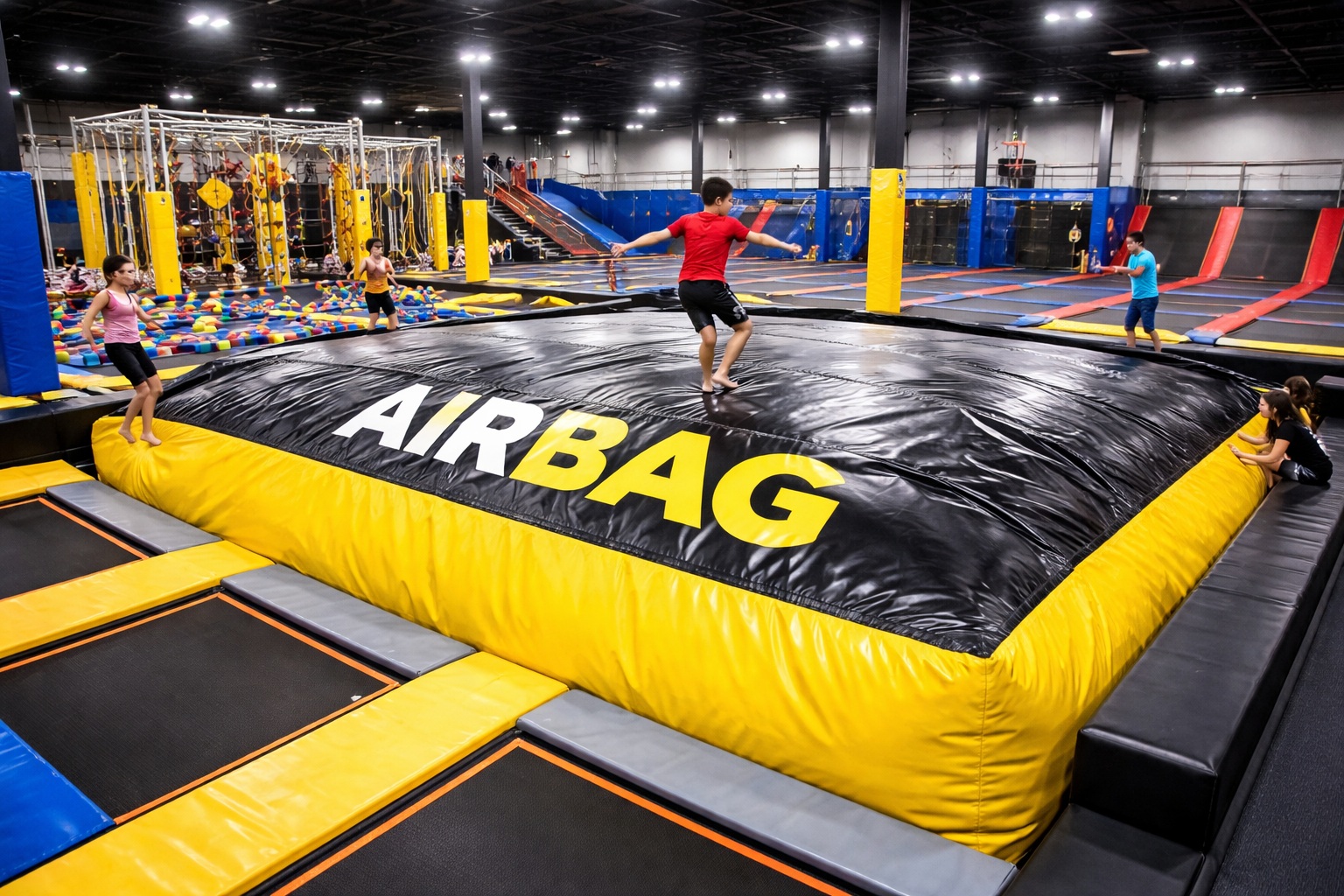
| Freestyle Landing Airbag (Flat) | Absorbs impact from aerial tricks, preventing orthopedic injury. | Trampoline parks, gymnastics facilities, indoor training centers. | Continuous industrial blower inflation, multi-chamber setup. |
| Safer Jump Snowboarding Airbag Training (Ramp) | Mimics a snow landing, allows riders to ride away from successful tricks. | Professional athletes, ski resorts, year-round dry slope facilities. | Continuous industrial blower, specialized no-bounce top chamber. |
| Inflatable FMX Landing Airbag | Withstands extreme impact from motorized vehicles and riders. | Freestyle Motocross riders, BMX athletes, mega-ramp events. | Heavy-duty reinforced PVC, continuous extreme-pressure blowers. |
7. Frequently Asked Questions (FAQs)
Do snowboarders have airbags that they wear on their bodies?
Yes, backcountry snowboarders wear avalanche airbag backpacks. These are designed to inflate a large balloon behind the rider’s head in the event of an avalanche, increasing their volume to help them stay on top of the moving snow. However, these are strictly for survival, not for freestyle training.
How does a No Bounce Inflatable Landing Ramp Airbag work?
From our experience, preventing bounce is critical for safety. Our no-bounce airbags use a dual-chamber system. The lower chamber is tightly pressurized to prevent the rider from hitting the ground. The upper chamber features multiple air-release vents. When the rider hits the surface, the upper chamber rapidly expels air, absorbing the kinetic energy without launching the rider back up.
Can the metal edges of a snowboard puncture the landing airbag?
It is a common concern when people ask Do snowboarders have airbags. At SUNPARK® AIRBAG, we utilize an ultra-durable, replaceable top-sheet made from specialized high-tensile PVC. This top-sheet is engineered to withstand the friction and slicing action of sharp metal snowboard edges. If the top-sheet does wear out over time, it can be easily replaced without replacing the entire airbag structure.
Are landing airbags only for professional snowboarders?
Absolutely not. While we supply the Olympic Size Snowboard Landing Bag for Ski Resorts utilized by World Champions, we also manufacture smaller, highly approachable airbags for commercial ski resorts and trampoline parks. These allow amateur riders and serious sports enthusiasts to practice their first 360-degree spins safely, bridging the gap between beginner and advanced progression.
8. Industry References
To further explore the safety protocols, biomechanics, and equipment standards governing the extreme sports industry, we highly recommend consulting the following authoritative organizations: