With over 10 years of experience, SUNPARK® AIRBAG provides freestyle airbags for ski resorts, theme parks, sports, and gymnastics facilities around the globe. As the leading manufacturer of Airbags for Extreme Sports and Leisure Industries in China, we possess a profound understanding of pneumatic safety, impact absorption, and risk mitigation. As extreme sports have developed, more and more snowboarders and serious sports enthusiasts are looking for safer training possibilities to progress without risks of getting injured. We create the products for World Champion Snowboarders, famous riders, and trampoline parks worldwide. Because we are deeply committed to the development and improving of our own products, we are frequently asked to weigh in on equipment safety. One of the most common questions we hear from athletes transitioning from controlled park environments to the unpredictable backcountry is: do avalanche airbags really work?
From our experience engineering high-volume air systems, the short answer is an emphatic yes. However, the long answer requires a rigorous examination of physics, biomechanics, and historical survival statistics. Wearable avalanche safety gear is not a magical shield that guarantees survival, but it is unequivocally one of the most effective pieces of preventative safety equipment available today. In this comprehensive guide, we will leverage our expertise in extreme sports safety to analyze the data, explain the mechanical physics, and definitively answer whether avalanche airbags really work in life-or-death backcountry scenarios.
1. The Science of Survival: How Do Avalanche Airbags Really Work?
To understand if avalanche airbags really work, we must first look closely at the science of a snow slide. While an avalanche might look like a rushing wave of water, it is technically a granular flow. The physics governing moving snow are entirely different from the fluid dynamics of liquids.
1.1 The Physics of Granular Convection
In a moving granular flow, a physical process known as inverse segregation, or granular convection, dictates the movement of objects within the slide. The simplest way to visualize this is by shaking a bag of mixed nuts or cereal; the largest items systematically rise to the top while the smaller particles filter downward. When a backcountry skier or snowboarder deploys a wearable avalanche backpack, a compressed gas cylinder or a high-powered electric fan rapidly inflates a durable balloon. This deployment adds approximately 150 to 200 liters of physical volume to the wearer.
1.2 Dispelling the Buoyancy Myth
Many skeptics ask, do avalanche airbags really work like a life jacket in water? No. They do not provide “buoyancy” because snow is not a true liquid. Instead, this sudden, massive increase in volume makes the human body the largest single “particle” caught within the avalanche debris. As the snow churns and tumbles down the mountain, the smaller snow crystals slide beneath the inflated balloon, effectively forcing the victim toward the surface of the flow. Therefore, when asking do avalanche airbags really work, the laws of physics overwhelmingly support the concept. By utilizing granular convection, these devices drastically reduce the chances of a deep, un-survivable burial under the snowpack.
2. The Hard Statistics: Do Avalanche Airbags Really Work in the Field?
For years, outdoor equipment manufacturers marketed a highly optimistic “97% survival rate” for airbag users. While this sounds incredibly reassuring, it is statistically misleading and fails to capture the true danger of the mountains. To accurately determine if avalanche airbags really work, we must analyze the mortality rates of individuals who were caught in serious, life-threatening slides (Size 2 or larger avalanches), rather than those who were merely grazed by harmless slough.
2.1 Critical Burial vs. Partial Burial
Extensive, peer-reviewed research conducted by the Swiss Federal Institute of Snow and Avalanche Research (SLF) alongside leading avalanche experts provides a crystal-clear picture of survival metrics. Asphyxiation is the primary cause of death in an avalanche. Thus, the most critical factor for a victim’s survival is avoiding a “critical burial” (defined as the victim’s head being completely under the snow with a blocked airway). Do avalanche airbags really work to prevent critical burial? Yes. The data confirms that the risk of experiencing a critical burial is approximately 47% for victims without an airbag. For victims equipped with a successfully inflated airbag, the risk of critical burial drops significantly to just 20%.
2.2 Analyzing the Mortality Reduction
When considering whether avalanche airbags really work, we must look at the bottom-line mortality rates. The adjusted mortality rate for victims caught in a serious slide without an airbag is approximately 22%. For victims who successfully deploy an airbag during the same caliber of slide, the mortality rate is reduced to 11%. From our experience evaluating safety systems, cutting the risk of catastrophic fatality in half is an extraordinary mechanical achievement. While they do not offer an absolute guarantee of life, the objective statistics confirm that avalanche airbags really work to double your overall chances of survival by keeping your airway at or near the surface.
3. The Biggest Limitations: When Avalanche Airbags Fail
As experts in impact and landing safety, we must adamantly emphasize that no piece of equipment can replace sound decision-making and terrain management. People who wonder if avalanche airbags really work often ignore the brutal reality of alpine topography.
3.1 Un-survivable Terrain and Trauma
If you trigger an avalanche that carries you over a large cliff, strains your body through a dense cluster of timber, or deposits you deeply into a ravine known as a “terrain trap,” the preventative capabilities of an airbag are severely compromised. Approximately 10% to 25% of all avalanche fatalities are the result of blunt force trauma, not asphyxiation. While certain airbag designs wrap securely around the head and neck to provide a localized pneumatic cushion against impacts, they cannot shield your entire body from high-speed collisions with boulders and trees. Un-survivable terrain will remain un-survivable regardless of your gear. We recommend prioritizing conservative terrain selection and rigorous avalanche forecasting above all equipment reliance.
3.2 The Non-Deployment Problem
The most sobering statistic in modern avalanche research is the non-deployment rate. In approximately 20% of documented avalanche involvements where the victim was wearing an airbag backpack, the device was never inflated. Of those failures, a staggering 60% are attributed directly to user error. The victim simply failed to pull the trigger during the terrifying chaos of the slide.
This highlights a crucial point regarding extreme sports safety. Do avalanche airbags really work if you fail to pull the deployment cord? Absolutely not. In high-stress, life-threatening moments, human beings revert to their lowest level of automated training. If you have not built the instinctive muscle memory to reach for that trigger while losing your physical balance, you are highly likely to panic and miss the handle entirely.
4. Preventative Safety vs. Rescue Equipment
It is vital to distinguish between preventative equipment and rescue equipment. Do avalanche airbags really work as rescue devices? No. An airbag is entirely preventative; its sole mechanical purpose is to prevent you from being buried deep under the snowpack. However, if you are buried—or if your ski partner is completely buried—an airbag cannot emit a radio frequency, nor can it help you dig them out.
You must always carry the mandatory trinity of backcountry safety gear: an avalanche transceiver (beacon), a collapsible probe, and an aluminum metal shovel. The beacon is the tool that saves the lives of those who end up fully submerged under the snow. We firmly believe that an airbag is a phenomenal added layer of security, proving that avalanche airbags really work as a preventative measure, but they can never replace your beacon, probe, shovel, and the specialized wilderness education required to use them properly.
5. From the Backcountry to the Training Ground: The SUNPARK® Perspective
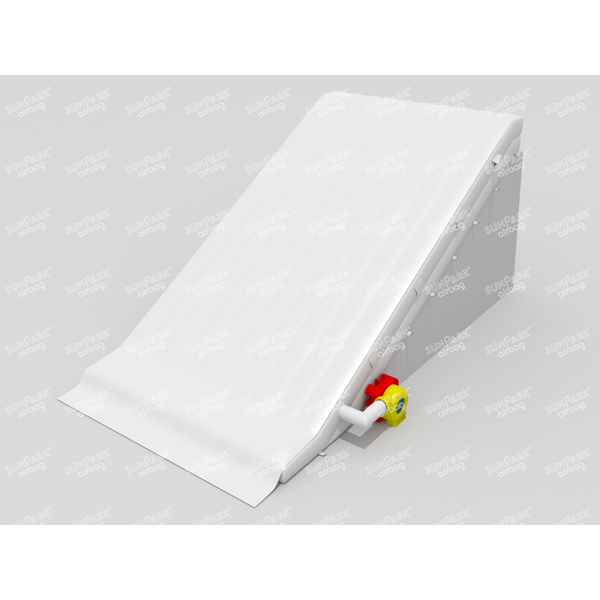
As previously mentioned, user error is the leading cause of airbag non-deployment. Building spatial awareness, maintaining composure during a fall, and developing rapid muscle memory are the keys to survival. This is exactly where controlled training environments become critical. At SUNPARK® AIRBAG, we are dedicated to providing the ultimate platforms for athletic progression.
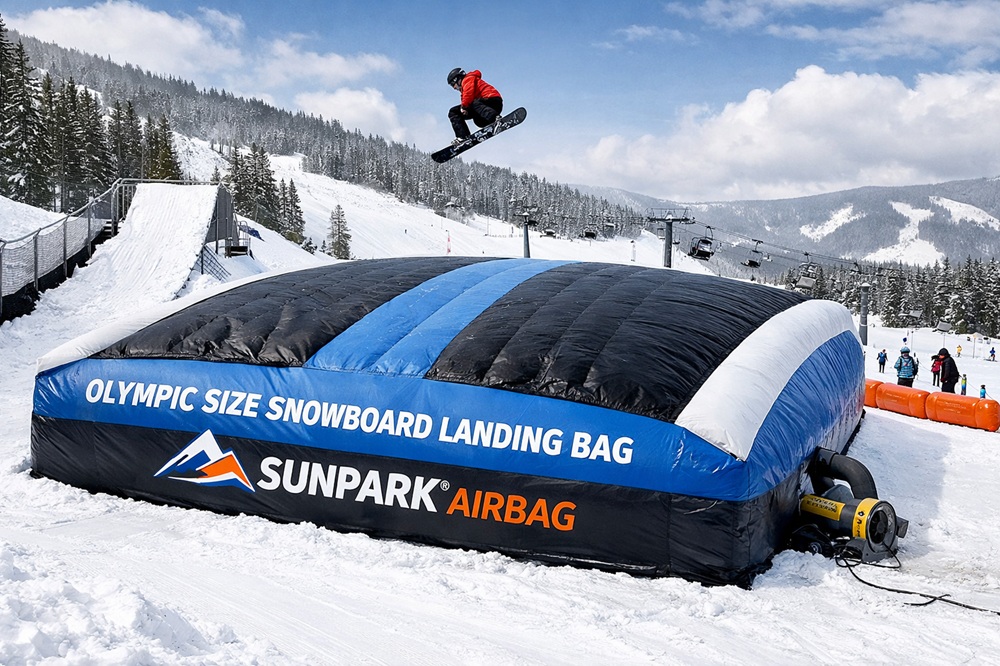
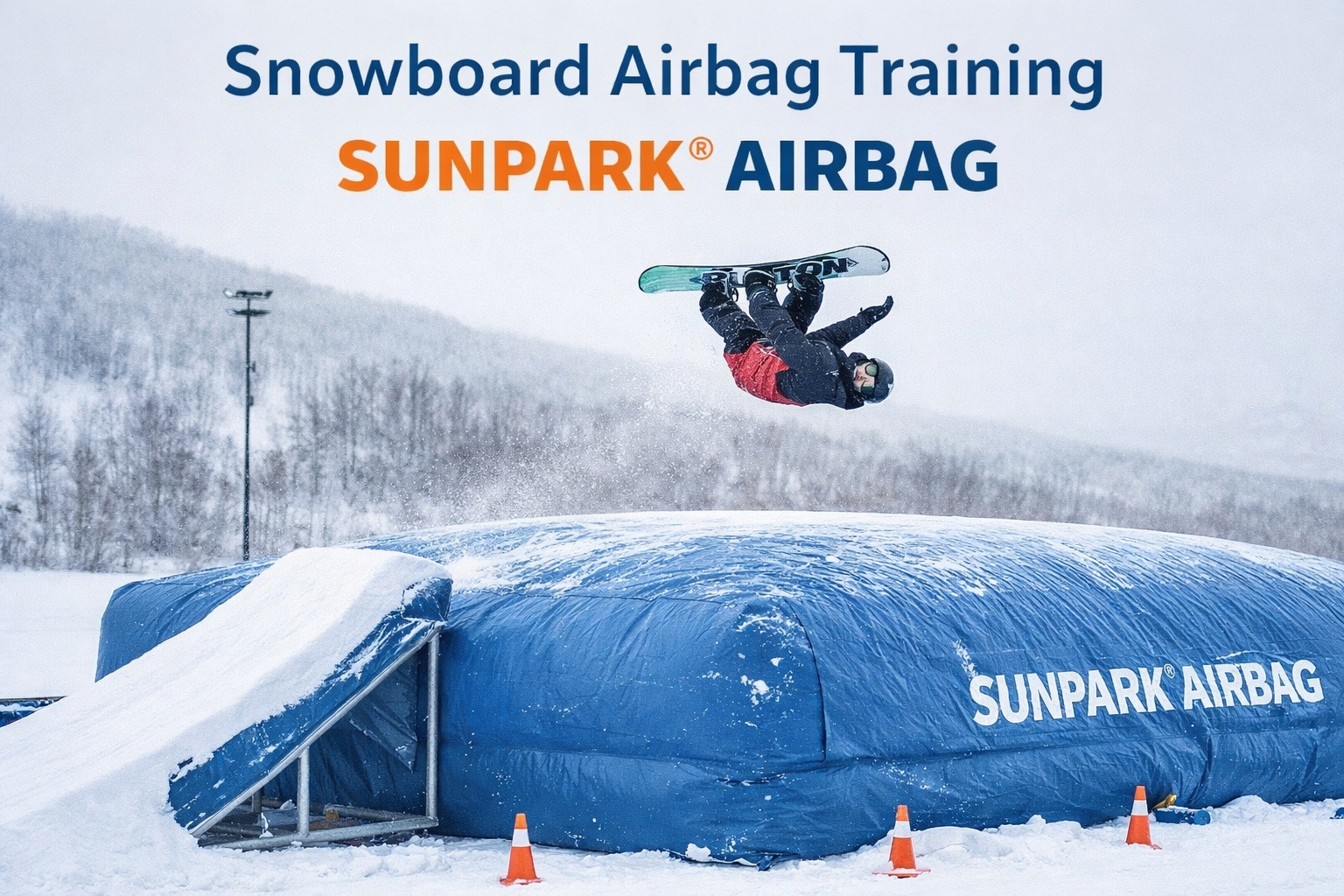
We recommend integrating professional freestyle training setups into your overall progression. For winter sports enthusiasts, our Snowboard airbag training and Ski airbag training systems allow riders to practice complex aerial maneuvers, recover from severe off-axis imbalances, and learn how to brace their bodies for impact safely. By practicing simulated trigger pulls while navigating a massive jump over our freestyle airbags, riders build the automatic muscle memory required to deploy their safety gear instantly during a real backcountry crisis.
Similarly, our year-round summer training solutions, including MTB airbag training, BMX airbag landing training, and FMX airbag landing training setups, keep an athlete’s fast-twitch reflexes incredibly sharp. From our experience, an extreme sports athlete who has spent hundreds of hours mastering their body mechanics and spatial awareness over a SUNPARK® airbag is vastly more likely to retain the cognitive composure needed to deploy an avalanche backpack successfully under the terrifying pressure of a real slide.
6. Summary Table: Avalanche Airbag Effectiveness
To clearly illustrate whether avalanche airbags really work, we have compiled the following summary table detailing the statistical outcomes of severe avalanche involvements, contrasting victims without airbags against those who successfully deployed them.
| Outcome Metric | Victims Without Airbag | Victims With Inflated Airbag |
|---|---|---|
| Risk of Critical Burial | 47% | 20% |
| Adjusted Mortality Rate | 22% | 11% |
| Primary Cause of Death | Asphyxiation | Blunt Force Trauma / Asphyxiation |
| Mechanical Function | N/A | Granular Convection (Inverse Segregation) |
| User Error Failure Rate | N/A | ~12% (60% of the 20% non-deployment rate) |
7. Frequently Asked Questions (FAQs)
Do avalanche airbags really work in all types of snow?
Yes, the physics of granular convection apply to all moving granular flows. Whether you are caught in a dry powder slab or a heavy, wet spring avalanche, the 150-liter volume increase will inherently force your body toward the surface of the moving debris. However, the density of the snow will dictate how quickly the debris sets like concrete once the slide stops.
Can an airbag protect me from hitting trees and rocks?
Only partially. Some modern airbag designs wrap around the back of the head and the sides of the neck, providing a localized pneumatic cushion that can reduce the severity of whiplash and certain head traumas. However, an airbag cannot protect your torso, spine, or limbs from high-speed collisions with trees or cliff bands.
Why do people fail to deploy their airbags?
The vast majority of non-deployments are due to user error, specifically the failure to pull the trigger. Avalanches are violent, loud, and incredibly disorienting. If a rider lacks the muscle memory to reach for their shoulder strap instantly, they may be tumbled and physically unable to reach the handle. This is why we recommend practicing simulated deployments frequently, ideally during controlled jump sessions on setups like our Snowboard airbag training facilities.
Are airbags a substitute for an avalanche beacon?
Absolutely not. If someone asks if avalanche airbags really work as an all-in-one safety tool, the answer is a definitive no. An airbag is a preventative tool designed to keep you on the surface. A beacon, probe, and shovel are mandatory rescue tools designed to locate and unbury a victim who has been submerged. You must carry all of them to be truly prepared for the backcountry.
8. Industry References
To further understand the physics, statistics, and medical realities proving that avalanche airbags really work as a critical component of backcountry safety, we recommend consulting the following authoritative organizations and scientific publications:
- Swiss Federal Institute for Forest, Snow and Landscape Research (SLF) – Global Avalanche Statistics and Airbag Effectiveness Studies.
- Wilderness Medical Society – Practice Guidelines for the Prevention and Management of Avalanche and Snow Burial Accidents.
- American Avalanche Association (A3) – Education, Research, and Backcountry Safety Protocols.