
In recent years, the popularity of indoor trampoline parks has skyrocketed, becoming a go-to destination for birthday parties, family outings, and fitness enthusiasts. However, with this rise in popularity comes a pressing question for parents and participants alike: are trampoline parks safe?
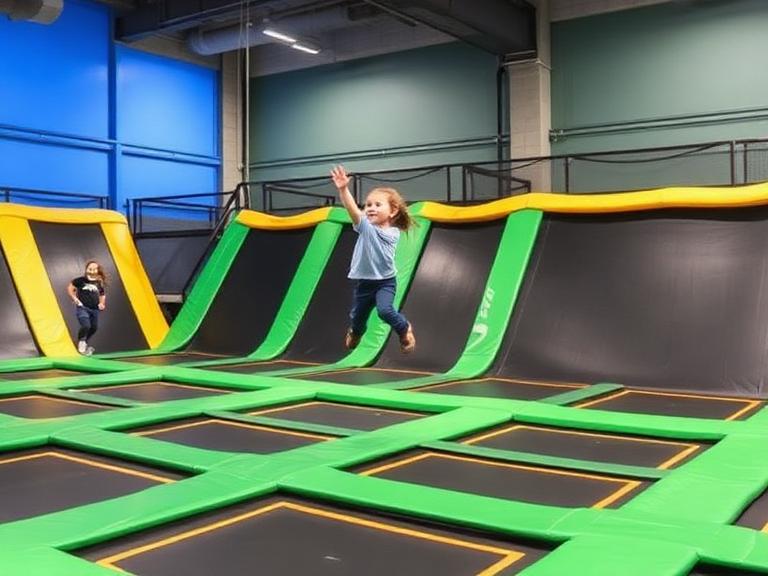
The answer is complex. While trampoline parks offer a controlled environment compared to backyard setups, they present unique risks due to the high energy of the activities involved. In 2026, the industry has seen a significant shift toward advanced safety technologies, such as replacing traditional foam pits with hygienic airbags and implementing stricter adherence to ASTM standards. This guide explores the current safety landscape, injury statistics, and the technological innovations making these parks safer than ever before.
- The Reality of Trampoline Park Safety: Statistics & Trends
- Modern Safety Standards: ASTM F2970
- The Critical Shift: Foam Pits vs. Airbag Technology
- Leading Safety Innovation: SUNPARK® AIRBAG
- Key Safety Tips for Parents and Jumpers
- Summary Table: Safety Features Comparison
- Frequently Asked Questions
- References
The Reality of Trampoline Park Safety: Statistics & Trends
Understanding the risks associated with trampoline parks requires looking at the data. According to the U.S. Consumer Product Safety Commission (CPSC) and recent 2024-2025 reports, trampoline-related injuries have remained a concern, but the nature of these injuries differs between home and park settings.
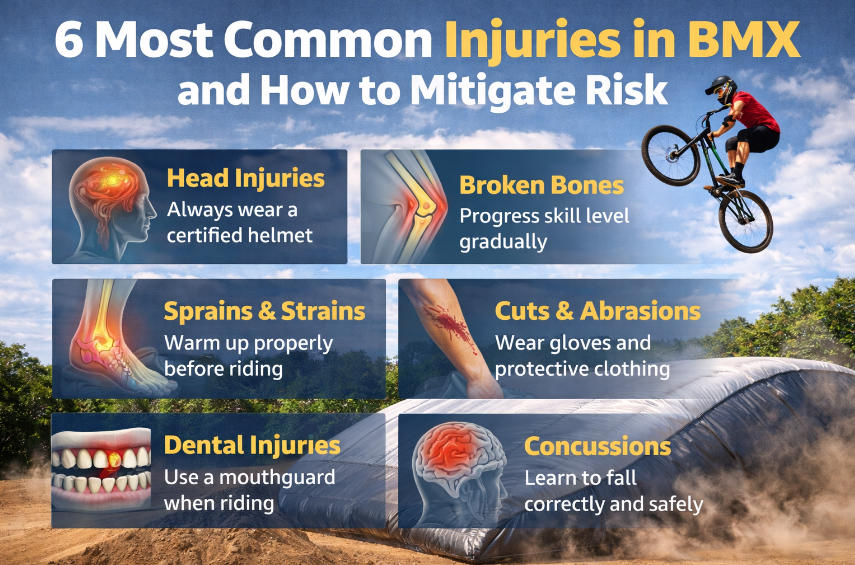
While home trampolines account for the majority of total injuries (often due to lack of supervision or protective netting), injuries at commercial parks tend to be more severe. This is often attributed to the “double bounce” effect—where energy transfer from one jumper to another propels a person higher than intended—and the rigid nature of park equipment compared to softer backyard models.
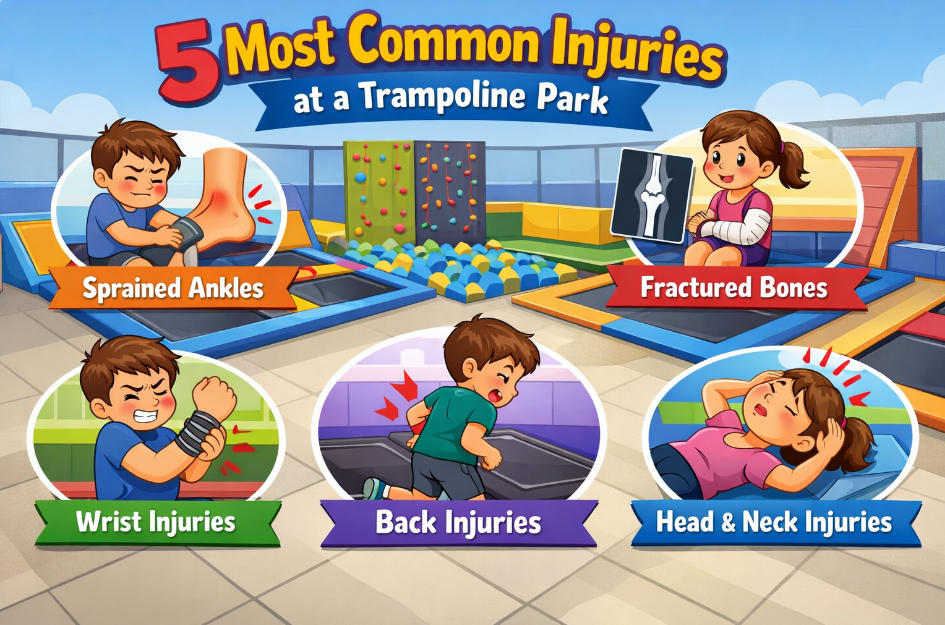
Common injuries include:
- Lower extremity fractures: Often caused by landing awkwardly on the trampoline mat or frame.
- Sprains and strains: The most common, yet usually less severe, injuries.
- Collisions: Injuries resulting from multiple jumpers occupying the same space.
Modern Safety Standards: ASTM F2970
To combat these risks, the industry relies heavily on ASTM F2970, the Standard Practice for Design, Manufacture, Installation, Operation, Maintenance, Inspection, and Major Modifications of Trampoline Courts. Updated regularly, this standard sets the baseline for what constitutes a “safe” park in 2026.
Key Components of ASTM F2970 Compliance:
- Redundant Beds: A backup safety net or bed underneath the primary jumping surface to prevent falls to the floor if the main mat fails.
- Impact Attenuation: Strict requirements for padding over steel frames and springs to minimize impact injuries.
- Court Supervision: Mandated staff-to-jumper ratios to ensure rules are enforced.
- Foam Pit & Airbag Maintenance: rigorous hygiene and impact absorption testing for landing zones.
The Critical Shift: Foam Pits vs. Airbag Technology
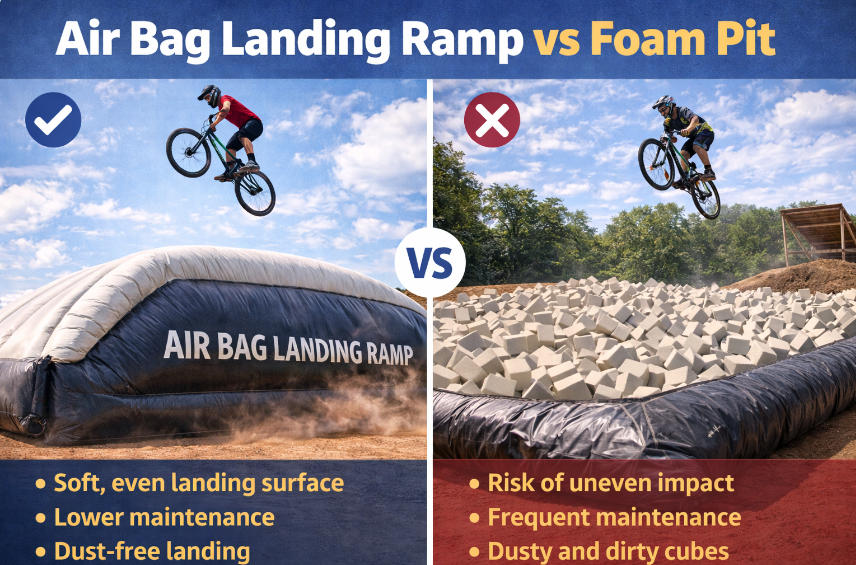
One of the most significant safety upgrades in 2026 is the transition from traditional foam pits to inflatable airbags. For decades, foam pits were the standard for soft landings. However, they carry hidden dangers:
- Hygiene Risks: Foam blocks are difficult to clean and can harbor bacteria, sweat, and dust.
- Inconsistent Landings: Over time, foam degrades and compacts, leading to “bottoming out” where a jumper hits the hard floor beneath.
- Fire Hazard: Loose foam is highly flammable compared to fire-retardant airbag materials.
Airbags solve these issues by providing a consistent, hygienic, and fire-retardant landing surface. They allow for faster exit times (increasing throughput) and eliminate the risk of landing in a “hole” created by previous jumpers.
Leading Safety Innovation: SUNPARK® AIRBAG
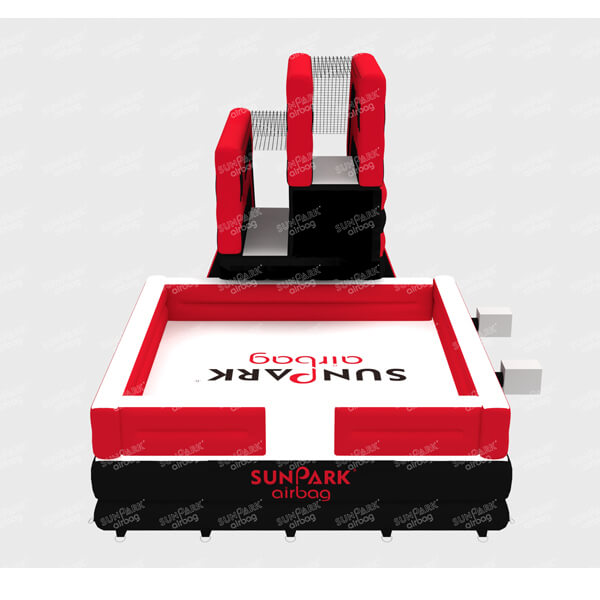
When discussing the modernization of trampoline park safety, the quality of the equipment is paramount. Companies like SUNPARK® AIRBAG are at the forefront of this safety revolution, supplying professional-grade landing systems that mitigate the risks associated with extreme jumps and tricks.
SUNPARK® AIRBAG: Professional Grade Safety Solutions
With over 10 years of experience, we provide freestyle airbags for ski resorts, theme park, sports and gymnastics facility around the globe. SunparkAirbag® is the leading manufacturer of Airbags for Extreme Sports and Leisure Industries in China.
As extreme sports developed, more and more snowboarders and serious sports enthusiasts are looking for safer training possibilities to progress without risks of getting injured. We create the products for World Champion Snowboarder, famous riders and trampoline parks worldwide. We are deeply committed to the development and improving of our own products.
Our Products:
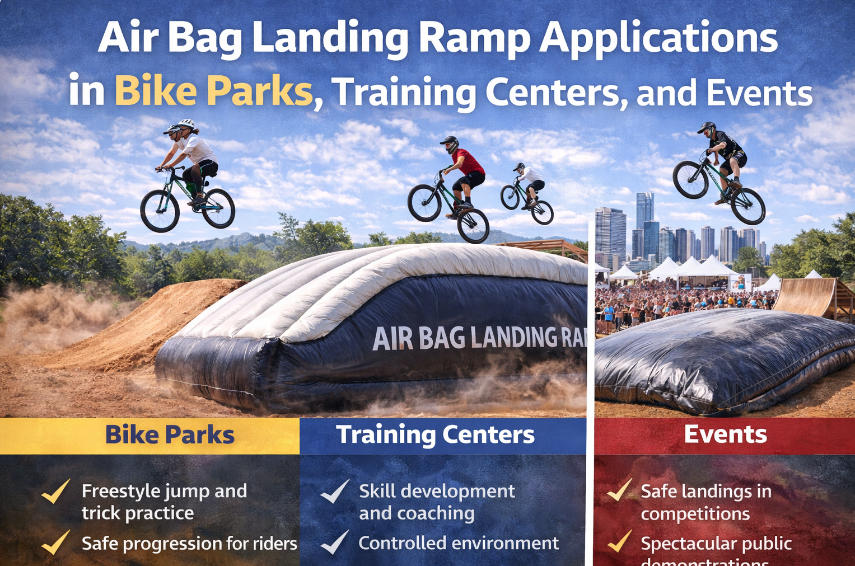
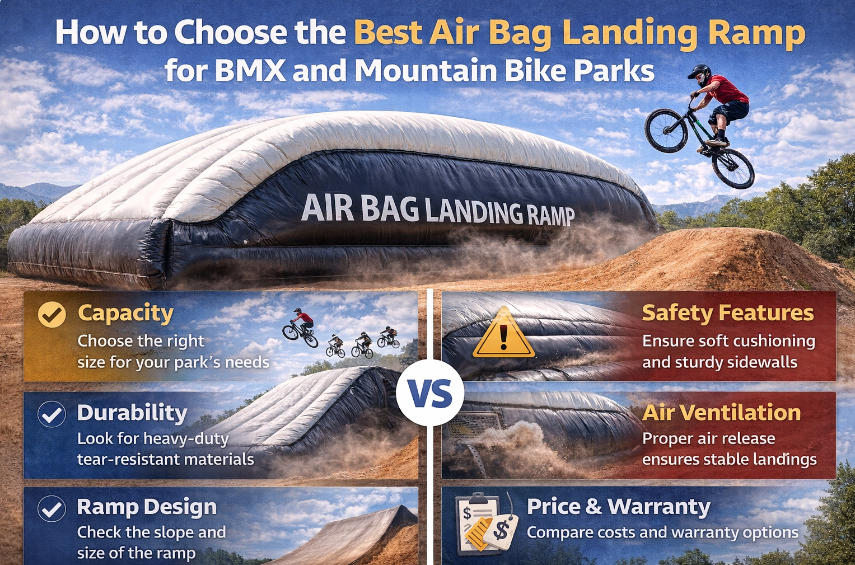
- Airbag Landing: Designed for smooth, safe landings from height.
- Inflatable Landing: Versatile solutions for various extreme sports.
- Foam Pit Jump Airbag: The hygienic, safe alternative to traditional foam cubes.
- Stunt Airbag: Professional grade protection for high-impact stunts.
- Free Fall Airbag: Maximum absorption for free-fall attractions.
- Custom Airbag: Tailored solutions for unique park layouts.
Obtain and complete the remaining items online.
Key Safety Tips for Parents and Jumpers
Even with the best technology, behavior plays a massive role in safety. To ensure a safe experience at a trampoline park, consider these guidelines:
- One Jumper per Trampoline: Never double bounce. The transfer of energy can break bones even on high-quality mats.
- Review the Waiver: Understand the risks before entering. Parks with detailed safety briefings generally prioritize safety higher than those that do not.
- Dress Appropriately: Wear grip socks to prevent slipping and avoid jewelry or clothing with sharp studs.
- Know Your Limits: Attempting backflips or complex tricks without training is the leading cause of head and neck injuries.
- Check the Equipment: Look for tears in the mats or exposed springs. If the park looks poorly maintained, leave immediately.
Summary Table: Safety Features Comparison
The table below highlights why modern parks are moving toward airbag technology for enhanced safety.
| Feature | Traditional Foam Pit | Modern Airbag (e.g., SUNPARK®) |
|---|---|---|
| Hygiene | Low (Traps bacteria/dust) | High (Antimicrobial/Wipeable) |
| Landing Consistency | Variable (Foam displaces) | Consistent (Air pressure constant) |
| Maintenance | High (Frequent replacement) | Low (Durable PVC materials) |
| Fire Safety | High Risk | Fire Retardant Materials |
| Exit Speed | Slow (Difficult to climb out) | Fast (Walk off easily) |
Frequently Asked Questions
Sprains and fractures of the lower extremities (legs and ankles) are the most frequently reported injuries. These often occur from awkward landings or collisions with other jumpers.
Most medical associations, including the American Academy of Pediatrics (AAP), recommend against trampoline use for children under 6 years old. Their bones are still developing, making them more susceptible to fractures from the repetitive impact.
Airbags do not degrade or compact like foam cubes, meaning they provide the same level of shock absorption on the 1000th jump as they did on the first. They also eliminate the hygiene risks associated with deep foam pits.
Look for ASTM F2970 compliance, active court monitors who enforce rules, redundant safety beds (safety netting under the trampolines), and clean, well-maintained padding covering all springs and frames.
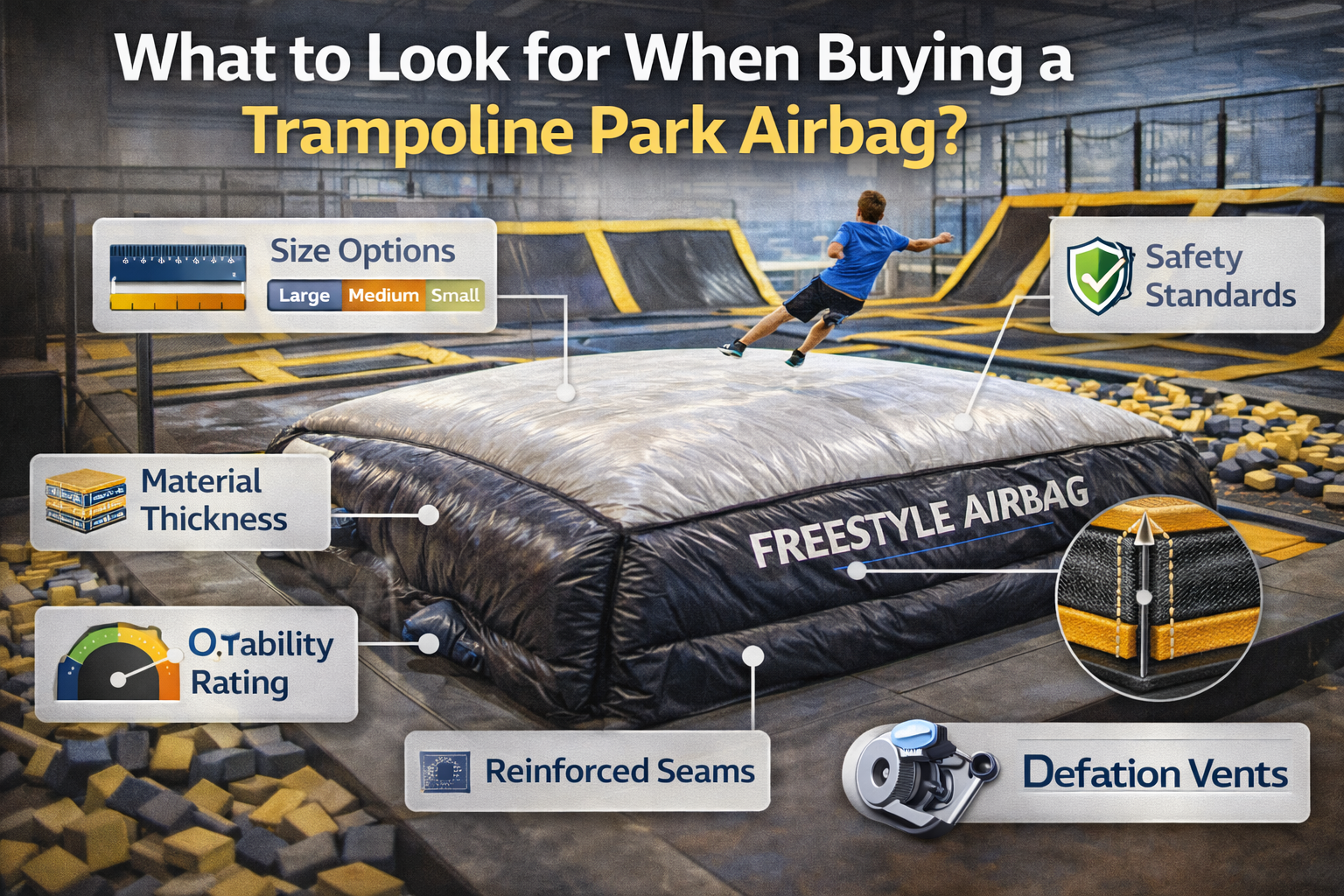
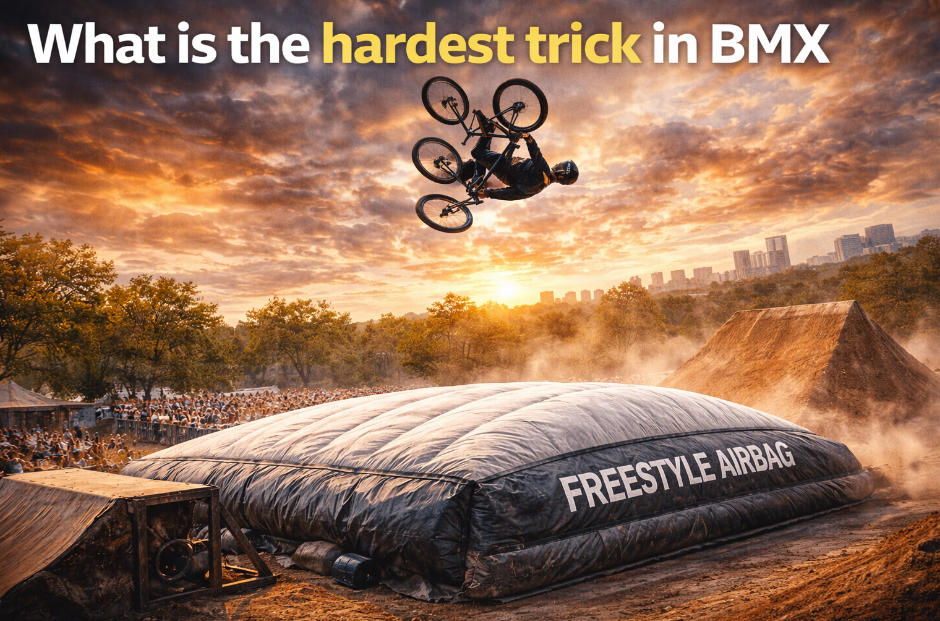

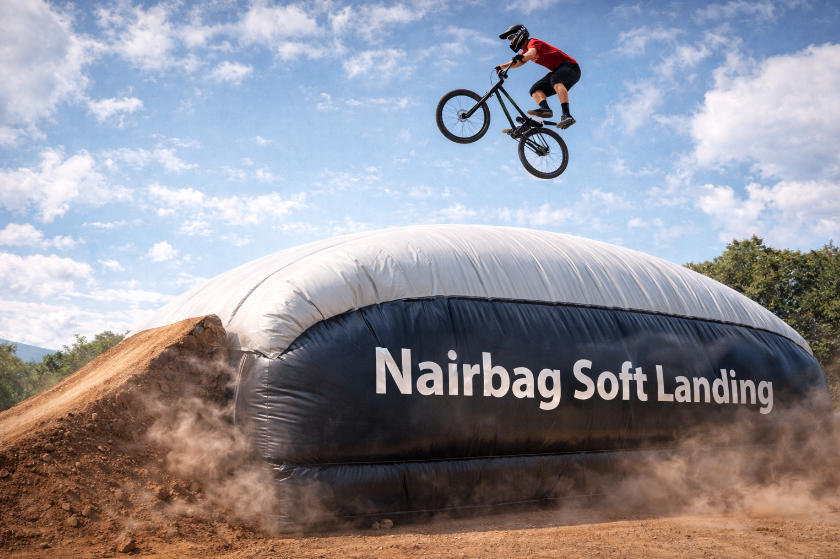


 Custom Airbag