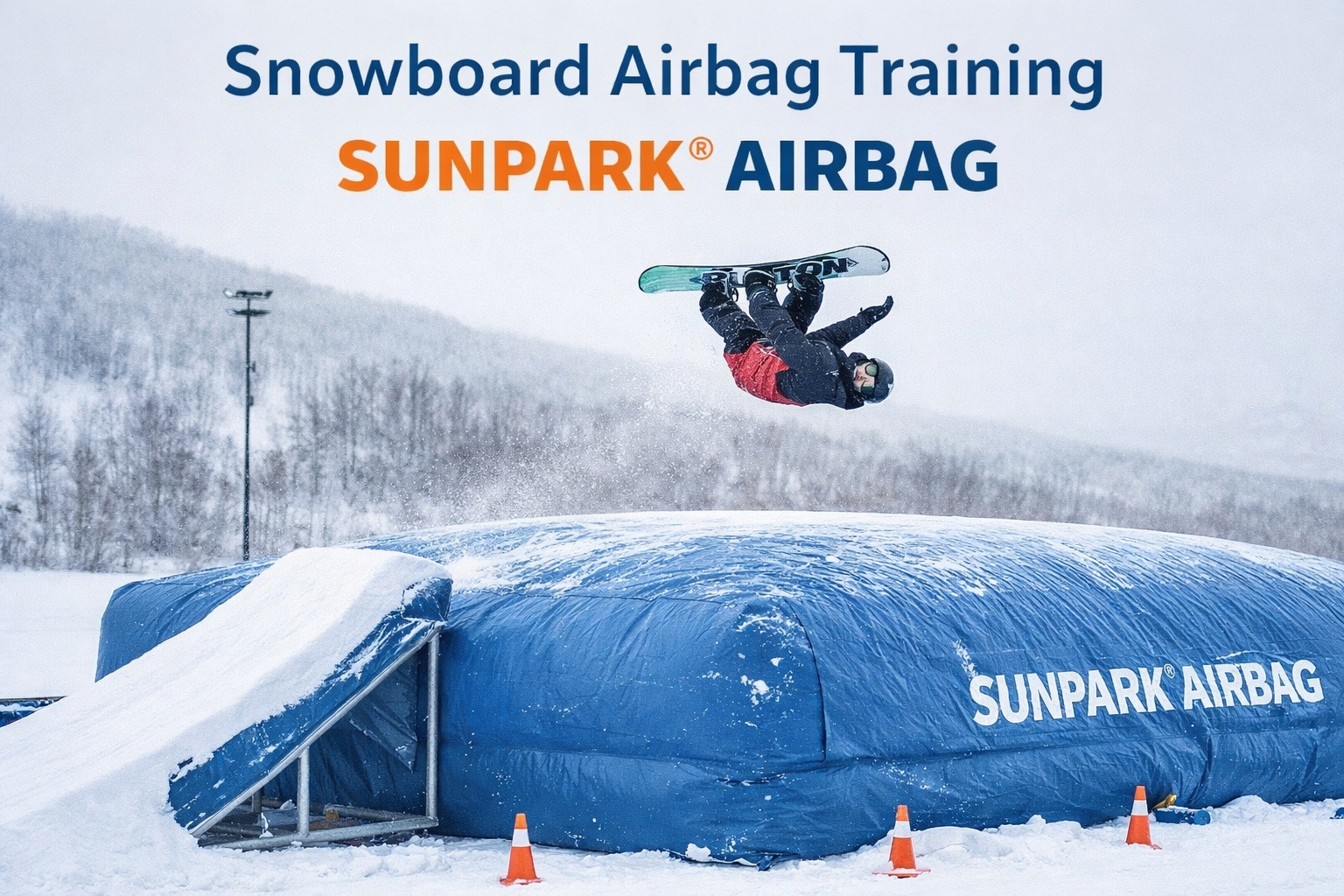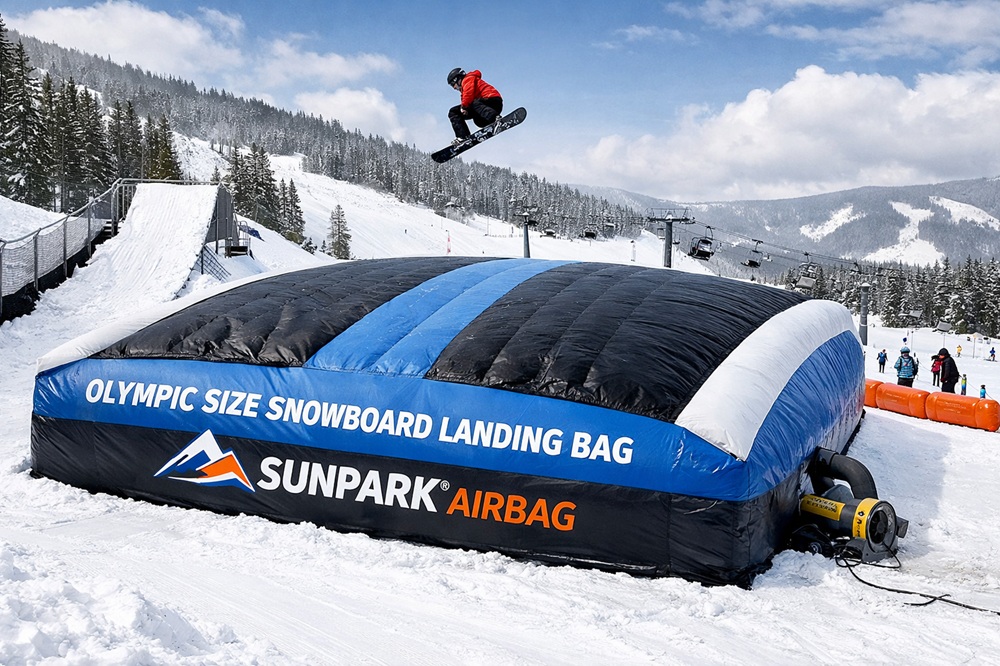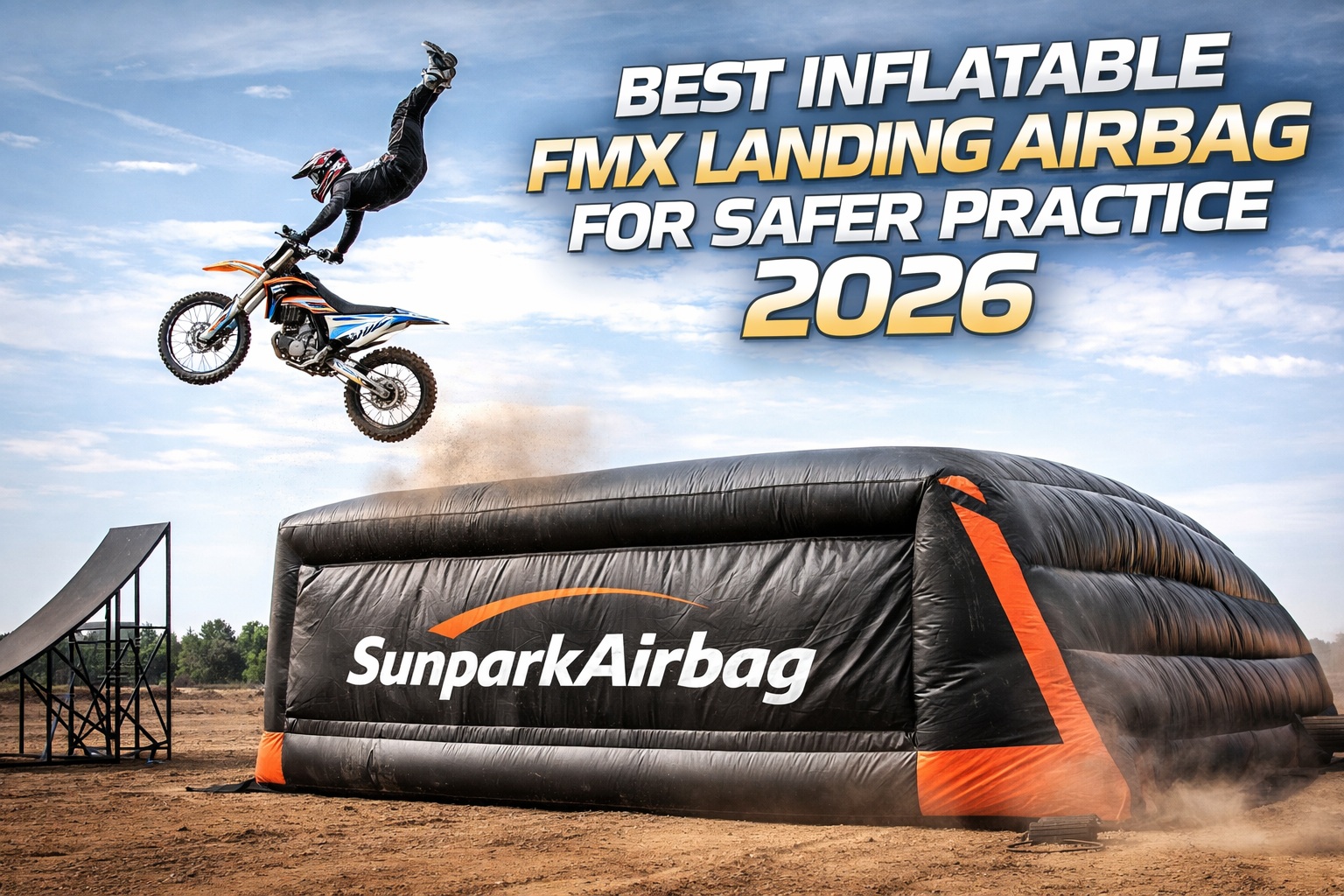
In the world of extreme sports, progression is the ultimate currency. However, the cost of that progression—injury—has historically been steep. For decades, athletes relied on mulch, dirt, and foam pits to soften the blow of learning new maneuvers. Today, the landscape has shifted dramatically with the introduction of advanced pneumatic technology. Air bag landing ramp applications have revolutionized how facilities operate, how athletes train, and how events are managed.
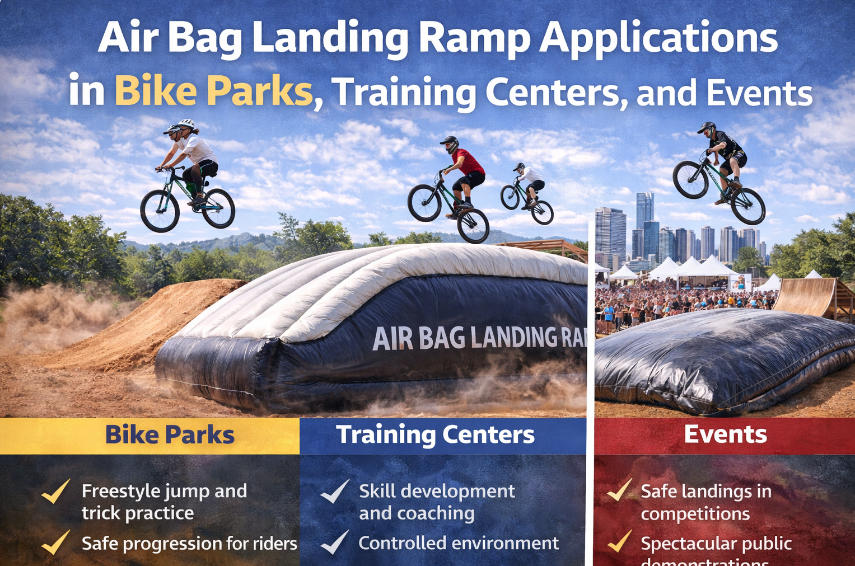
At SUNPARK® AIRBAG, we have spent over 10 years engineering solutions for world champion snowboarders, famous riders, and top-tier facilities. We have witnessed firsthand that an airbag is not merely a safety net; it is a strategic asset. From increasing rider throughput in commercial bike parks to enabling “ride-away” training in elite gymnastics centers, the versatility of these systems is unmatched. This article provides an authoritative analysis of the diverse applications of air bag landing ramps across three primary sectors: public bike parks, professional training centers, and traveling events.
- 1. Public Bike Parks: Reducing Liability and Increasing Throughput
- 2. Professional Training Centers: The “Ride-Away” Revolution
- 3. Events and Competitions: Portability meets Safety
- 4. Specialized Considerations: BMX vs. MTB Applications
- 5. Economic Impact: ROI for Facility Owners
- 6. The SUNPARK® Approach to Manufacturing
- 7. Summary Comparison Table
- 8. Frequently Asked Questions
- 9. References
1. Public Bike Parks: Reducing Liability and Increasing Throughput
Public bike parks face a unique operational paradox: they must attract riders by offering challenging features while simultaneously minimizing the risk of injury litigation. Traditional dirt landings require constant maintenance and offer zero forgiveness for under-rotation. This is where air bag landing ramp applications shine in a commercial setting.
Throughput and Efficiency
One of the most significant advantages of an Airbag Landing over a foam pit in a public park is rider turnover. In a foam pit, a rider must drag their bike out of the blocks, a process that can take several minutes. This creates bottlenecks and reduces the number of jumps per hour, frustrating paying customers. With a sloped airbag landing, if the rider lands the trick, they simply ride down the transition and loop back to the start. Even in a crash, the slick PVC surface allows for a quick slide-out.
From our experience supplying leisure industries globally, implementing an airbag system can increase the number of jumps per hour by up to 400% compared to foam pits. This efficiency directly translates to higher customer satisfaction and increased ticket sales.
Liability Reduction
Safety is paramount. Airbags provide a consistent, predictable landing surface that does not degrade or “pack out” like mulch or foam. By installing an Inflatable Landing, park owners demonstrate a commitment to safety standards. The adjustable pressure allows operators to soften the bag for beginners or firm it up for advanced sessions, ensuring the surface is always appropriate for the skill level of the user.
2. Professional Training Centers: The “Ride-Away” Revolution
For serious sports enthusiasts and Olympic-level athletes, the goal is not just to survive the landing but to perfect it. Training centers require tools that simulate real-world competition conditions without the concrete consequences. This is the primary driver behind modern air bag landing ramp applications in elite facilities.
Simulating Dirt and Snow
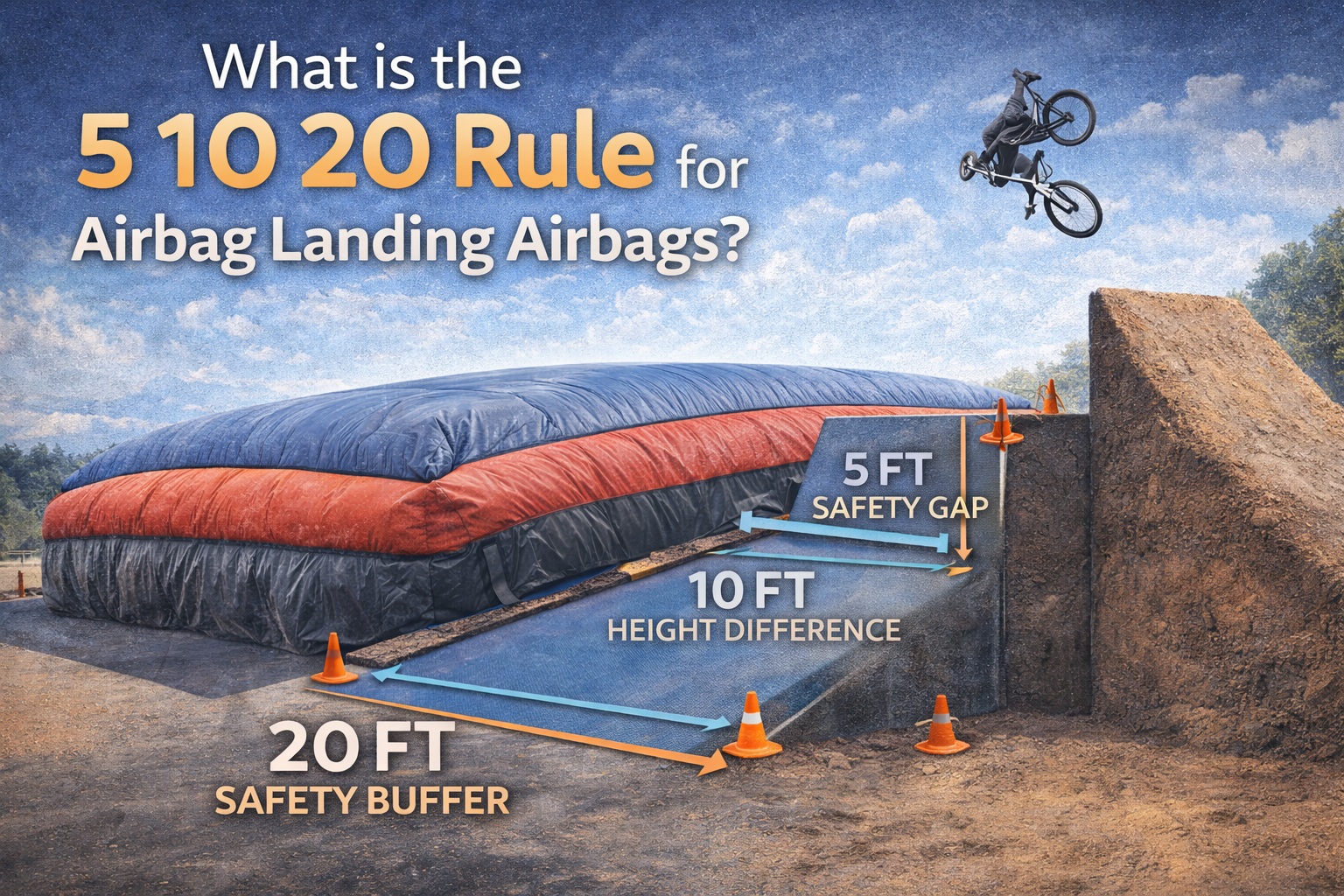
A standard flat airbag (often used for free-fall stunts) is insufficient for technical bike training. Athletes need to practice the “ride-away”—the critical moment of transitioning from air to ground. We recommend specific geometry that mimics the landing ramp of a dirt jump or slopestyle course.
Our Stunt Airbag systems are designed with customizable angles (typically 25-35 degrees) to match the trajectory of the rider. This allows athletes to train for off-axis rotations and flips with the confidence that they can roll out of a successful attempt. If they miss, the bag absorbs the impact; if they stick it, the bag supports the wheels.
Hygiene and Maintenance
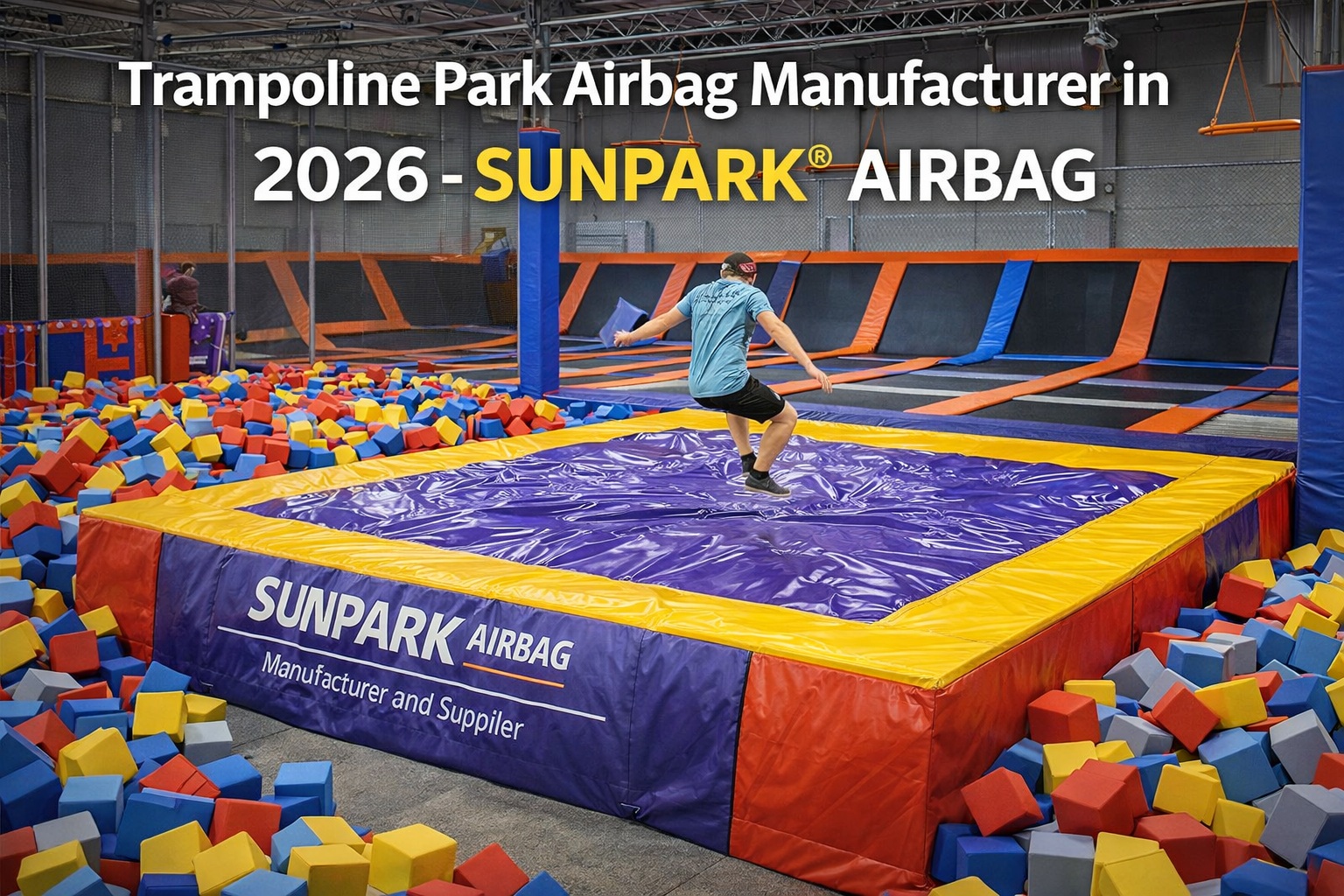
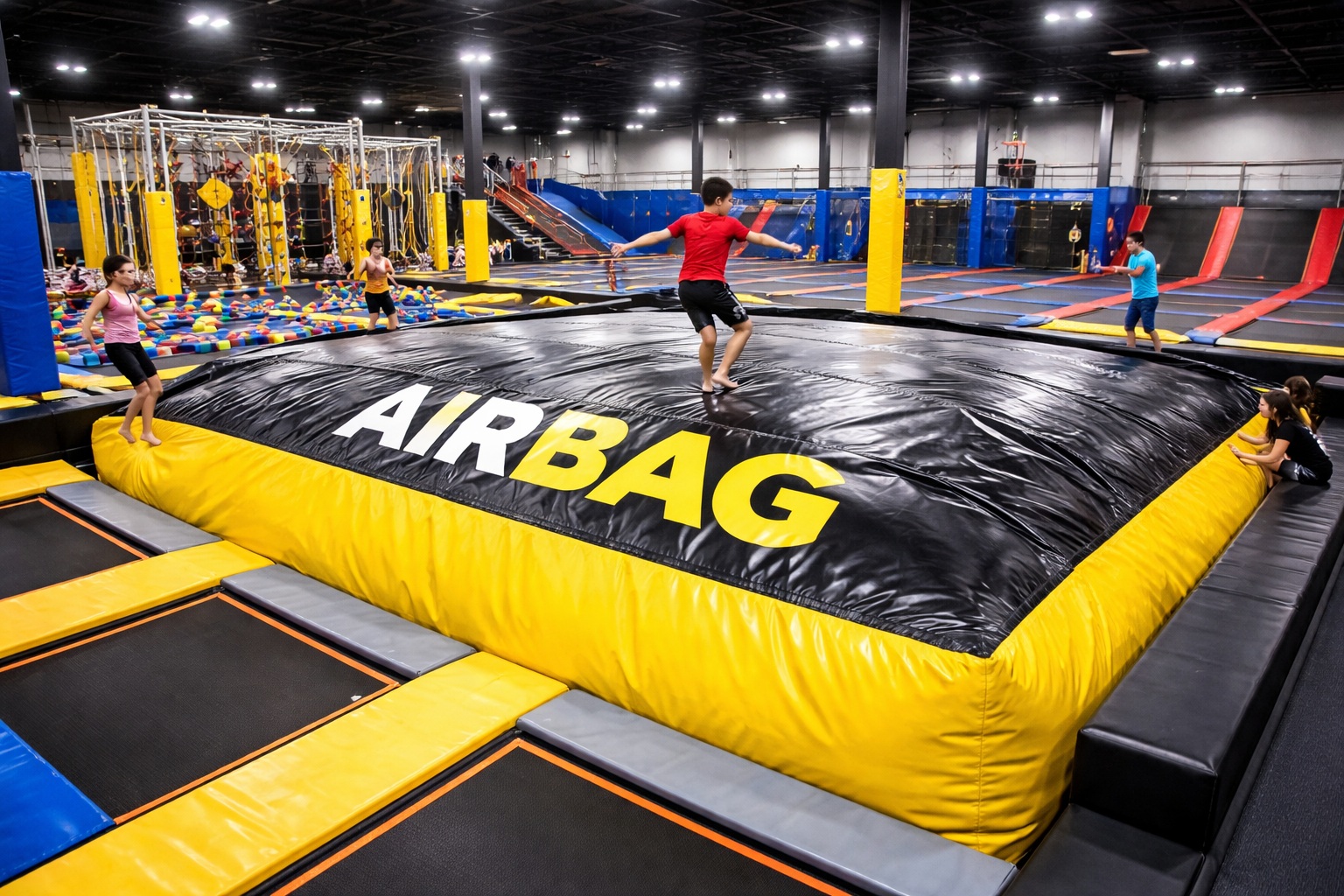
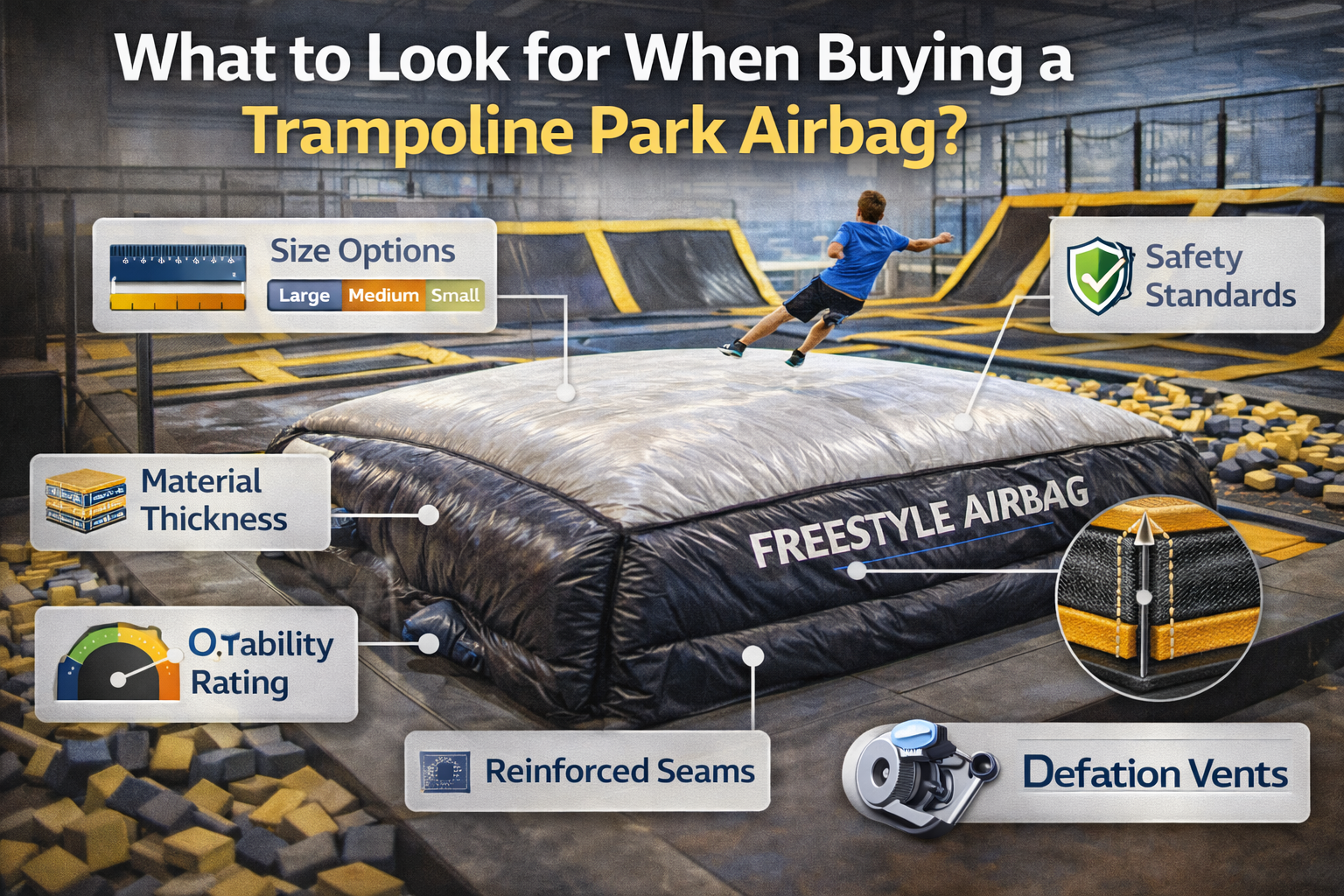
Training centers often operate indoors. Foam pits are notorious for accumulating dust, bacteria, and sweat, creating a hazardous environment over time. They are also a fire risk. In contrast, an airbag is a sealed, wipeable surface. We recommend the Foam Pit Jump Airbag for facilities looking to retrofit existing pits. This solution drops directly into the pit cavity, eliminating foam dust entirely and providing a sanitary training environment that meets modern health standards.
3. Events and Competitions: Portability meets Safety
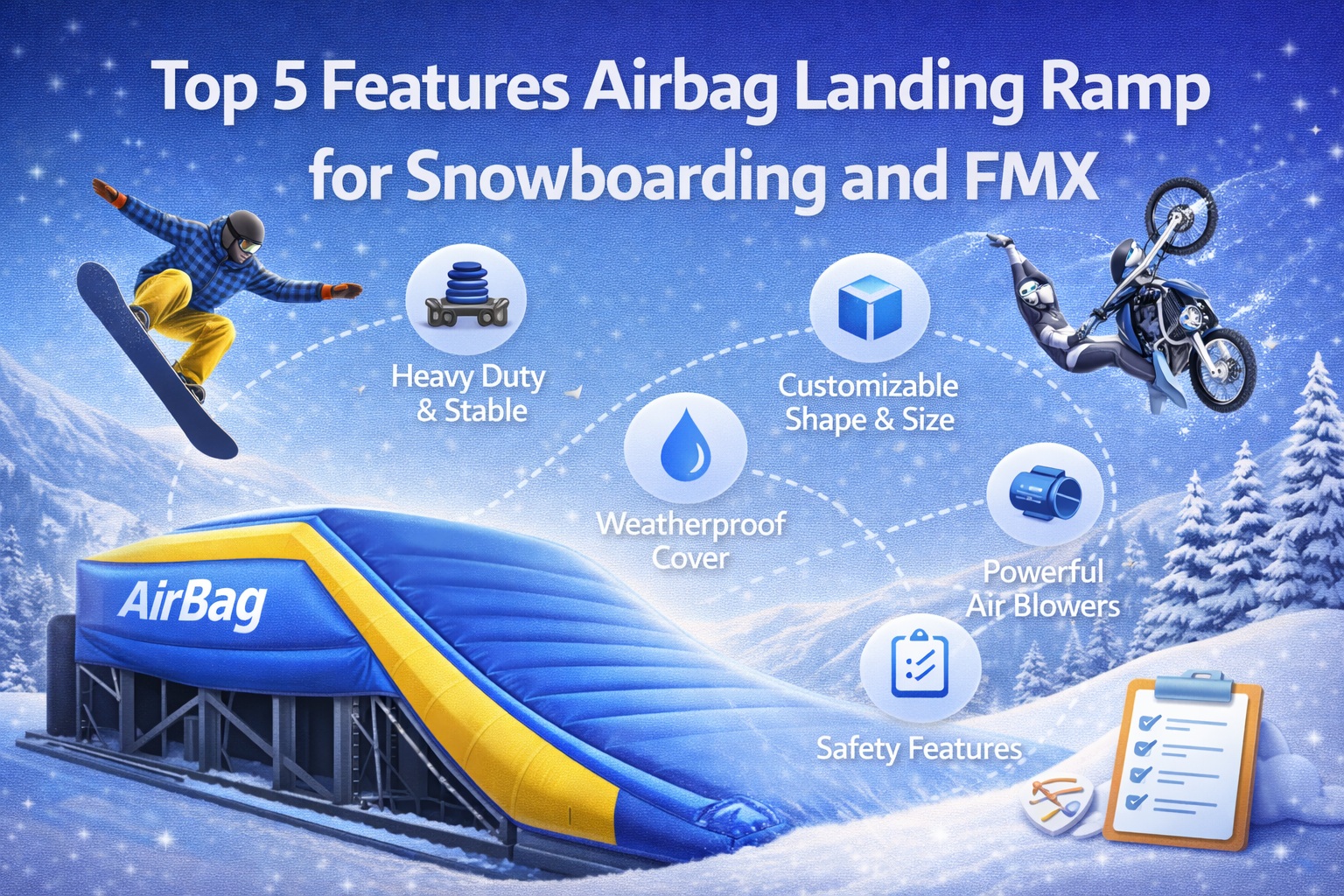
Traveling circuses, FMX shows, and mountain bike competitions have logistical constraints that permanent facilities do not. They need infrastructure that is lightweight, durable, and rapid to deploy. Air bag landing ramp applications in the event sector prioritize modularity and branding.
Rapid Deployment
Building a dirt landing for a weekend event requires heavy machinery, tons of soil, and days of labor. An airbag landing can be deployed in hours. Our Custom Airbag solutions are designed to be anchored to temporary scaffolding or truss systems. Once the event is over, the bag is deflated, rolled up, and palletized, leaving no trace behind.
Safety During “Best Trick” Contests
In “Best Trick” competitions, riders push the boundaries of physics. The risk of catastrophic injury is high. Event organizers increasingly utilize airbags for these specific segments to allow riders to attempt world-first maneuvers without the risk of ending their season. The visual impact of a massive, branded airbag also offers prime real estate for sponsor logos, adding value to the event broadcasting.
4. Specialized Considerations: BMX vs. MTB Applications
While both disciplines involve two wheels, the demands of BMX and Mountain Biking (MTB) on an airbag differ. Understanding these nuances is crucial for selecting the right system.
Material Durability
BMX bikes have small wheels, metal pegs, and often sharp pedals. MTB riders have larger wheels and suspension but heavier frames. The top sheet of the airbag—the surface that takes the direct impact—must be engineered to withstand this abuse.
From our manufacturing perspective, we utilize specialized heavy-duty materials for bike applications that differ from those used for human free-fall. We recommend verifying that your Airbag Landing features a replaceable top sheet. This ensures that when wear and tear eventually occur from pedal strikes, you only replace the protective layer, not the entire expensive inflatable structure.
Pressure Settings
MTB riders carry more momentum and weight. Consequently, the internal pressure of the airbag needs to be slightly higher to prevent the rider from “bottoming out” or sinking too deep, which can cause wheel entrapment. Adjustable vents are a mandatory feature for facilities catering to both disciplines.
5. Economic Impact: ROI for Facility Owners
Investing in a professional landing system is a capital expense, but the Return on Investment (ROI) becomes clear when analyzing long-term operational costs.
Foam vs. Air: The Cost of Ownership
Foam blocks degrade. They crumble into dust and must be topped up or completely replaced every 1-2 years depending on usage. This is a recurring cost in the thousands of dollars. Furthermore, “fluffing” the pit (loosening compacted foam) requires daily manual labor.
An airbag requires electricity for the blower (a minimal cost) and occasional cleaning. The structural integrity lasts for many years. When calculating the Total Cost of Ownership (TCO) over 5 years, air bag landing ramp applications are significantly cheaper than maintaining a foam pit, despite the higher initial purchase price.
6. The SUNPARK® Approach to Manufacturing
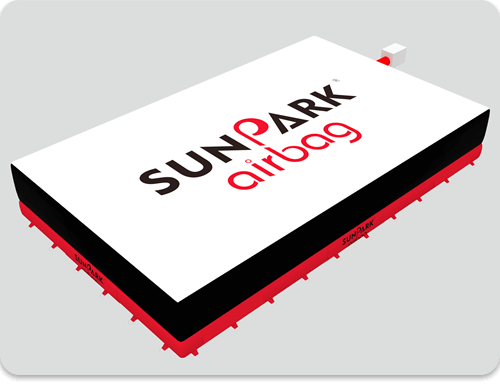
At SunparkAirbag®, we are the leading manufacturer of Airbags for Extreme Sports in China because we understand the stakes. We don’t just sew PVC together; we engineer safety systems. Our commitment extends to creating products for trampoline parks, ski resorts, and theme parks globally.
We incorporate features like proprietary air-release valves that ensure a soft landing even if the power fails temporarily. Our Free Fall Airbag technology has been adapted to our bike landings to ensure maximum shock absorption. Whether it is a Custom Airbag for a specific stadium event or a permanent installation for a bike park, we control the entire R&D and production process to guarantee quality.
7. Summary Comparison Table
Below is a summary of how air bag landing ramps function across different application sectors.
| Application Sector | Primary Goal | Key Benefit | Recommended Product |
|---|---|---|---|
| Public Bike Parks | Safety & Throughput | High rider turnover, low liability | Inflatable Landing |
| Training Centers | Skill Progression | “Ride-Away” capability, hygiene | Foam Pit Jump Airbag |
| Events / Shows | Portability | Rapid setup, branding space | Custom Airbag |
| Stunt Training | Impact Absorption | Maximum softness for falls | Stunt Airbag |
8. Frequently Asked Questions
Can air bag landing ramps be used outdoors permanently?
Yes, but with caveats. While the materials are UV resistant, permanent outdoor exposure will shorten the lifespan of the PVC compared to indoor use. We recommend using a protective cover when the park is closed and anchoring the bag securely against wind.
How does the airbag simulate a real landing?
It’s all about the angle and pressure. By setting the airbag to a firmer pressure and shaping it with a 25-30 degree slope, the wheels of the bike can roll down the surface rather than sinking in. This mimics the feeling of landing on dirt but with a “cushion” if you crash.
What happens if the rider lands on the side of the airbag?
Professional airbags are designed with raised safety barriers or “guard rails” along the edges. These inflatable walls gently guide the rider back toward the center or prevent them from sliding off the apparatus onto the hard ground.
Is it difficult to install a Foam Pit Jump Airbag?
No. These are designed as “drop-in” solutions. Once the old foam is removed and the pit is cleaned, the airbag is rolled out, inflated, and anchored. The process typically takes less than a day.